Phase Contrast and DIC Comparison Image Gallery
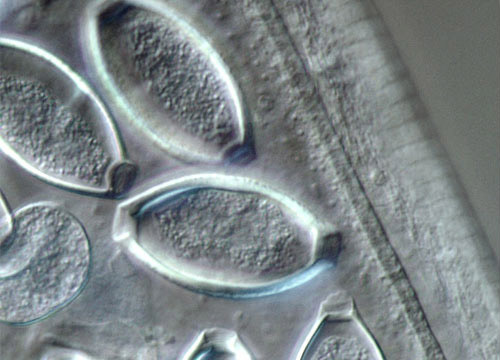
Whipworm Eggs (Trichuris trichiura) - DIC
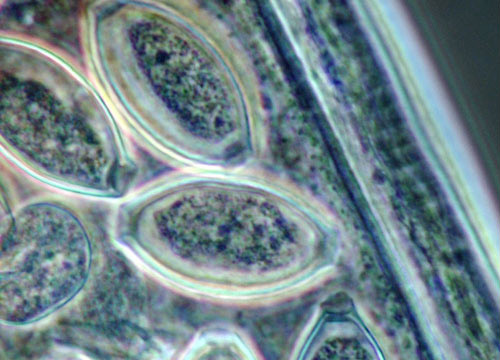
Whipworm infections transpire as a result of accidental ingestion of Trichuris trichiura eggs or embryos. After they are swallowed, the eggs move to the host's small intestine, where they develop into juveniles. The young worms then move to the large intestine and attach their anterior ends to the intestinal wall. After approximately three months, the parasite becomes a sexually mature adult, females producing up to 10,000 eggs per day, which are passed out of the host's system with digestive wastes. The eggs need a warm moist environment to survive outside the body and become infective in about three weeks. Since whipworms do not actually multiply inside a host, each individual worm represents a separate incident of infection.