
SMZ1500 Fluorescence Image Gallery

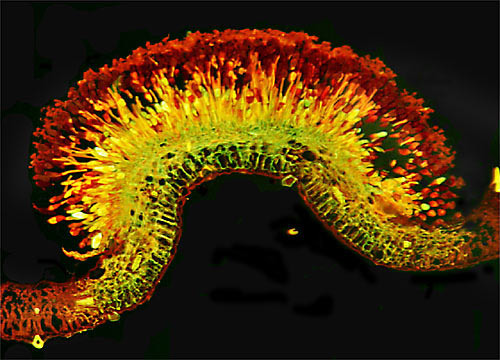
Hollyhock Rust

A tall and showy biennial or perennial, the hollyhock (Alcea rosea) has adorned many an English cottage and is an old-fashioned favorite. This herbaceous plant of the mallow family (Malvaceae) is a native of China, and it is thought to have been introduced to Britain by soldiers returning from the Crusades.

The common name is derived from the word holy; in many cultures, the plant signifies forgiveness. Hollyhock is treasured in Japan, where its leaves are borne by the heraldic badge symbolizing the dynasty of Tokugawa and considered a sign of ambition and fruitfulness.

The large, satiny flowers of the hollyhock come in a variety of colors -- from pink, red, white, yellow, lavender, and even black -- and are set along erect stalks growing between 5 and 9 feet tall. The hollyhock's heart-shaped, wrinkled leaves have hairy undersides and are a favorite food plant of the butterfly caterpillar before it takes wing as an adult. The flowers of this relative of the marshmallow plant are purported since medieval times to have medicinal applications as an emollient and a diuretic. The flowers of A. rosea are also touted to yield good dyes.

Although a hearty plant, hollyhock is prone to rust disease and temporarily lost some of its popularity in Britain during a serious outbreak in the nineteenth century. The rusts generally do not cause death of the plant, but they do stunt growth and cause discoloration and shedding of leaves. These parasitic fungi first appear on the underside of the leaves in small blister-like formations that are reddish-brown in color. On the opposite side of the leaf, these blisters appear as larger, bright yellow or orange spots. These autoecious rusts complete their entire life cycle on one host and can attack all green parts of the hollyhock plant.

BACK TO THE SMZ1500 FLUORESCENCE IMAGE GALLERY