
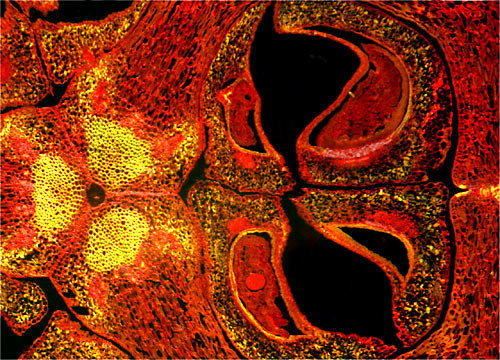
Lily Seed Embryo
A plant embryo is actually an immature plant that is surrounded by stored nutritive materials enveloped in a protective seed coat. The embryo typically consists of embryonic roots (radicles), an embryonic stem (hypocotyl), and leaf-like structures (cotyledons). Lilies are classified as monocots because they produce only a single cotyledon. This embryonic leaf absorbs nutrients from the seed package until the embryo germinates and develops into a seedling that can produce true leaves and generate food through photosynthesis. All seeds encase plant embryos, which remain dormant until activated by water and climate conditions that entice germination.
Featured in:
Share this page: