
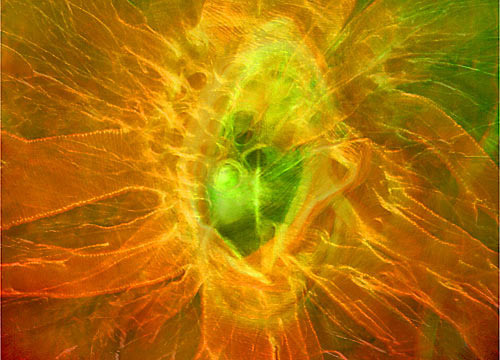
Silkworm Spiracle
The larvae feed on leaves of white mulberry, Osage orange, or lettuce, although artificial diets have been developed for modern commercial operations. After six weeks, the silkworm stops eating and spins its cocoon. The larvae possess a pair of specially-modified salivary glands called silk glands. These glands secrete a clear, viscous fluid that is forced through openings — called spinnerets — on the mouthparts of the larva. The fluid hardens as it comes into contact with air to become the silk thread. The diameter of the spinneret determines the thickness of the silk thread produced. Each cocoon of yields a strand of silk about 1,000 yards (900 meters) long.
Featured in:
Share this page: