|
||||||||||||||||||||||||||||||||||||
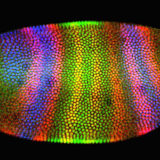
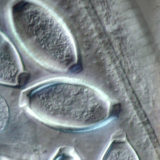
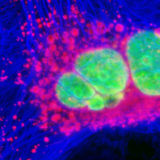
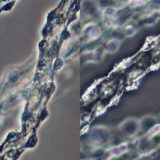
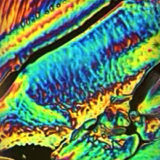
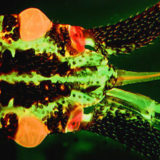
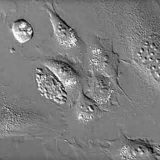
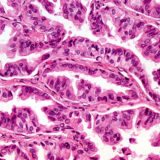
Digital Image GalleriesRecording of images observed in the optical microscope is of paramount importance for students, teachers, scientists, and technicians in both educational and industrial environments. The MicroscopyU digital image galleries feature over 1,000 images and present a wide spectrum of specimens imaged using the classical illumination techniques of brightfield, differential interference contrast (DIC), fluorescence, Rheinberg, darkfield, reflected light, Hoffman modulation contrast, phase contrast, and polarized light. Nikon's Small World Galleries - The Nikon Small World Galleries give you a glimpse into a world that most have never seen. They are a window into a universe that can only be seen through the lens of a microscope. For the past 28 years, Nikon has sponsored the Small World Competition, the world's foremost forum for recognizing excellence in photomicrography. Included in these links are image galleries featuring photomicrographs from the winners of previous contests. Digital Eclipse Image Gallery - We take the DXM 1200 camera system on a test drive to demonstrate the tremendous photomicrography potential available with this digital camera. Images were recorded using a wide spectrum of illumination techniques including brightfield, phase contrast, fluorescence, differential interference contrast (DIC), Hoffman modulation contrast, and polarized light. Fluorescence Microscopy Digital Image Gallery - The widefield reflected light fluorescence microscope has been a fundamental tool for the examination of fluorescently labeled cells and tissues since the introduction of the dichromatic mirror in the late 1940s. Furthermore, advances in synthetic fluorophore design coupled to the vast array of commercially available primary and secondary antibodies have provided the biologist with a powerful arsenal in which to probe the minute structural details of living organisms with this technique. In the late twentieth century, the discovery and directed mutagenesis of fluorescent proteins added to the cadre of tools and created an avenue for scientists to probe the dynamics of living cells in culture. This gallery examines the fluorescence microscopy of both cells and tissues with a wide spectrum of fluorescent probes. Human Pathology Digital Image Gallery - The investigation of disease in humans has, understandably, been one of the primary focal points in medicine for thousands of years. The image gallery presented in this section attempts to illustrate, through use of the brightfield microscope, many of the pathological conditions that are readily observed in stained human specimens. Each image was chosen for artistic merit, photographic quality, and content. Note that several of the images in this gallery might not depict every aspect of the pathological condition under which they are catalogued. Stereomicroscopy Fluorescence Image Gallery - The application of stereomicroscopes for GFP observation is now so prevalent that stereo fluorescence illuminators are more frequently referred to as GFP illuminators, even though they can be utilized for many other applications in both the life sciences and industry. Large specimens, such as larvae, nematodes, zebrafish, oocytes, and mature insects can be easily selected and manipulated when they are labeled with GFP and illuminated by fluorescence techiques. This technique is also applicable to traditional fluorescence specimens, such as stained thin sections, cell culture mounts, and autofluorescence in plant tissues. Visit the gallery to observe the wide variety of specimens imaged using this novel new technique. Confocal Microscopy Image Gallery - The Nikon MicroscopyU Confocal Image Gallery features digital image sequences captured using a Nikon PCM-2000 confocal microscope scanning system coupled to an Eclipse E-600 upright microscope. Successive serial optical sections were recorded along the optical axis of the microscope over a range of specimen planes. These sequences are presented as interactive Java tutorials that allow the visitor to either "play" the series of sections automatically, or to utilize a slider to scroll back and forth through the images. Phase Contrast Digital Image Gallery - Transparent specimens often appear remarkably different when comparatively observed under positive and negative phase contrast illumination. In positive phase contrast, specimen intensity is manifested by relatively medium to dark gray features, surrounded by a bright halo, and superimposed on a lighter gray background. Alternatively, in negative phase contrast, the specimen often appears much brighter on a dark gray background and the accompanying halos are also dark (much darker than the background). This digital image gallery compares identical viewfields of a wide variety of specimens illuminated with both positive and negative phase contrast. Phase Contrast and DIC Comparison Image Gallery - Phase contrast and differential interference contrast (DIC) should be considered as complementary (rather than competing) techniques, and employed together to fully investigate specimen optical properties, dynamics, and morphology. In many cases, each technique will reveal specific details about a particular specimen that is not apparent from observing images captured by other methods. The wide variety of images presented in this MicroscopyU gallery are derived from both thick and thin transparent specimens, as well as specimens that have inherent contrast originating from synthetic dyes (stains) or natural pigments. |
||||||||||||||||||||||||||||||||||||
|
||||||||||||||||||||||||||||||||||||