
Digital Eclipse Image Gallery

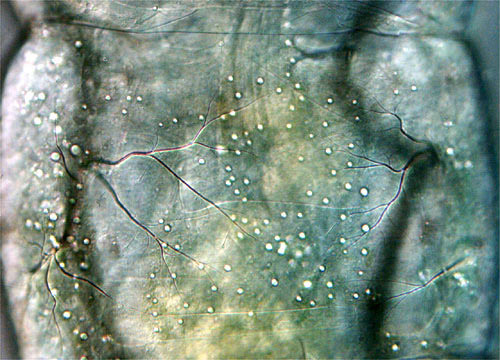
Chironomid Larva Blood Vessels

Presented below is a photomicrograph of chironomid larva blood vessels. This digital image was captured with the DXM 1200 ACT-1 control software in single-image acquisition mode utilizing DIC illumination.

Insects have few blood vessels. They have an open circulatory system, lacking veins and arteries, with only a dorsal vessel to carry the blood from the heart into the head where it spills into the rest of the body cavity.

Insect blood, hemolymph, does not function like vertebrate blood. It is not red and does not carry oxygen to the tissues. Hemolymph transports nutrients throughout the body and carries metabolic waste products from the organs to the malpighian tubules for excretion. It contains free cells called hemocytes, most of which are phagocytes that help to protect the insect by devouring microorganisms.

Non-biting midges are one of the most diverse and widespread dipteran groups known. They inhabit virtually the entire range of aquatic ecosystems, both fresh and marine, as well as semi-terrestrial and terrestrial habitats. Most species have aquatic wormlike larval stages that start as egg masses laid on the water surface. After going through a pupal stage, floating at the surface of the water, a full-grown midge emerges and flies away. Larvae of some species build a protective capsule made of secretions and debris that they live in during the stage, emerging only long enough to feed.

BACK TO DIGITAL ECLIPSE IMAGE GALLERY