
Digital Eclipse Image Gallery

Dinosaur Bone

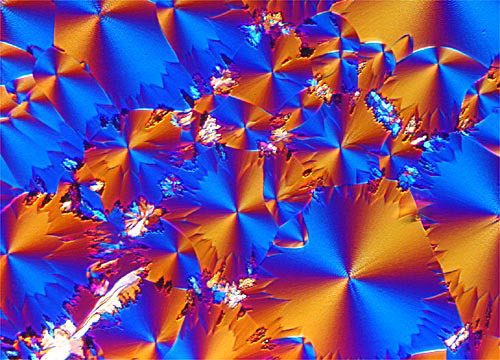
Presented below is a photomicrograph of a thin section of a fossilized dinosaur bone. This digital image was captured with the DXM 1200 ACT-1 control software in single-image acquisition mode utilizing Hoffman modulation contrast and polarization.

Under polarized light, thin sections of fossilized dinosaur bones exhibit striking colors and patterns as evidenced by this photomicrograph. The term fossil refers to any preserved remains or imprint of a living organism (usually ancient), such as a bone, shell, footprint, or leaf impression. Most of the dinosaur fossils found today are mineralized bones, but they also include footprints, tracks, eggs, skin impressions, stomach stones (known as gastroliths), and fossilized feces (known as coprolites).

Fossilization usually occurred when a dinosaur died and was buried or covered over by a sediment of rock particles. Most dinosaur remains were probably scavenged by other dinosaurs before becoming weathered and slowly covered by sediment. The soft tissues that were not eaten (skin, eyes, muscles, and internal organs) rotted away quickly leaving only the bones and teeth to become fossilized.

Bones and teeth of the dinosaurs must undergo some form of mineralization to become fossils. The organic matter comprising the bones and teeth usually decays and is replaced by minerals such as silica, calcite, carbonates and iron. Sometimes the bone and teeth organic matter forms complex inorganic compounds with these minerals. Mineral replacement and complex formation occurs on a microscopic scale where the tiny spaces and voids comprising the organic bone matrix become filled with new minerals. It is widely believed that fossilization takes well over 10,000 years because most younger bones show little or no mineralization. The actual rate at which mineralization of bone occurs is dependent upon the type and chemistry of the surrounding sedimentary environment in which the bone is buried.

Since their discovery over 150 years ago, dinosaurs have been a source of intrigue and fascination for young and old alike. The first dinosaur bones were discovered in Western Europe during the 1820s, but today their fossils are found on all of the continents and several hundred distinct types of dinosaurs have now been classified. Dinosaurs are a group of extinct reptiles that first appeared about 225 million years ago and became extinct about 66 million years ago. The reptilian nature of dinosaurs is evidenced by their skeletal features and the fact that they reproduced by laying hard-shelled eggs.

BACK TO DIGITAL ECLIPSE IMAGE GALLERY