|
||||||||||||||||||||||||||||||||||||
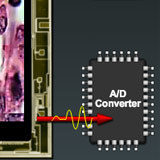
Digital Imaging in Optical MicroscopyFor the past fifty years, the primary medium for photomicrography has been film, which has served the scientific community well by faithfully reproducing countless images from the optical microscope. It has only been in the past decade that improvements in electronic camera and computer technology have made digital imaging cheaper and easier to use than conventional photography. This section explores new concepts in digital imaging technology and reviews both fundamental concepts and advanced techniques involved in digital imaging. In addition several of the current camera systems designed for optical microscopy are explored. Digital Imaging - New Opportunities for Microscopy - Digital imaging is increasingly applied to image capture for microscopy - an area that demands high resolution, color fidelity and careful management of, often, limited light conditions. The latest digital cameras combined with powerful computer software now offer image quality that is comparable with traditional silver halide film photography. Moreover, digital cameras are also easier to use and offer greater flexibility for image manipulation and storage. Fundamentals of Digital Imaging - In the past decade, improvements in electronic camera and computer technology have made digital imaging cheaper and easier to use than conventional photography. A primary consideration in choosing a digital camera over film is whether the electronic imaging device is of adequate field size and spatial resolution to record the entire viewfield at the optical resolution of the microscope system. In recent years, the amount of information capable of being captured and stored by the best digital cameras is approaching (but still short of) the resolution available with traditional 35 millimeter film. Introduction to Charge-Coupled Devices (CCDs) - Digital cameras replace traditional sensitized film with a CCD photon detector, a thin silicon wafer divided into a geometrically regular array of thousands or millions of light-sensitive regions that capture and store image information in the form of localized electrical charge that varies with incident light intensity. The variable electronic signal associated with each picture element (pixel) of the detector is read out very rapidly as an intensity value for the corresponding image location, and following digitization of the values, the image can be reconstructed and displayed on a computer monitor virtually instantaneously Color Balance in Digital Imaging - The acquisition of accurately color balanced images in the optical microscope can be a challenge even to experienced microscopists, regardless of whether they are employing traditional photographic film emulsions or newer solid-state digital camera systems. Utilization of electronic image capture technology relies upon the same familiar properties of light as does conventional film-based photomicrography, but the capability of performing white balance adjustment for color balancing is a unique function of electronic image sensors that is not at all intuitive to investigators seeking to capture digital images from the microscope. Digital Camera Resolution Requirements for Optical Microscopy - The ultimate resolution of a charge-coupled device (CCD) or complementary metal oxide semiconductor (CMOS) image sensor is a function of the number of photodiodes and their size relative to the image projected onto the surface of the imaging array by the microscope optical system. When attempting to match microscope optical resolution to a specific digital camera and video coupler combination, use this calculator for determining the minimum pixel density necessary to adequately capture all of the optical data from the microscope. Determining the Signal-to-Noise Ratio in Digital Cameras - For any electronic measuring system, the signal-to-noise ratio (SNR) characterizes the quality of a measurement and determines the ultimate performance of the system. With a CCD (charge-coupled device) image sensor, the SNR value specifically represents the ratio of the measured light signal to the combined noise, which consists of undesirable signal components arising in the electronic system, and inherent natural variation of the incident photon flux. Because a CCD sensor collects charge over an array of discrete physical locations, the signal-to-noise ratio may be thought of as the relative signal magnitude, compared to the measurement uncertainty, on a per-pixel basis. The three primary sources of noise in a CCD imaging system are photon noise, dark noise, and read noise, all of which must be considered in the SNR calculation. Nikon Digital Camera Systems for Optical MicroscopyDigital Networking Camera Technology - Nikon's Peter Drent explains how digital imaging has given microscopists a whole new medium with which to capture, store and organize microscope images. Outstandingly flexible, digitally captured images can be saved, annotated, manipulated and used in other software packages for image analysis and presentation. Latest developments in the field of digital camera technology have taken this flexibility a large step further forward - it is now possible to share images in real-time using a digital camera over a network. Users in remote locations can simultaneously share live images, and even control the acquisition of these images as they are being captured, creating a range of new possibilities in the way that digital cameras can be used. Digital Sight Camera System - The DS-5M-L1 Digital Sight Camera System is Nikon's innovative digital imaging system for microscopy that emphasizes the ease and efficiency of an all-in-one concept, incorporating a built-in LCD monitor in a stand-alone control unit. The system optimizes the capture of high-resolution images up to 5 megapixels through straightforward menus and pre-programmed imaging modes for different observation methods. The stand-alone design offers the advantage of independent operation including image storage to a CompactFlash Card housed in the control/monitor unit, but has the versatility of full network capabilities if desired. Connection is possible to PCs through a USB interface, and to local area networks or the Internet via Ethernet port. Web browser support is available for live image viewing and remote camera control, and the camera control unit supports HTTP, Telnet, FTP server/client, and is DHCP compatible. Digital Sight ACT-1 for L-1 Software - The automatic camera tamer software (referred to as the ACT-1 for L-1 Version) is an application program designed to allow operation of the Nikon Digital Sight DS-L1 camera control unit from a networked high-performance PC. Multiple Digital Sight camera systems, connected to the network, can be controlled from the PC, with the selection of the desired camera being accomplished by simple menu selection. The ACT-1 program allows basic digital imaging operations such as image capture, saving, printing, and deleting to be performed, and in addition provides access to more advanced image processing, display manipulation, and image analysis functions. Nikon DN100 Digital Network Camera - The DN100 Digital Network Camera is Nikon's new platform-independent, Internet-capable digital camera system that can be utilized to deliver live or captured images to a local computer in the laboratory or to a remote computer anywhere in the world. This unique cutting-edge digital microscope camera system combines 1.3-megapixel color resolution imaging at a rate of 15 frames per second with unique networking capabilities to enable simultaneous sharing of information over the Internet or a local area network. The DN100's ability to transfer images over a network or the Internet enables the microscopist to easily share digital images of specimens with colleagues, and the system's advanced capabilities ease the burden of preparing images for the web. The DN100's networking capabilities include HTTP and FTP communication, allowing the unit to conveniently provide images and streaming video to a remote microscopist via a web browser. The DN100 is also capable of allowing an operator to remotely control the camera system software and hardware. Digital Eclipse DXM 1200 - Nikon's new high-resolution color digital camera is designed exclusively for photography through the microscope. This system provides real photo-quality digital imaging at a resolution of up to 12 million pixels with low noise, superb color rendition, and high sensitivity. In addition, live color monitoring on the supporting computer screen at a rate of 12 frames per second enables easy focusing of images. One of the most significant features of the DXM 1200 is the advanced control software (Automatic Camera Tamer or ACT-1) bundled with the camera system, which allows the microscopist a great deal of latitude in collecting, organizing, and correcting digital images. Digital Imaging Interactive Java TutorialsColor Balance in Digital Imaging - A lack of proper color temperature balance between the microscope illumination source and the film emulsion or electronic image sensor calibration is the most common reason for unexpected color shifts in photomicrography and digital imaging. If the color temperature of the light source is too low, images will have an overall yellowish or reddish cast, and if the color temperature is too high, images will have a blue cast. This interactive tutorial explores how the white and black balance settings on a digital camera system can be utilized to adjust color balance in digital images. Spatial Resolution in Digital Imaging - In terms of digital images, spatial resolution refers to the number of pixels utilized in construction of the image. Images having higher spatial resolution are composed with a greater number of pixels than those of lower spatial resolution. The spatial resolution of a digital image is related to the spatial density of the image and optical resolution of the microscope used to capture the image. Full-Frame CCD Operation - Full-frame charged coupled devices (CCDs) feature high-density pixel arrays capable of producing high quality digital images with the highest resolution currently available. This popular CCD architecture has been widely adopted due to the simple design, reliability, and ease of fabrication. CCD Noise Sources - Noise sources vary in digital cameras. Photon noise, dark current, fixed pattern noise, and photo response nonuniformity are generated on the CCD itself, while reset noise, I/f noise, and quantization noise occur during amplification and conversion of the analog signal to a digital output. Proximity-Focused Image Intensifiers - Image intensifiers were developed for military use to enhance our night vision and are often referred to as wafer tubes or proximity-focused intensifiers. They have a flat photocathode separated by a small gap on the input side of a micro-channel plate (MCP) electron multiplier and a phosphorescent output screen on the reverse side of the MCP. Use this interactive Java tutorial to explore how intensifier gain can be used to increase the output level of this device. Digital Sight Interactive Java TutorialsDigital Sight Camera Control Unit Simulation - When the Digital Sight Camera Control Unit (CCU) is powered on, the display is activated on the internal LCD monitor. The LCD monitor window displays a digital color specimen image captured in the microscope at either 1.3- or 5-megapixel resolution, which is refreshed by the live camera system at a rate ranging from 3.75 to 15 frames per second, depending on the imaging mode in use. An array of on-screen control menus that facilitate the capture and processing of digital images is accessible from the display window. In addition, the front panel of the CCU incorporates a number of indicators and buttons that can be used to monitor and control the CCU, and to gain access to many of its image adjustment and networking capabilities. Digital Sight Web Browser Simulation - When the Nikon Digital Sight web browser interface initializes, two virtual rooms are available to assist the operator from the entry page. In one of these rooms, a single microscope image with a remote control panel appears in the web browser window. This interactive tutorial simulates many of the features present in the Digital Sight browser interface. DXM 1200 Camera System Interactive Java TutorialsACT-1 Main Window - Upon initialization, the ACT-1 software main window appears on the computer monitor. This window presents a variety of on-screen elements including menu bars and a Windows-style tool bar that facilitates capture and correction of digital images. There are two image display areas, a larger window appearing on the left portion and a smaller window positioned on the right. The tutorial operates in a manner that is similar to the native Nikon software. Currently, working modules include the thumbnail area, and all portions of the Live window. Live Settings Panel Operation - Utilize this interactive Java tutorial to explore the various features available in the Nikon DXM 1200 ACT-1 software Live settings panel. Among the options included in the tutorial are exposure time, focus, the focus mark, sensitivity, and the color levels function. Tutorial controls are identical to those found in the native software. White Balance Calibration - Explore calibration of the DXM 1200 imaging control software for white balance to alleviate color shifts and unwanted hues in digital photomicrography with this interactive tutorial. Either a single point or a rectangular marquee-selected area on the image can be specified for measuring the white balance. Image Rotation - Live and captured images displayed in the Nikon DXM 1200 ACT-1 control software image windows can be rotated and flipped by a menu found in the Live settings panel. This interactive tutorial explores the appearance and orientation of flipped images. Control of the applet features is identical to that found in the native Nikon software. Retouching Digital Images - Images captured by the Nikon DXM 1200 digital camera system can be conveniently processed by a retouching menu available with the ACT-1 control software. Correction factors include image brightness, contrast, gamma, sharpness, hue, saturation, intensity, rotation, color balance, white/black balance, and cropping. This interactive tutorial explores how images can be corrected using the ACT-1 Retouch Image window. Option Settings Panel - The Option settings panel in the DXM 1200 ACT-1 control software can be utilized to configure various functions related to image capture. Among the variables controlled by this panel are image resolution, auto printing, automatic image enhancement, noise reduction, and color mode. DN100 Digital Network Camera Interactive Java TutorialsDN100 Camera Control Unit Simulation - When the DN100 Camera Control Unit (CCU) is powered on, the display window appears on the computer monitor. The display window presents a color image captured at 1.3 megapixel resolution that is refreshed at a rate of 15 frames per second. An array of on-screen control windows that facilitate the capture and correction of digital images is accessible from the main display window. In addition, the front panel of the CCU contains a number of indicators and buttons that can be used to monitor the CCU and gain access to its image processing and networking capabilities. DN100 Web Browser Simulation - When the Nikon DN100 web browser interface initializes, three virtual rooms are available to the operator from the entry page. In one of these rooms, a single microscope image with a remote control panel appears in the web browser window. The remote controls provided by the instrument allow a remote microscopist to access many of the features of the camera control unit, including exposure settings, image processing functions, and the ability to capture and download live images in Bitmap or JPEG format. Other noteworthy features include an electronic zoom and pan capability, as well as an annotation function that allows the operator to superimpose a hand-drawn diagram on the image window. Contributing Authors Kenneth R. Spring - Scientific Consultant, Lusby, Maryland, 20657. Peter Drent - Production Manager, Microscopy Division, Nikon Europe, Schipholweg 321, 1171PL Badhoevedorp, The Netherlands. Matthew Parry-Hill, Thomas J. Fellers, and Michael W. Davidson - National High Magnetic Field Laboratory, 1800 East Paul Dirac Dr., The Florida State University, Tallahassee, Florida, 32310. |
||||||||||||||||||||||||||||||||||||
|
||||||||||||||||||||||||||||||||||||