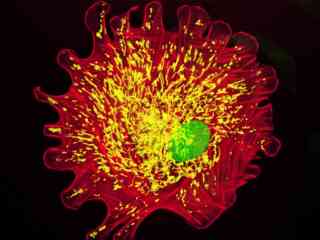
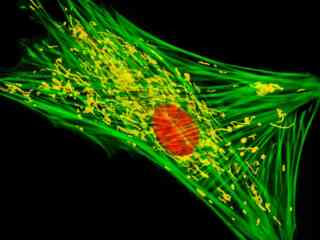
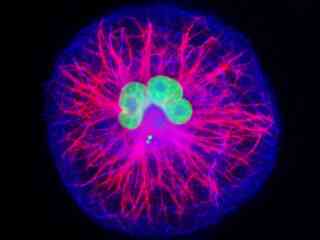
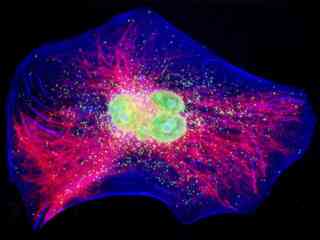
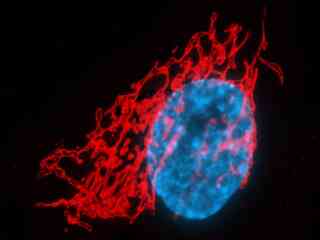
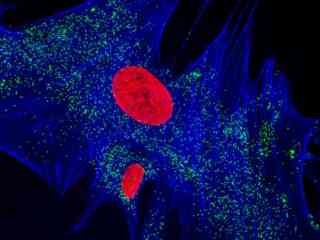
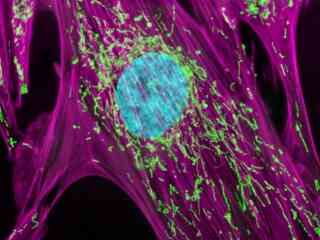
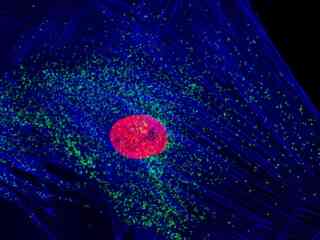
Normal African Green Monkey Kidney Fibroblast Cells (CV-1 Line)
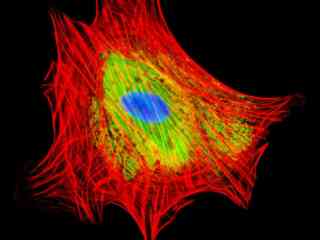
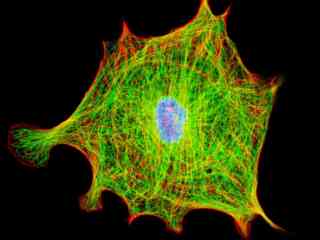
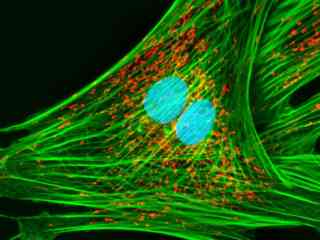
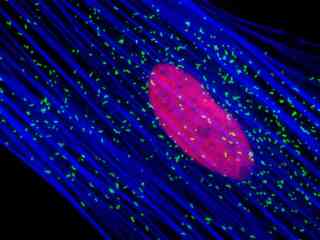
The CV-1 cell line is a widely utilized fibroblast line that was established in the mid-1960s. When the line was first initiated, CV-1 cells were primarily used in investigations of Rous sarcoma virus (RSV). More recently, the CV-1 line has garnered a significant amount of usage as a host for acquired immunodeficiency disease (AIDS) research. The cells are also often employed in transfection experiments with simian virus 40 (SV40) and recombinant plasmid vectors. CV-1 cells demonstrate susceptibility to a variety of viruses, including herpes simplex, Eastern and Western equine encephalitis, poliovirus 1, California encephalitis, and simian virus 40.
-
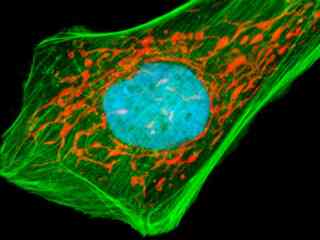
Normal African Green Monkey Kidney Fibroblast Cells (CV-1 Line)
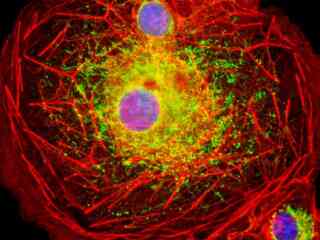
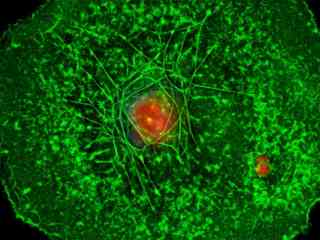
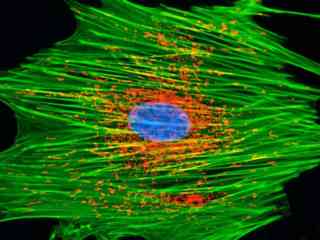
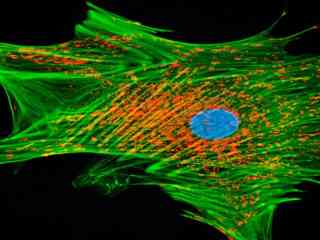
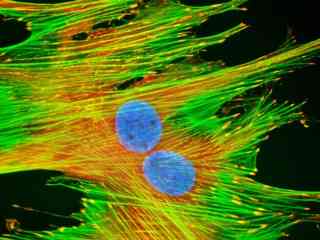
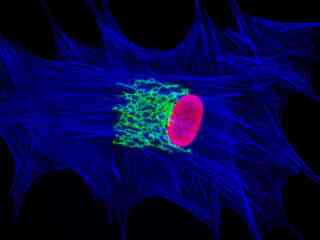
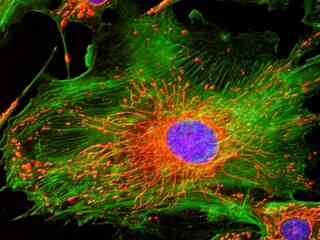
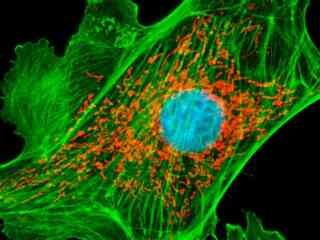
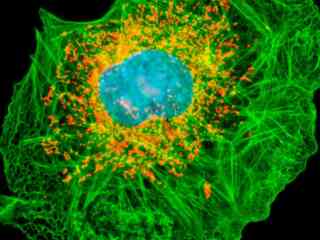
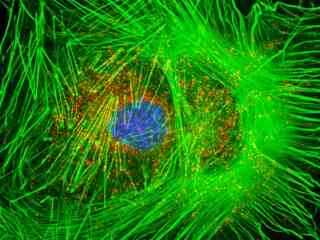
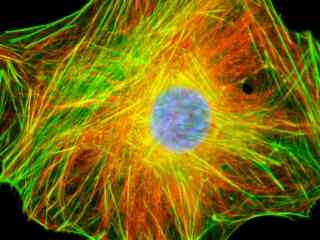
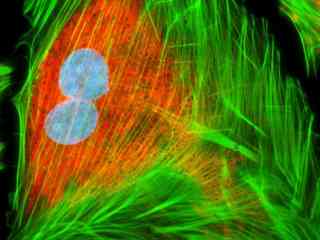
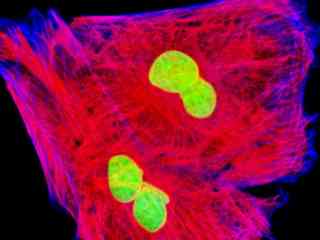
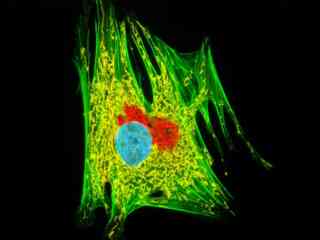
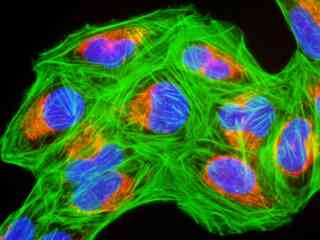
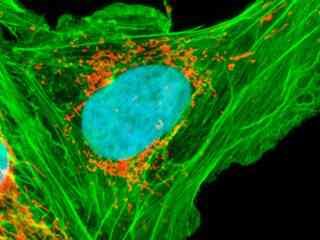
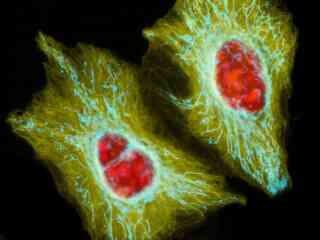
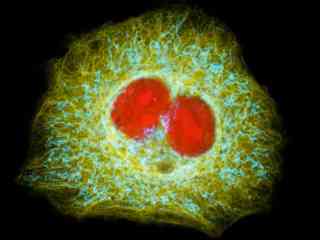
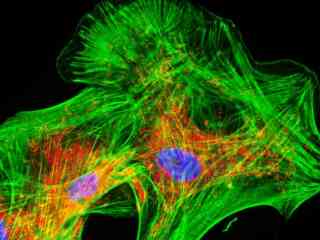
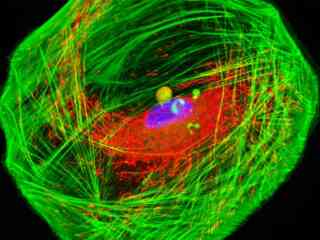
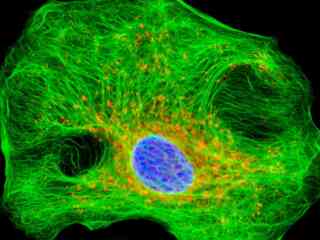
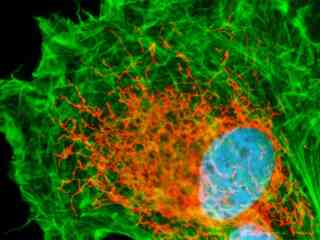
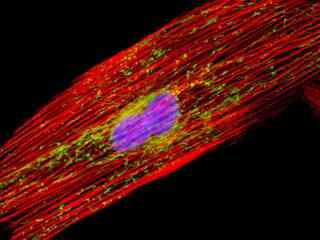
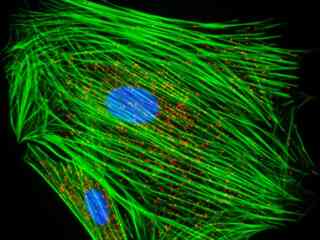
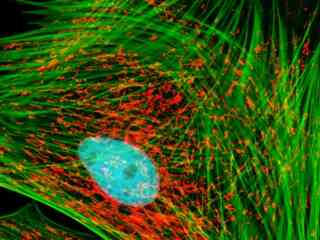
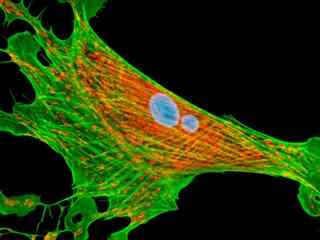
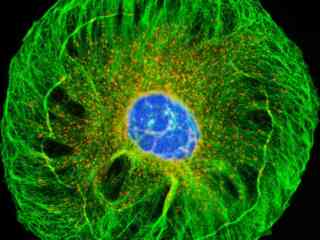
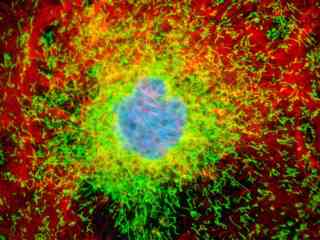
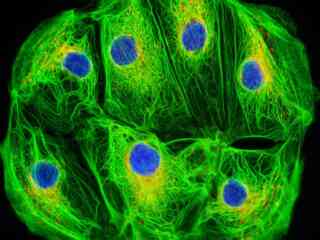
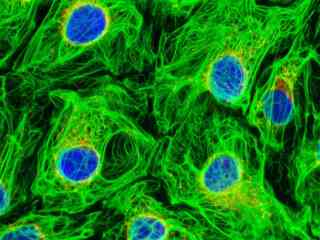
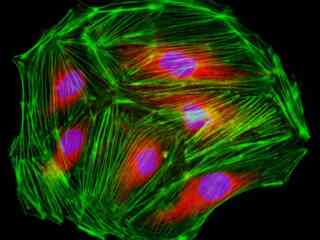
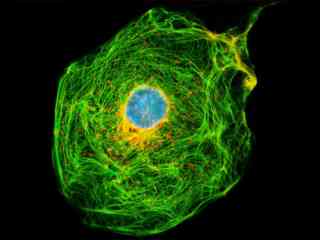
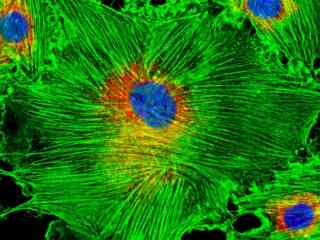
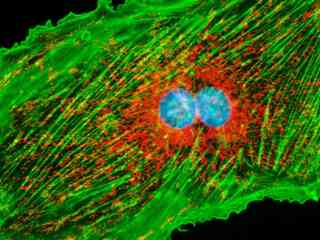
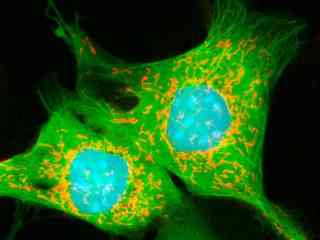
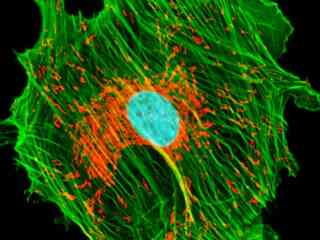
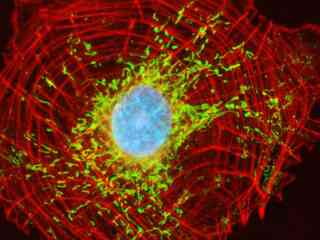
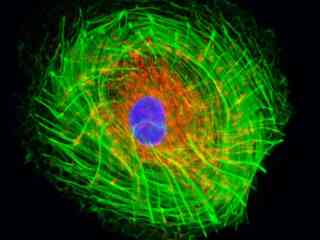
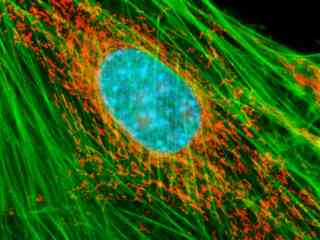
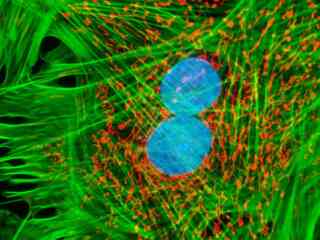
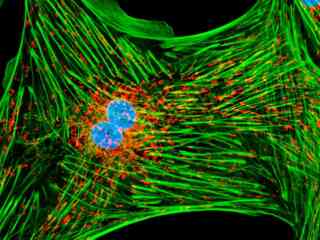
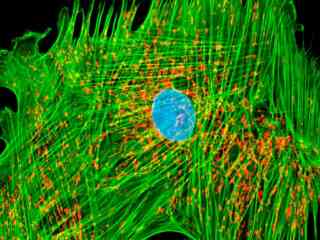
The intracellular relationship between the cytoskeletal filamentous actin network and mitochondria present in a culture of CV-1 fibroblast cells (illustrated above) was visualized with the use of the probes Alexa Fluor 488 conjugated to phalloidin (yielding green fluorescence emission) and MitoTracker Red CMXRos. Cell nuclei were counterstained with DAPI (blue emission). Images were recorded in grayscale with a 12-bit digital camera coupled to either a Nikon E-600 or Eclipse 80i microscope equipped with bandpass emission fluorescence filter optical blocks. During the processing stage, individual image channels were pseudocolored with RGB values corresponding to each of the fluorophore emission spectral profiles.
-
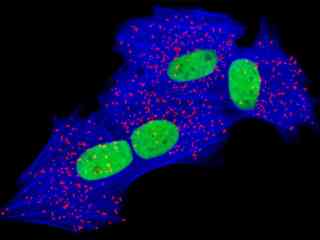
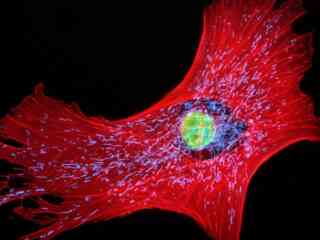
Normal African Green Monkey Kidney Fibroblast Cells (CV-1 Line)
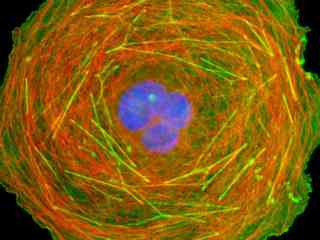
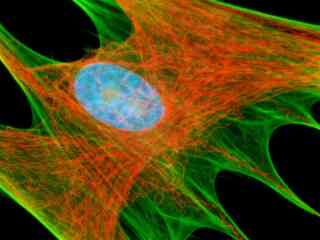
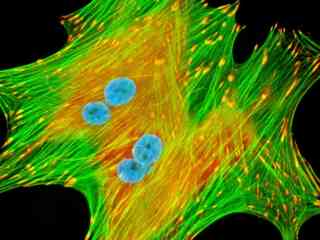
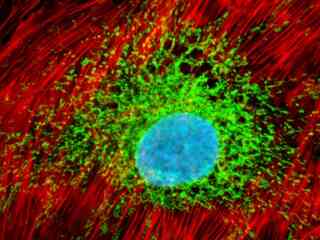
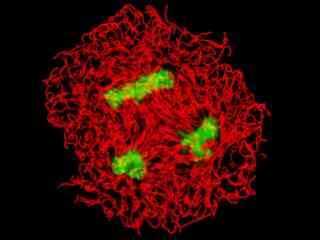
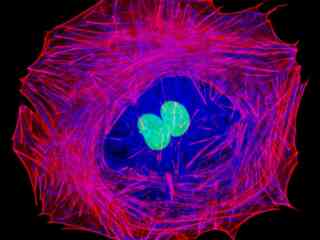
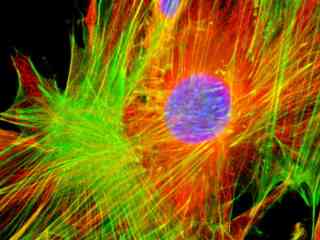
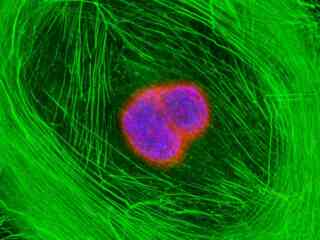
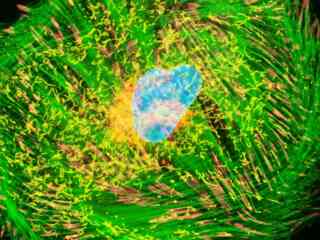
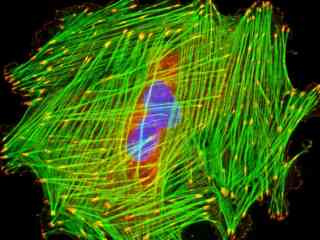
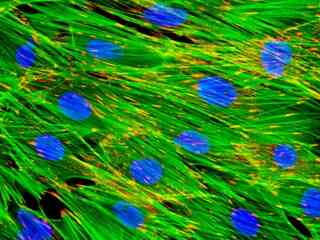
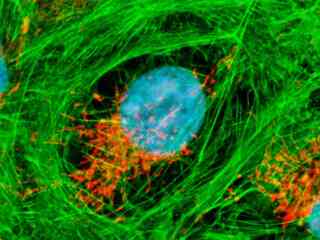
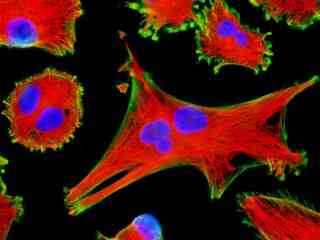
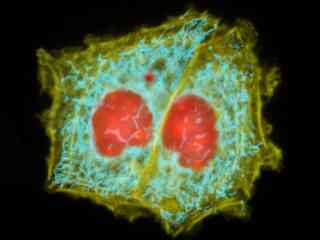
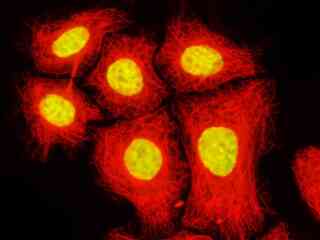
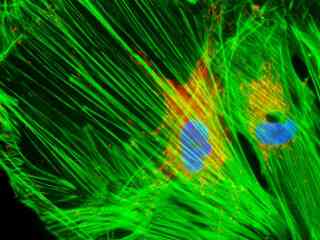
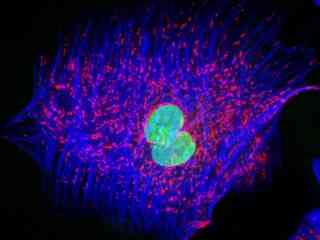
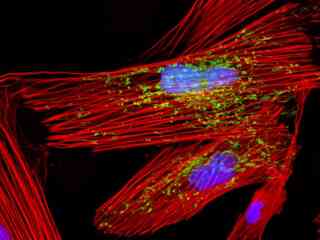
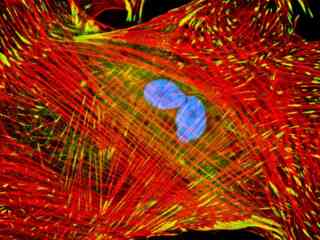
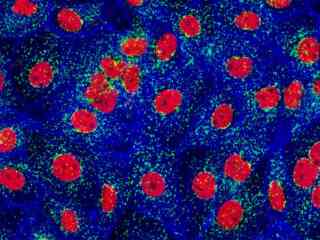
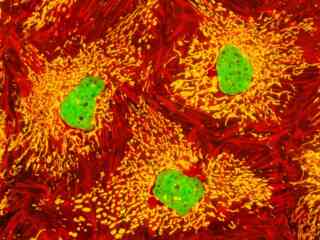
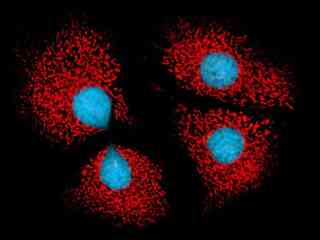
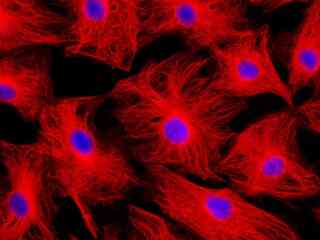
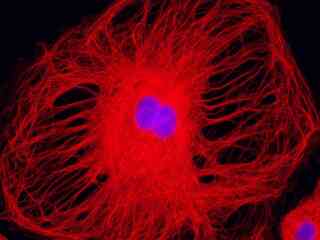
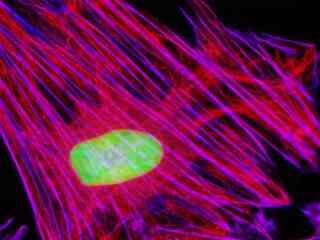
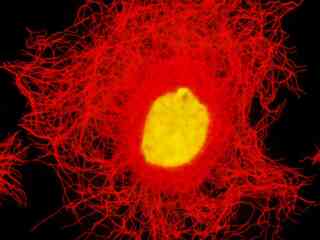
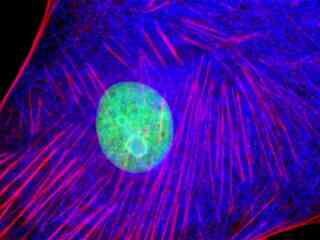
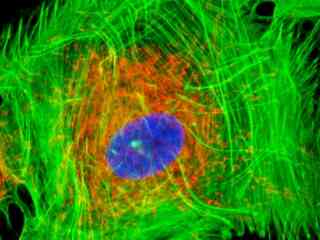
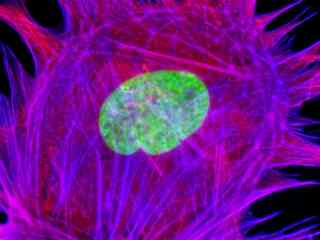
The culture of African green monkey kidney cells presented in the digital image above was immunofluorescently labeled with primary anti-tubulin mouse monoclonal antibodies followed by goat anti-mouse secondary antibody fragments (Fab) conjugated to Rhodamine Red-X. In addition, the specimen was subsequently counterstained for DNA in the cell nucleus with DAPI. Images were recorded in grayscale with a 12-bit digital camera coupled to either a Nikon E-600 or Eclipse 80i microscope equipped with bandpass emission fluorescence filter optical blocks. During the processing stage, individual image channels were pseudocolored with RGB values corresponding to each of the fluorophore emission spectral profiles.
-
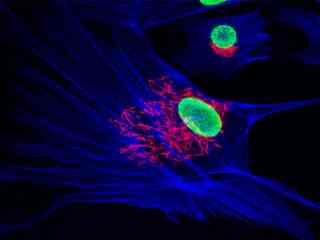
Normal African Green Monkey Kidney Fibroblast Cells (CV-1 Line)
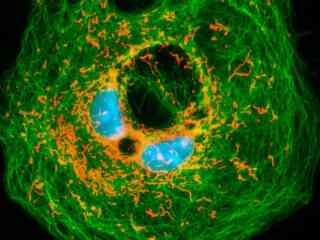
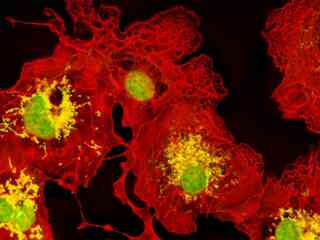
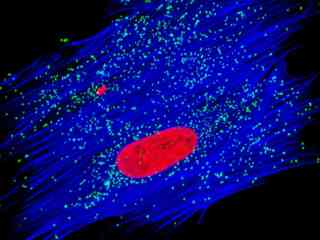
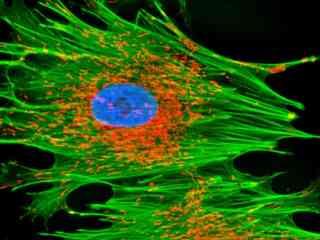
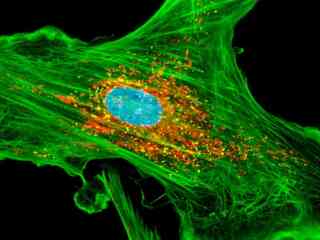
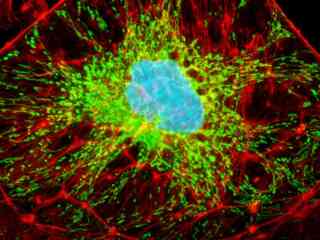
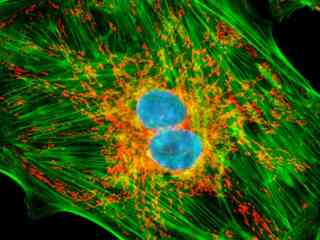
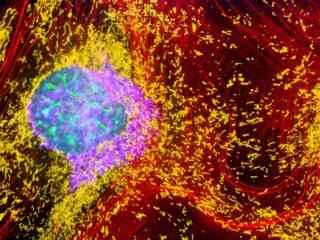
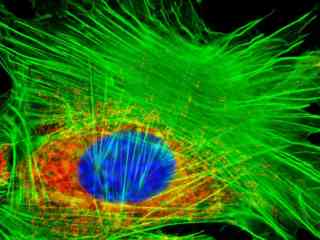
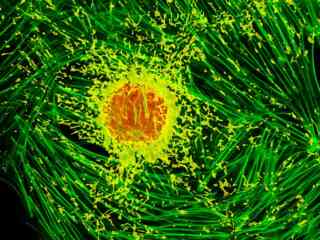
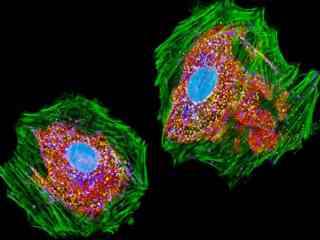
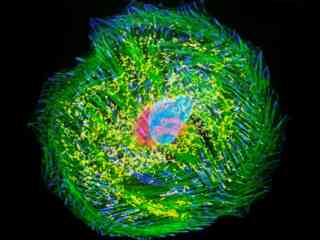
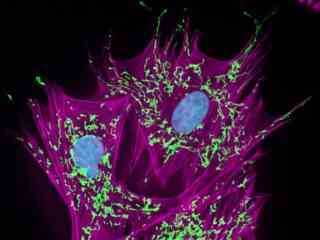
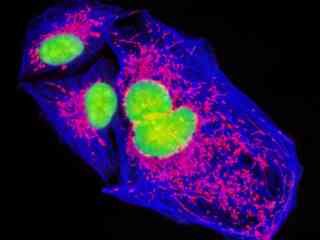
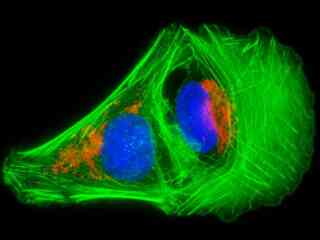
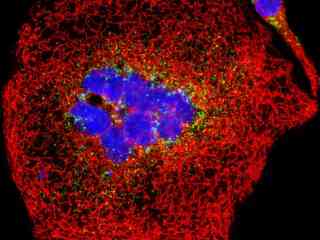
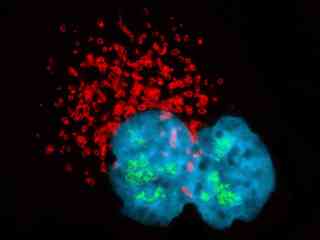
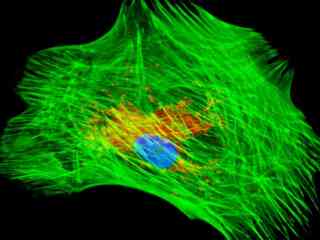
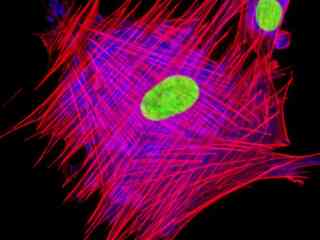
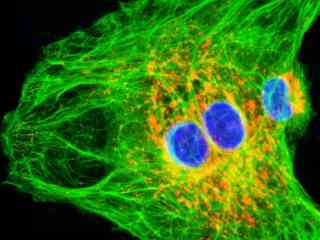
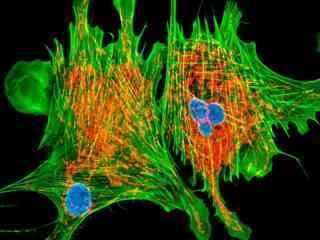
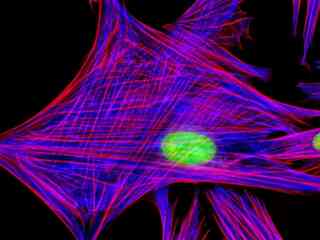
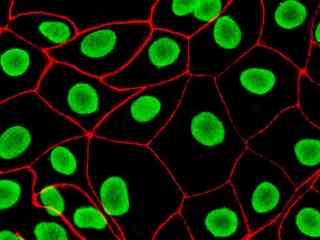
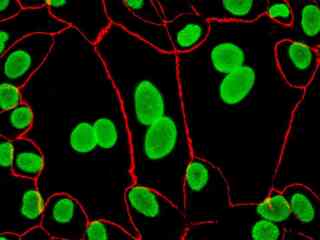
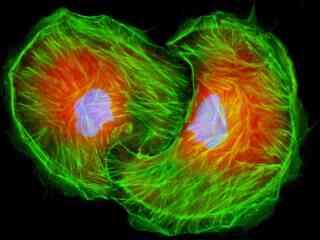
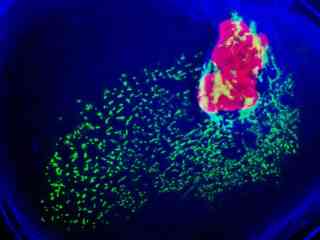
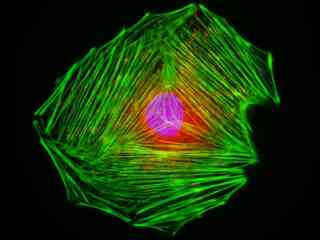
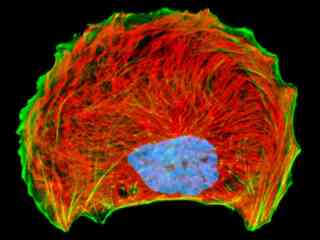
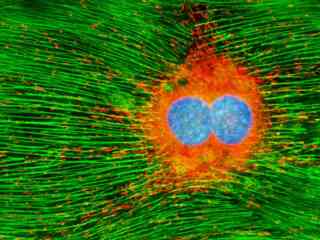
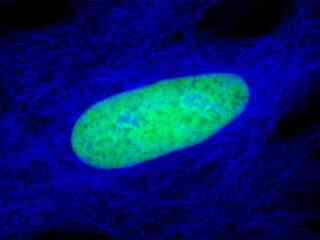
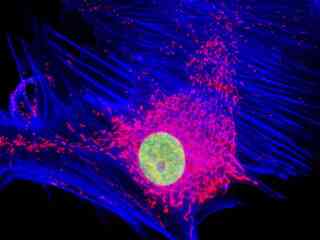
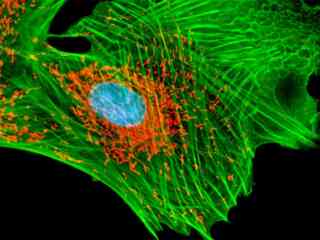
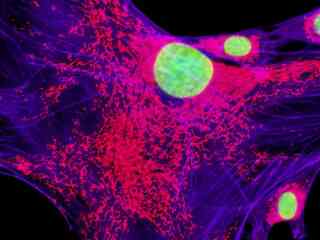
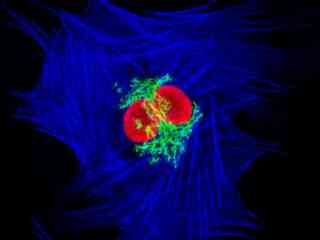
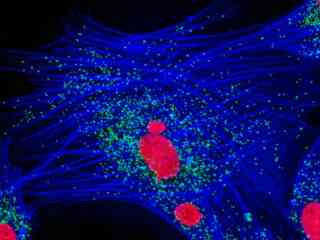
The culture of African green monkey kidney (CV-1) cells that is presented in the digital image above was labeled with SYTOX Green and Alexa Fluor 350 conjugated to phalloidin, which target nuclear DNA and filamentous actin, respectively. The specimen was also stained for mitochondria with MitoTracker Red CMXRos. Images were recorded in grayscale with a 12-bit digital camera coupled to either a Nikon E-600 or Eclipse 80i microscope equipped with bandpass emission fluorescence filter optical blocks. During the processing stage, individual image channels were pseudocolored with RGB values corresponding to each of the fluorophore emission spectral profiles.
-
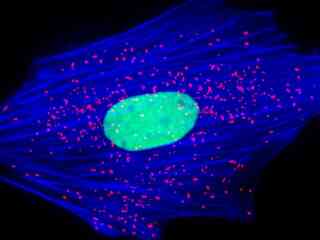
Normal African Green Monkey Kidney Fibroblast Cells (CV-1 Line)
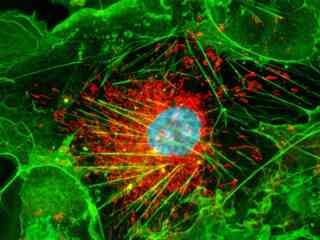
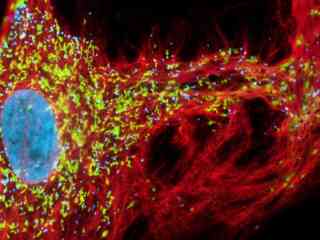
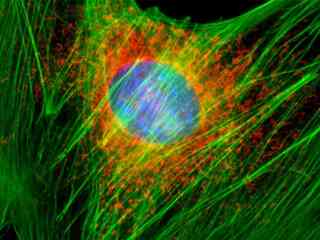
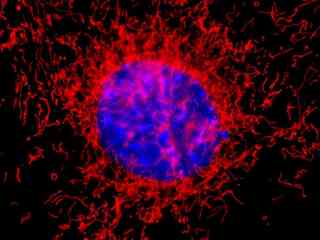
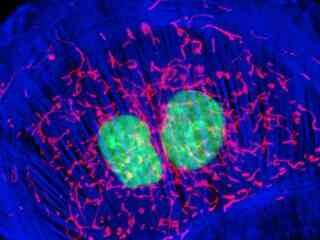
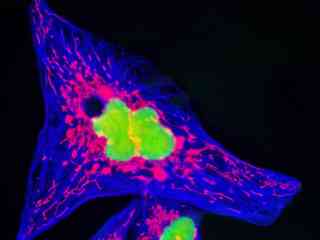
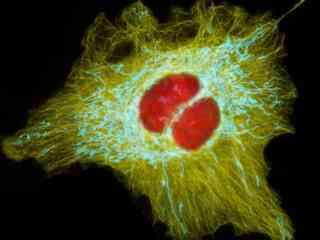
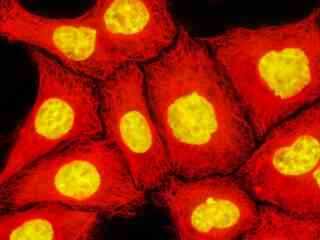
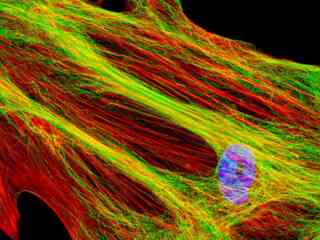
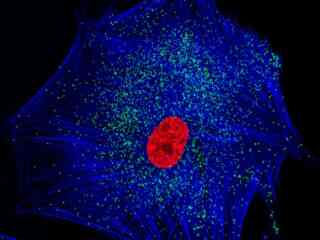
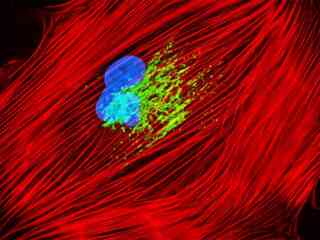
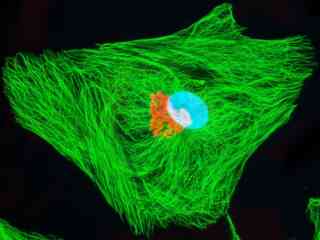
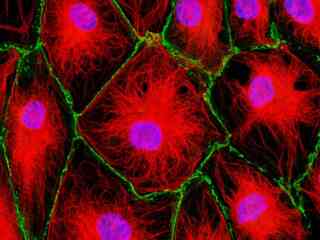
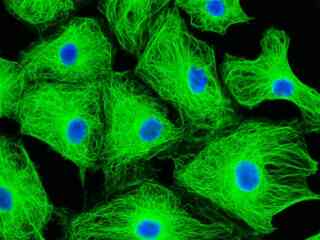
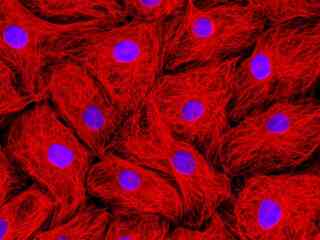
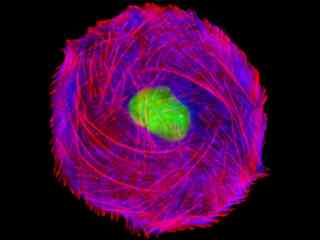
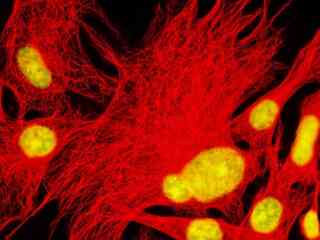
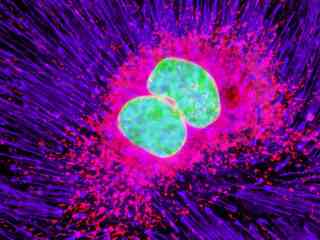
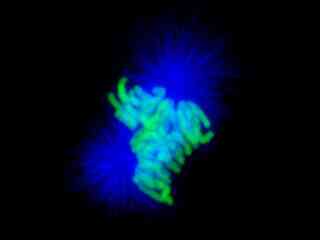
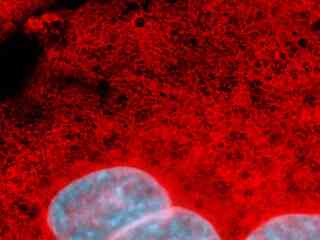
The microtubules present in the log phase culture of CV-1 cells featured in the digital image presented above were immunofluorescently labeled with primary anti-tubulin mouse monoclonal antibodies followed by goat anti-mouse Fab fragments conjugated to Rhodamine Red-X. In addition, the culture was stained with Hoechst 33258, which selectively binds to DNA in cell nuclei. Images were recorded in grayscale with a 12-bit digital camera coupled to either a Nikon E-600 or Eclipse 80i microscope equipped with bandpass emission fluorescence filter optical blocks. During the processing stage, individual image channels were pseudocolored with RGB values corresponding to each of the fluorophore emission spectral profiles.
-
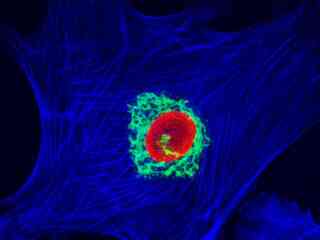
Normal African Green Monkey Kidney Fibroblast Cells (CV-1 Line)
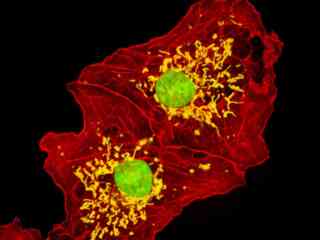
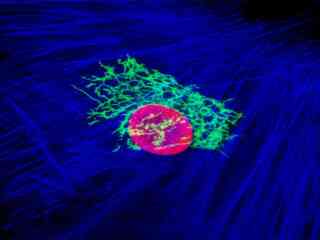
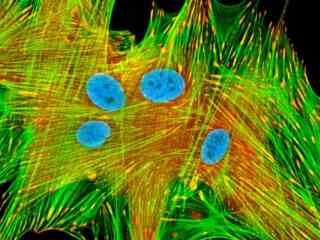
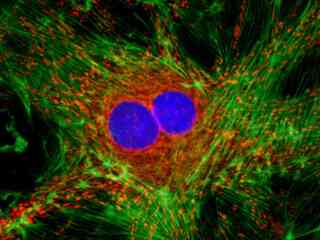
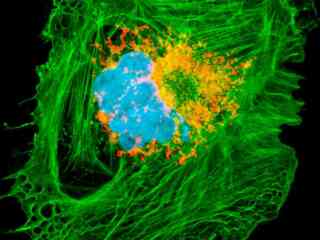
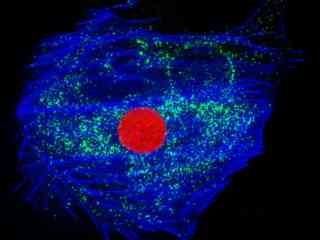
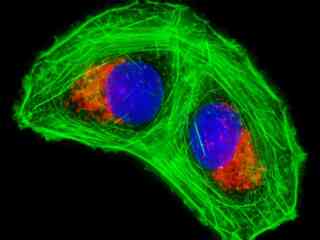
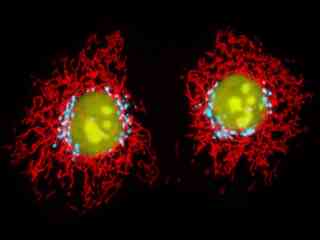
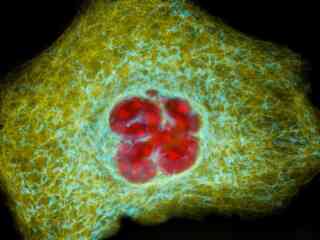
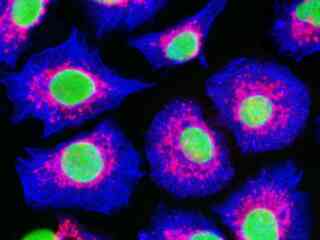
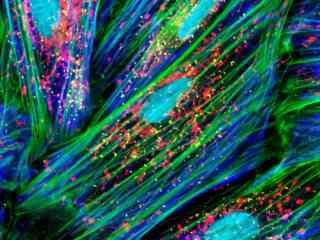
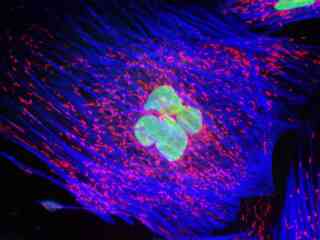
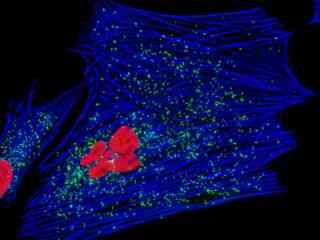
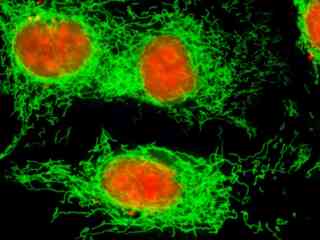
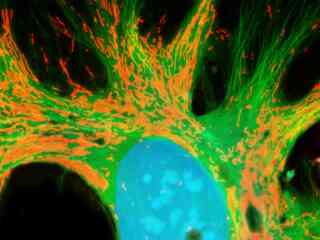
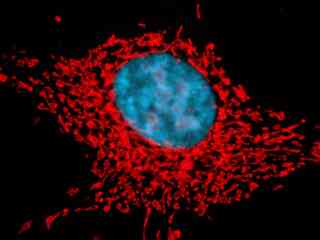
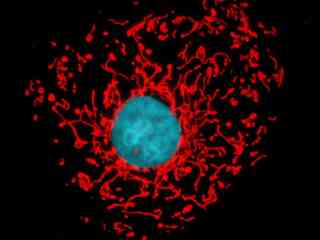
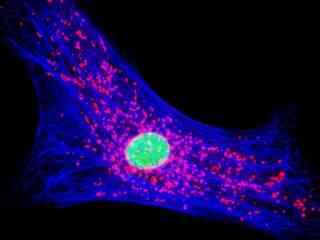
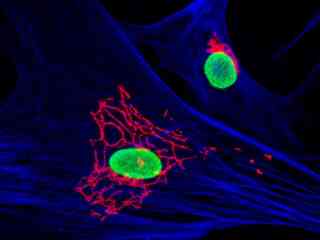
The mitochondria present in the culture of monkey kidney cells (CV-1 line) featured in the digital image above were fluorescently labeled with MitoTracker Red CMXRos, a derivative of X-rosamine. In addition, the culture was labeled for the cytoskeletal F-actin network and DNA in the cell nucleus with Alexa Fluor 633 conjugated to phalloidin and SYTOX Green, respectively. Images were recorded in grayscale with a 12-bit digital camera coupled to either a Nikon E-600 or Eclipse 80i microscope equipped with bandpass emission fluorescence filter optical blocks. During the processing stage, individual image channels were pseudocolored with RGB values corresponding to each of the fluorophore emission spectral profiles with the exception of Alexa Fluor 633, which was pseudocolored blue.
-
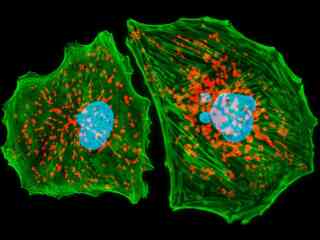
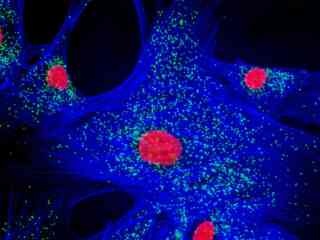
Normal African Green Monkey Kidney Fibroblast Cells (CV-1 Line)
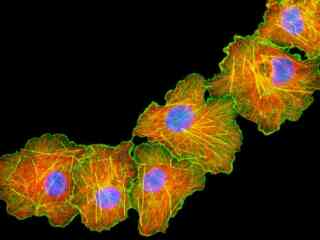
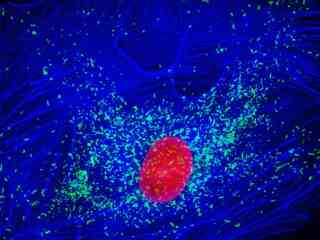
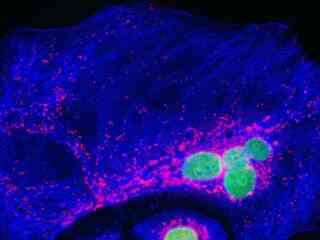
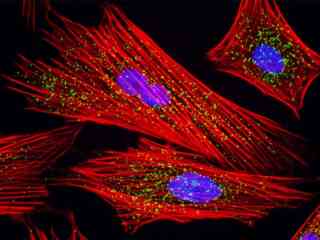
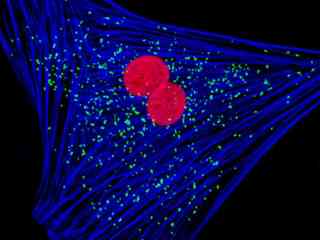
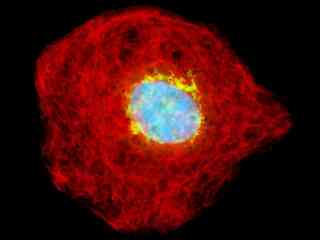
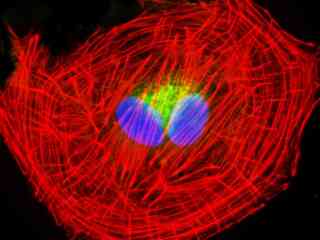
In order to visualize lectin binding to the Golgi complex in CV-1 cells, the adherent culture illustrated above was treated with wheat germ agglutinin conjugated to Oregon Green 488. The cells were subsequently counterstained with Alexa Fluor 568 conjugated to phalloidin to localize the filamentous actin network, and the nucleic acid stain DAPI to label DNA in the nucleus. Images were recorded in grayscale with a 12-bit digital camera coupled to either a Nikon E-600 or Eclipse 80i microscope equipped with bandpass emission fluorescence filter optical blocks. During the processing stage, individual image channels were pseudocolored with RGB values corresponding to each of the fluorophore emission spectral profiles.
Transformed (Simian Virus 40) African Green Monkey Kidney Fibroblast Cells (COS-1 Line)
COS-1 is a transformed cell line that was developed by Yakov Gluzman from the CV-1 line. Two other similarly transformed lines, COS-3 and COS-7, were also initiated from the CV-1 line by Gluzman. The COS-1 cell line was produced via transformation of the previously established line with an origin defective mutant of simian virus 40 (SV40) that codes for wild type large tumor antigen (T antigen). Integrated into COS-1 cells is a copy of the entire early region of the SV40 genome.
-
Transformed (Simian Virus 40) African Green Monkey Kidney Fibroblast Cells (COS-1 Line)
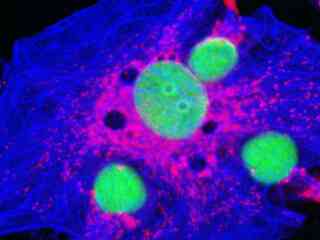
The transformed African green monkey kidney cells presented in the digital image above were resident in an adherent culture immunofluorescently labeled with Alexa Fluor 488 and Alexa Fluor 568 conjugated to goat secondary antibodies that target mouse anti-fibrillarin (nucleoli) and rabbit anti-giantin (targeting the Golgi complex) primary antibodies, respectively. Nuclei were stained with Hoechst 33258. Images were recorded in grayscale with a 12-bit digital camera coupled to either a Nikon E-600 or Eclipse 80i microscope equipped with bandpass emission fluorescence filter optical blocks. During the processing stage, individual image channels were pseudocolored with RGB values corresponding to each of the fluorophore emission spectral profiles.
-
Transformed (Simian Virus 40) African Green Monkey Kidney Fibroblast Cells (COS-1 Line)
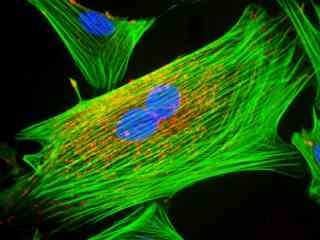
The intracellular relationship between mitochondria and the filamentous actin network was visualized in a culture of COS-1 fibroblasts (illustrated above) with MitoTracker Red CMXRos and Alexa Fluor 488 conjugated to phalloidin. Cell nuclei were counterstained with Hoechst 33342. Images were recorded in grayscale with a 12-bit digital camera coupled to either a Nikon E-600 or Eclipse 80i microscope equipped with bandpass emission fluorescence filter optical blocks. During the processing stage, individual image channels were pseudocolored with RGB values corresponding to each of the fluorophore emission spectral profiles.
-
Transformed (Simian Virus 40) African Green Monkey Kidney Fibroblast Cells (COS-1 Line)
Presented in the digital image above is an adherent culture of COS-1 fibroblasts that was labeled with Alexa Fluor 488 conjugated to soybean agglutinin, a lectin that selectively binds terminal alpha- and beta-N-acetylgalactosamine and galactopyranosyl residues. In addition, the cells were labeled with Texas Red conjugated to phalloidin and DAPI, targeting the cytoskeletal F-actin network and DNA, respectively. Images were recorded in grayscale with a 12-bit digital camera coupled to either a Nikon E-600 or Eclipse 80i microscope equipped with bandpass emission fluorescence filter optical blocks. During the processing stage, individual image channels were pseudocolored with RGB values corresponding to each of the fluorophore emission spectral profiles.
Transformed (Simian Virus 40) African Green Monkey Kidney Fibroblast Cells (COS-7 Line)
The COS-7 cell line is a line developed from the standard CV-1 African green monkey kidney line by transforming the normal cells with an origin defective mutant of simian virus 40 that codes for the wild-type large tumor antigen. COS-7 cells exhibit fibroblast morphology and are often utilized in transfection experiments. COS-7 cells fully permit the lytic growth of SV40 and the replication of populations of SV40 mutants with deletions in the early region.
-
Transformed (Simian Virus 40) African Green Monkey Kidney Fibroblast Cells (COS-7 Line)
The culture of transformed monkey kidney cells (COS-7 line) that is presented in the digital image above was labeled with SYTOX Orange and Alexa Fluor 488 conjugated to phalloidin, which target DNA and F-actin, respectively. In addition, the mitochondria were stained with MitoTracker Deep Red 633. Images were recorded in grayscale with a 12-bit digital camera coupled to either a Nikon E-600 or Eclipse 80i microscope equipped with bandpass emission fluorescence filter optical blocks. During the processing stage, individual image channels were pseudocolored with RGB values corresponding to each of the fluorophore emission spectral profiles with the exception of MitoTracker Deep Red 633, which was pseudocolored blue.
-
Transformed (Simian Virus 40) African Green Monkey Kidney Fibroblast Cells (COS-7 Line)
The microtubule network was visualized in the culture of transformed African green monkey kidney fibroblast cells (COS-7) displayed in the digital image above via immunofluorescent labeling with primary anti-tubulin mouse monoclonal antibodies followed by goat anti-mouse Fab fragments conjugated to Cy3. In addition, F-actin and cell nuclei were targeted with Alexa Fluor 488 conjugated to phalloidin and DAPI, respectively. Images were recorded in grayscale with a 12-bit digital camera coupled to either a Nikon E-600 or Eclipse 80i microscope equipped with bandpass emission fluorescence filter optical blocks. During the processing stage, individual image channels were pseudocolored with RGB values corresponding to each of the fluorophore emission spectral profiles.
-
Transformed (Simian Virus 40) African Green Monkey Kidney Fibroblast Cells (COS-7 Line)
Presented in the digital image above is an adherent culture of COS-7 fibroblasts that was labeled with Oregon Green 488 conjugated to soybean agglutinin, which has saccharide binding sites that recognize and bind terminal alpha- and beta-N-acetylgalactosamine and galactopyranosyl oligosaccharides. The cells were also labeled with Alexa Fluor 568 conjugated to phalloidin and DAPI, targeting the cytoskeletal F-actin network and nuclear DNA, respectively. Images were recorded in grayscale with a 12-bit digital camera coupled to either a Nikon E-600 or Eclipse 80i microscope equipped with bandpass emission fluorescence filter optical blocks. During the processing stage, individual image channels were pseudocolored with RGB values corresponding to each of the fluorophore emission spectral profiles.
-
Transformed (Simian Virus 40) African Green Monkey Kidney Fibroblast Cells (COS-7 Line)
The culture of COS-7 fibroblasts illustrated above was transfected with chimeric EGFP and ECFP plasmid vectors that express fluorescent fusion proteins targeted at cytoplasmic actin and cell nuclei, respectively. The specimen was also transfected with a pDsRed-Mitochondria plasmid subcellular localization vector, thus localizing a red fluorescent protein tag to the intracellular mitochondrial network. Images were recorded in grayscale with a 12-bit digital camera coupled to either a Nikon E-600 or Eclipse 80i microscope equipped with bandpass emission fluorescence filter optical blocks. During the processing stage, individual image channels were pseudocolored with RGB values corresponding to each of the fluorophore emission spectral profiles.
-
Transformed (Simian Virus 40) African Green Monkey Kidney Fibroblast Cells (COS-7 Line)
The adherent COS-7 fibroblast cell culture presented in the digital image above was labeled for the cytoskeletal filamentous actin and intracellular mitochondrial networks with Alexa Fluor 546 conjugated to phalloidin and MitoTracker Deep Red 633, respectively. Nuclei present in the cells were counterstained with SYTOX Green. Images were recorded in grayscale with a 12-bit digital camera coupled to either a Nikon E-600 or Eclipse 80i microscope equipped with bandpass emission fluorescence filter optical blocks. During the processing stage, individual image channels were pseudocolored with RGB values corresponding to each of the fluorophore emission spectral profiles with the exception of MitoTracker Deep Red 633, which was pseudocolored yellow.
-
Transformed (Simian Virus 40) African Green Monkey Kidney Fibroblast Cells (COS-7 Line)
The culture of transformed African green monkey kidney cells (COS-7 line) featured in the digital image above was labeled with Alexa Fluor 350 conjugated to wheat germ agglutinin, a fluorescent lectin that selectively binds to sialic acid residues found in both mucoproteins and glycoproteins. The cells were also stained with Alexa Fluor 488 conjugated to phalloidin and the intercalating dye propidium iodide, which target the cytoskeletal filamentous actin network and nuclear DNA, respectively. Images were recorded in grayscale with a 12-bit digital camera coupled to either a Nikon E-600 or Eclipse 80i microscope equipped with bandpass emission fluorescence filter optical blocks. During the processing stage, individual image channels were pseudocolored with RGB values corresponding to each of the fluorophore emission spectral profiles.
-
Transformed (Simian Virus 40) African Green Monkey Kidney Fibroblast Cells (COS-7 Line)
The culture of COS-7 cells displayed in the digital image above was immunofluorescently labeled with primary anti-tubulin mouse monoclonal antibodies followed by goat anti-mouse Fab fragments conjugated to Cy3, targeting intracellular microtubules. The culture was also stained for nuclear DNA with the ultraviolet-absorbing probe DAPI and for filamentous actin with Alexa Fluor 488 conjugated to phalloidin. Images were recorded in grayscale with a 12-bit digital camera coupled to either a Nikon E-600 or Eclipse 80i microscope equipped with bandpass emission fluorescence filter optical blocks. During the processing stage, individual image channels were pseudocolored with RGB values corresponding to each of the fluorophore emission spectral profiles.
-
Transformed (Simian Virus 40) African Green Monkey Kidney Fibroblast Cells (COS-7 Line)
The COS-7 fibroblast cells presented in the digital image above were resident in an adherent culture stained for F-actin with Alexa Fluor 546 conjugated to phalloidin, and for DNA with SYTOX Green. The mitochondrial network was simultaneously visualized using MitoTracker Deep Red 633. Images were recorded in grayscale with a 12-bit digital camera coupled to either a Nikon E-600 or Eclipse 80i microscope equipped with bandpass emission fluorescence filter optical blocks. During the processing stage, individual image channels were pseudocolored with RGB values corresponding to each of the fluorophore emission spectral profiles with the exception of MitoTracker Deep Red 633, which was pseudocolored yellow.
-
Transformed (Simian Virus 40) African Green Monkey Kidney Fibroblast Cells (COS-7 Line)
SV40 is a small DNA tumor virus with a genome that can be readily manipulated by scientists because of its simplicity. The capsid of SV40 is spherical and has such limited space that the genome is only large enough to encode a few functions. Space restraints further require overlapping reading frames for the production of capsid proteins, meaning that the terminal nucleotide sequence of the gene for one protein also serves as the first portion of the gene for another protein. SV40 DNA also encodes the T-antigen protein, which in many primate cells normally controls the replication and packaging of the virus. In some cells, however, T-antigen can bind to p53 and Rb proteins, interfering with their ability to regulate growth and potentially causing tumors to arise in affected tissues.
African Water Mongoose Skin Fibroblast Cells (A.P. Mongoose Line)
The skin tissue of an African water mongoose (Atilax paludinosus) served as the original source of cells from which the A.P. Mongoose line was established by The Naval Biosciences Laboratory (NBL). Similar to other fibroblast lines, A.P. Mongoose cells are relatively easy to grow in culture dishes. It is widely assumed among cell biologists that the fibroblast tendency to readily grow and proliferate in vitro is linked to their function in the body, where they are extremely important for wound healing.
-
African Water Mongoose Skin Fibroblast Cells (A.P. Mongoose Line)
The adherent monolayer culture of African water mongoose cells illustrated above was fixed, permeabilized, blocked with 10-percent normal goat serum, and then treated with a cocktail of mouse anti-NPCP (nuclear pore complex protein) and rabbit anti-giantin (Golgi complex) primary antibodies followed by goat anti-mouse and anti-rabbit secondary antibodies (IgG) conjugated to Alexa Fluor 568 and Alexa Fluor 488, respectively. The filamentous actin network was counterstained with Alexa Fluor 350 conjugated to phalloidin. Images were recorded in grayscale with a 12-bit digital camera coupled to either a Nikon E-600 or Eclipse 80i microscope equipped with bandpass emission fluorescence filter optical blocks. During the processing stage, individual image channels were pseudocolored with RGB values corresponding to each of the fluorophore emission spectral profiles.
-
African Water Mongoose Skin Fibroblast Cells (A.P. Mongoose Line)
Using a popular triple-fluorophore staining technique for mitochondria, filamentous actin, and the nucleus, the log phase monolayer culture of A.P. Mongoose cells illustrated above was first treated with MitoTracker Red CMXRos for one hour, and then fixed with medium containing 3.7-percent paraformaldehyde. After permeabilization and blocking with bovine serum albumen, the cells were labeled with Alexa Fluor 488 conjugated to phalloidin and counterstained with Hoechst 33258. Images were recorded in grayscale with a 12-bit digital camera coupled to either a Nikon E-600 or Eclipse 80i microscope equipped with bandpass emission fluorescence filter optical blocks. During the processing stage, individual image channels were pseudocolored with RGB values corresponding to each of the fluorophore emission spectral profiles.
-
African Water Mongoose Skin Fibroblast Cells (A.P. Mongoose Line)
In a double immunofluorescence experiment, the adherent monolayer culture of African water mongoose fibroblast cells illustrated above was fixed, permeabilized, blocked with 10 percent normal goat serum, and treated with a cocktail of mouse anti-histones (pan) and rabbit anti-PMP 70 (peroxisomal membrane protein) primary antibodies, followed by goat anti-mouse and anti-rabbit secondary antibodies (IgG) conjugated to Texas Red and Alexa Fluor 488, respectively. The filamentous actin network was counterstained with Alexa Fluor 350 conjugated to phalloidin. Images were recorded in grayscale with a 12-bit digital camera coupled to either a Nikon E-600 or Eclipse 80i microscope equipped with bandpass emission fluorescence filter optical blocks. During the processing stage, individual image channels were pseudocolored with RGB values corresponding to each of the fluorophore emission spectral profiles.
-
African Water Mongoose Skin Fibroblast Cells (A.P. Mongoose Line)
Applying a collection of popular mitochondrial, actin, and DNA probes, the culture of A.P. Mongoose cells presented above was grown to log phase, treated with MitoTracker Red CMXRos before fixing, and then labeled with phalloidin and Hoechst 33258 after permeabilization. The red fluorescence arises from the mitochondrial dye (MitoTracker), while the phalloidin was conjugated to Alexa Fluor 488 to generate green fluorescence. Nuclei are rendered in light blue. Images were recorded in grayscale with a 12-bit digital camera coupled to either a Nikon E-600 or Eclipse 80i microscope equipped with bandpass emission fluorescence filter optical blocks. During the processing stage, individual image channels were pseudocolored with RGB values corresponding to each of the fluorophore emission spectral profiles.
-
African Water Mongoose Skin Fibroblast Cells (A.P. Mongoose Line)
The adherent culture of A.P. Mongoose cells featured above was immunofluorescently labeled with anti-vinculin mouse monoclonal primary antibodies followed by goat anti-mouse IgG secondary antibodies conjugated to Texas Red. In addition, the specimen was simultaneously stained for DNA with the ultraviolet-absorbing probe Hoechst 33258, and for the cytoskeletal filamentous actin network with Alexa Fluor 488 conjugated to phalloidin. Images were recorded in grayscale with a 12-bit digital camera coupled to either a Nikon E-600 or Eclipse 80i microscope equipped with bandpass emission fluorescence filter optical blocks. During the processing stage, individual image channels were pseudocolored with RGB values corresponding to each of the fluorophore emission spectral profiles.
-
African Water Mongoose Skin Fibroblast Cells (A.P. Mongoose Line)
The microtubule network of the adherent culture of A.P. Mongoose fibroblast cells presented in the digital image above was immunofluorescently labeled with anti-tubulin mouse monoclonal primary antibodies followed by goat anti-mouse secondary antibodies (IgG) conjugated to Alexa Fluor 568 (yielding red emission). In addition, the cells were labeled for cytoskeletal F-actin with Alexa Fluor 488 (green emission) conjugated to phalloidin, and for cell nuclei with Hoechst 33342. Images were recorded in grayscale with a 12-bit digital camera coupled to either a Nikon E-600 or Eclipse 80i microscope equipped with bandpass emission fluorescence filter optical blocks. During the processing stage, individual image channels were pseudocolored with RGB values corresponding to each of the fluorophore emission spectral profiles.
-
African Water Mongoose Skin Fibroblast Cells (A.P. Mongoose Line)
The culture of water mongoose skin fibroblast cells that is presented in the digital image above was labeled with MitoTracker Red CMXRos and Alexa Fluor 488 conjugated to phalloidin, which target mitochondria and filamentous actin, respectively. In addition, the cells were stained for nuclear DNA with Hoechst 33258. Images were recorded in grayscale with a 12-bit digital camera coupled to either a Nikon E-600 or Eclipse 80i microscope equipped with bandpass emission fluorescence filter optical blocks. During the processing stage, individual image channels were pseudocolored with RGB values corresponding to each of the fluorophore emission spectral profiles.
-
African Water Mongoose Skin Fibroblast Cells (A.P. Mongoose Line)
Focal adhesions were visualized in the log phase adherent monolayer culture of African water mongoose cells illustrated above by immunofluorescent treatment with mouse anti-vinculin primary antibodies followed by goat anti-mouse Fab fragments conjugated to Texas Red. The actin cytoskeletal network was simultaneously imaged with Alexa Fluor 488 conjugated to phalloidin, and nuclei were counterstained with Hoechst 33258. Images were recorded in grayscale with a 12-bit digital camera coupled to either a Nikon E-600 or Eclipse 80i microscope equipped with bandpass emission fluorescence filter optical blocks. During the processing stage, individual image channels were pseudocolored with RGB values corresponding to each of the fluorophore emission spectral profiles.
-
African Water Mongoose Skin Fibroblast Cells (A.P. Mongoose Line)
The close proximity between the Golgi complex and nuclei in African water mongoose cells (illustrated above) was probed in a double immunofluorescence experiment with mouse anti-NPCP (nuclear pore complex protein) and rabbit anti-giantin primary antibodies. The antibody targets were visualized with goat secondary antibodies conjugated to Alexa Fluor 568 and Alexa Fluor 488, respectively, while the actin cytoskeletal framework was labeled with Alexa Fluor 350 conjugated to phalloidin. Images were recorded in grayscale with a 12-bit digital camera coupled to either a Nikon E-600 or Eclipse 80i microscope equipped with bandpass emission fluorescence filter optical blocks. During the processing stage, individual image channels were pseudocolored with RGB values corresponding to each of the fluorophore emission spectral profiles.
-
African Water Mongoose Skin Fibroblast Cells (A.P. Mongoose Line)
A culture of water mongoose fibroblast cells (illustrated above) was immunofluorescently labeled with primary anti-vinculin mouse monoclonal antibodies followed by goat anti-mouse Fab fragments conjugated to Texas Red. Vinculin is a protein associated with the cytoplasmic face of focal adhesions. In addition, the fixed and permeabilized culture was counterstained for DNA with the probe Hoechst 33258, and for the cytoskeletal filamentous actin network with Alexa Fluor 488 conjugated to phalloidin. Images were recorded in grayscale with a 12-bit digital camera coupled to either a Nikon E-600 or Eclipse 80i microscope equipped with bandpass emission fluorescence filter optical blocks. During the processing stage, individual image channels were pseudocolored with RGB values corresponding to each of the fluorophore emission spectral profiles.
-
African Water Mongoose Skin Fibroblast Cells (A.P. Mongoose Line)
The peroxisome organelles present in the African water mongoose cell culture (APM line) shown above were immunofluorescently labeled with Alexa Fluor 750 conjugated to rabbit secondary antibody fragments directed against rabbit primary antibodies to peroxisomal membrane protein 70 (PMP 70), a major peroxisome membrane polypeptide. In addition, the culture was treated with Alexa Fluor 488 conjugated to phalloidin and MitoTracker Red CMXRos, targeting cytoskeletal F-actin and the mitochondrial network, respectively. Hoechst 33342 was employed as a nuclear counterstain. Images were recorded in grayscale with a 12-bit digital camera coupled to a Nikon Eclipse 80i microscope equipped with bandpass emission fluorescence filter optical blocks. During the processing stage, individual image channels were pseudocolored with RGB values corresponding to each of the fluorophore emission spectral profiles, with the exception of Alexa Fluor 750, which was pseudocolored yellow.
-
African Water Mongoose Skin Fibroblast Cells (A.P. Mongoose Line)
In a double immunofluorescence experiment, an adherent culture of APM fibroblasts was fixed, permeabilized, blocked with 10-percent normal goat serum, and then treated with a cocktail of mouse anti-vimentin and rabbit anti-PMP 70 (peroxisomal membrane protein 70) primary antibodies followed by goat anti-mouse and anti-rabbit secondary antibodies (IgG) conjugated to Alexa Fluor 647 and Alexa Fluor 750, respectively. The mitochondrial network was also targeted with MitoTracker Red CMXRos and cell nuclei were counterstained with Hoechst 33342. Images were recorded in grayscale with a 12-bit digital camera coupled to a Nikon Eclipse 80i microscope equipped with bandpass emission fluorescence filter optical blocks. During the processing stage, the image channel for Hoechst 33342 was pseudocolored with an RGB value corresponding to its fluorophore emission spectral profile, while the image channels for Alexa Fluor 750, Alexa Fluor 647, and MitoTracker Red CMXRos were pseudocolored cyan, red, and green, respectively.
Bovine Pulmonary Artery Endothelial Cells (BPAE Line)
The BPAE cell line was established in the late 1970s from tissue excised from the main stem of the pulmonary artery of a young cow (Bos taurus). The cells exhibit endothelial morphology and are widely used in studies relating to hypertension, atherosclerosis, and coronary heart disease. BPAE cells are positive for angiotensin converting enzyme (ACE), a substance closely associated with the control of blood pressure and volume. The cells have also tested positive for bovine diarrhea virus, an important bovine viral pathogen.
-
Bovine Pulmonary Artery Endothelial Cells (BPAE Line)
Applying a popular triple fluorophore technique, the BPAE cell culture presented above was stained with MitoTracker Red CMXRos, DAPI, and Alexa Fluor 488 conjugated to phalloidin, which target the mitochondrial network, nuclear DNA, and F-actin, respectively. Images were recorded in grayscale with a 12-bit digital camera coupled to either a Nikon E-600 or Eclipse 80i microscope equipped with bandpass emission fluorescence filter optical blocks. During the processing stage, individual image channels were pseudocolored with RGB values corresponding to each of the fluorophore emission spectral profiles.
-
Bovine Pulmonary Artery Endothelial Cells (BPAE Line)
Presented in the digital image above is an adherent culture of BPAE cells that was labeled with Alexa Fluor 488 conjugated to soybean agglutinin, a lectin isolated from Glycine max that selectively binds terminal alpha- and beta-N-acetylgalactosamine and galactopyranosyl residues. In addition, the cells were labeled with Texas Red conjugated to phalloidin and DAPI, targeting the cytoskeletal F-actin network and DNA, respectively. Images were recorded in grayscale with a 12-bit digital camera coupled to either a Nikon E-600 or Eclipse 80i microscope equipped with bandpass emission fluorescence filter optical blocks. During the processing stage, individual image channels were pseudocolored with RGB values corresponding to each of the fluorophore emission spectral profiles.
-
Bovine Pulmonary Artery Endothelial Cells (BPAE Line)
The intracellular mitochondrial network of the culture of bovine pulmonary artery endothelial cells appearing in the digital image above was stained with MitoTracker Red CMXRos. The specimen was also labeled for filamentous actin and DNA with Alexa Fluor 488 (green emission) conjugated to phalloidin and DAPI (blue emission), respectively. Images were recorded in grayscale with a 12-bit digital camera coupled to either a Nikon E-600 or Eclipse 80i microscope equipped with bandpass emission fluorescence filter optical blocks. During the processing stage, individual image channels were pseudocolored with RGB values corresponding to each of the fluorophore emission spectral profiles.
-
Bovine Pulmonary Artery Endothelial Cells (BPAE Line)
Alexa Fluor 488 conjugated to soybean agglutinin, a lectin isolated from Glycine max, was utilized to immunofluorescently label terminal alpha- and beta-N-acetylgalactosamine and galactopyranosyl residues in a culture of bovine pulmonary artery endothelial cells. The specimen was also stained with Texas Red conjugated to phalloidin and DAPI to visualize filamentous actin and cell nuclei, respectively. Images were recorded in grayscale with a 12-bit digital camera coupled to either a Nikon E-600 or Eclipse 80i microscope equipped with bandpass emission fluorescence filter optical blocks. During the processing stage, individual image channels were pseudocolored with RGB values corresponding to each of the fluorophore emission spectral profiles.
-
Bovine Pulmonary Artery Endothelial Cells (BPAE Line)
The culture of BPAE cells illustrated above was labeled for the cytoskeletal filamentous actin network with Alexa Fluor 488 conjugated to phalloidin, and for the cell nucleus with Hoechst 33342. Additionally, cellular mitochondria were stained with MitoTracker Red CMXRos, a complex aminated xanthene derivative. Images were recorded in grayscale with a 12-bit digital camera coupled to either a Nikon E-600 or Eclipse 80i microscope equipped with bandpass emission fluorescence filter optical blocks. During the processing stage, individual image channels were pseudocolored with RGB values corresponding to each of the fluorophore emission spectral profiles.
-
Bovine Pulmonary Artery Endothelial Cells (BPAE Line)
When present in the body, endothelial cells are usually elongate in shape and arranged with their long axes in parallel orientation with the blood flow direction. Two different types of connections, known as gap junctions and tight junctions, link the cells closely together. Adjacent endothelial cells are able to communicate via gap junctions, which allow small molecules and ions to pass directly from one cell to another. Tight junctions, however, function as barriers to the diffusion of most molecules. A tight junction forms a band around the entire circumference of a cell.
-
Bovine Pulmonary Artery Endothelial Cells (BPAE Line)
The bovine pulmonary artery endothelial cells that appear in the digital image above were resident in a BPAE cell culture that was stained with MitoTracker Red CMXRos, Alexa Fluor 488 conjugated to phalloidin, and Hoechst 33342, which target the mitochondrial network, filamentous actin, and DNA in the nucleus, respectively. Images were recorded in grayscale with a 12-bit digital camera coupled to a Nikon Eclipse 80i microscope equipped with bandpass emission fluorescence filter optical blocks. During the processing stage, individual image channels were pseudocolored with RGB values corresponding to each of the fluorophore emission spectral profiles.
Chinese Hamster Ovary Cells (CHO-K1 Line)
CHO-K1 is a cell line that was derived as a subclone from the parental CHO cell line established from the excised tissue of adult Chinese hamster ovary by T. T. Puck in 1957. Unlike the original CHO line, CHO-K1 cells require proline in the medium for growth in culture. Often utilized as a transfection host, the CHO-K1 line is susceptible to a number of viruses including vesicular stomatitis (Indiana strain) and the Getah virus. CHO-K1 cells are resistant to poliovirus 2, Modoc virus, and button willow virus. The cells, which exhibit typical epithelial cell characteristics and grow adherently to plastic and glass in culture, are negative for reverse transcriptase.
-
Chinese Hamster Ovary Cells (CHO-K1 Line)
MitoTracker Orange CMTM Ros was utilized to fluorescently label the active mitochondria in a culture of Chinese hamster ovary cells (illustrated above). The specimen was additionally labeled with Oregon Green 488 conjugated to phalloidin and Hoechst 33258 to visualize the intracellular F-actin network and nuclear DNA, respectively. Images were recorded in grayscale with a 12-bit digital camera coupled to either a Nikon E-600 or Eclipse 80i microscope equipped with bandpass emission fluorescence filter optical blocks. During the processing stage, individual image channels were pseudocolored with RGB values corresponding to each of the fluorophore emission spectral profiles.
-
Chinese Hamster Ovary Cells (CHO-K1 Line)
A culture of CHO-K1 cells (illustrated above) was labeled with a triplet of fluorophores, including MitoTracker Orange CMTM Ros, Oregon Green 488, and Hoechst 33258. The Oregon Green probe was conjugated to phalloidin in order to target filamentous actin. Images were recorded in grayscale with a 12-bit digital camera coupled to either a Nikon E-600 or Eclipse 80i microscope equipped with bandpass emission fluorescence filter optical blocks. During the processing stage, individual image channels were pseudocolored with RGB values corresponding to each of the fluorophore emission spectral profiles.
Embryonic Swiss Mouse Fibroblast Cells (3T3 Line)
The 3T3 line was initiated in the early 1960s by George Todaro and Howard Green from the tissue of an albino Swiss mouse embryo. The cells, which are heavily utilized in biomedical research laboratories around the world, exhibit contact inhibited motility and generally tend to form confluent monolayers. Testing has established that most variants of the initial 3T3 cell line are susceptible to polyoma and simian virus 40 (SV40). The cells are known to be negative for the mousepox virus and for the enzyme reverse transcriptase.
-
Embryonic Swiss Mouse Fibroblast Cells (3T3 Line)
The embryonic Swiss mouse fibroblast cell culture presented in the digital image above was immunofluorescently labeled with mouse anti-alpha-tubulin primary antibodies followed by goat anti-mouse secondary antibodies conjugated to Alexa Fluor 405. In addition, the culture was stained with Texas Red conjugated to phalloidin and SYTOX Green, targeting the filamentous actin network and nuclei, respectively. Images were recorded in grayscale with a 12-bit digital camera coupled to either a Nikon E-600 or Eclipse 80i microscope equipped with bandpass emission fluorescence filter optical blocks. During the processing stage, individual image channels were pseudocolored with RGB values corresponding to each of the fluorophore emission spectral profiles.
-
Embryonic Swiss Mouse Fibroblast Cells (3T3 Line)
The 3T3 fibroblast cell culture featured above was fixed, permeabilized, washed, and blocked with 10-percent normal goat serum in phosphate-buffered saline prior to immunofluorescent labeling with rabbit primary antibodies to giantin, a protein resident in the Golgi complex of mammalian cells, and mouse primary antibodies to fibrillarin, a component of a nucleolar small nuclear ribonucleoprotein (SnRNP). The culture was subsequently stained with a mixture of secondary antibodies conjugated to Alexa Fluor 750 to visualize the giantin and Alexa Fluor 488 (green) to visualize the fibrillarin. In addition, mitochondria were labeled with MitoTracker Deep Red 633, the filamentous actin network was counterstained with Alexa Fluor 568 (red) conjugated to phalloidin, and nuclei were targeted with Hoechst 33258 (blue). Images were recorded in grayscale with a 12-bit digital camera coupled to either a Nikon E-600 or Eclipse 80i microscope equipped with bandpass emission fluorescence filter optical blocks. During the processing stage, individual image channels were pseudocolored with RGB values corresponding to each of the fluorophore emission spectral profiles with the exception of MitoTracker Deep Red 633, which was pseudocolored yellow, and Alexa Fluor 750, which was pseudocolored purple.
-
Embryonic Swiss Mouse Fibroblast Cells (3T3 Line)
The fibroblast cells that appear in the digital image above were resident in a 3T3 cell culture that was stained with MitoTracker Red CMXRos, DAPI, and Alexa Fluor 488 conjugated to phalloidin, which target the mitochondrial network, nuclear DNA, and filamentous actin, respectively. Images were recorded in grayscale with a 12-bit digital camera coupled to either a Nikon E-600 or Eclipse 80i microscope equipped with bandpass emission fluorescence filter optical blocks. During the processing stage, individual image channels were pseudocolored with RGB values corresponding to each of the fluorophore emission spectral profiles.
-
Embryonic Swiss Mouse Fibroblast Cells (3T3 Line)
Nuclear histone proteins were targeted in the culture of Swiss mouse fibroblasts presented above with mouse anti-histone (pan) monoclonal antibodies, which were imaged with goat anti-mouse Fab fragments conjugated to Alexa Fluor 568 (labeling the nucleus). The specimen was simultaneously labeled for peroxisomes with Alexa Fluor 488 conjugated to goat secondary antibodies that target rabbit anti-PMP 70 (peroxisomal membrane protein 70). Alexa Fluor 350 conjugated to phalloidin was utilized to counterstain the cytoskeletal F-actin network. Images were recorded in grayscale with a 12-bit digital camera coupled to either a Nikon E-600 or Eclipse 80i microscope equipped with bandpass emission fluorescence filter optical blocks. During the processing stage, individual image channels were pseudocolored with RGB values corresponding to each of the fluorophore emission spectral profiles.
-
Embryonic Swiss Mouse Fibroblast Cells (3T3 Line)
The culture of 3T3 cells featured in the image above was labeled for peroxisomes with Rhodamine Red conjugated to goat secondary antibodies that target rabbit anti-PMP 70 (peroxisomal membrane protein 70). The culture was additionally labeled with Alexa Fluor 488 conjugated to phalloidin and Hoechst 33258, targeting filamentous actin and the nucleus, respectively. Images were recorded in grayscale with a 12-bit digital camera coupled to either a Nikon E-600 or Eclipse 80i microscope equipped with bandpass emission fluorescence filter optical blocks. During the processing stage, individual image channels were pseudocolored with RGB values corresponding to each of the fluorophore emission spectral profiles.
-
Embryonic Swiss Mouse Fibroblast Cells (3T3 Line)
The 3T3 cell culture appearing in the digital image above was immunofluorescently labeled with primary anti-tubulin mouse monoclonal antibodies followed by goat anti-mouse Fab fragments conjugated to Cy3. The fibroblast cells were also stained with DAPI, which preferentially binds to nuclear DNA, and Alexa Fluor 488 conjugated to phalloidin to target the F-actin network. Images were recorded in grayscale with a 12-bit digital camera coupled to either a Nikon E-600 or Eclipse 80i microscope equipped with bandpass emission fluorescence filter optical blocks. During the processing stage, individual image channels were pseudocolored with RGB values corresponding to each of the fluorophore emission spectral profiles.
-
Embryonic Swiss Mouse Fibroblast Cells (3T3 Line)
The culture of embryonic Swiss mouse fibroblast cells presented in the digital image above was labeled with MitoTracker Red CMXRos and Alexa Fluor 488 conjugated to phalloidin, targeting the mitochondrial network and filamentous actin, respectively. The culture was counterstained for DNA in the cell nucleus with DAPI. Images were recorded in grayscale with a 12-bit digital camera coupled to either a Nikon E-600 or Eclipse 80i microscope equipped with bandpass emission fluorescence filter optical blocks. During the processing stage, individual image channels were pseudocolored with RGB values corresponding to each of the fluorophore emission spectral profiles.
-
Embryonic Swiss Mouse Fibroblast Cells (3T3 Line)
The 3T3 cell culture presented above was immunofluorescently labeled with mouse anti-alpha-tubulin primary antibodies followed by goat anti-mouse secondary antibodies conjugated to the cyanine dye Cy3. In addition, filamentous actin in the culture was targeted with Alexa Fluor 488 conjugated to phalloidin and cell nuclei were labeled with DAPI. Images were recorded in grayscale with a 12-bit digital camera coupled to either a Nikon E-600 or Eclipse 80i microscope equipped with bandpass emission fluorescence filter optical blocks. During the processing stage, individual image channels were pseudocolored with RGB values corresponding to each of the fluorophore emission spectral profiles.
-
Embryonic Swiss Mouse Fibroblast Cells (3T3 Line)
The log phase culture of 3T3 cells illustrated above was fixed, permeabilized, blocked with 10-percent normal goat serum, and then treated with mouse anti-NPCP (nuclear pore complex proteins) primary antibodies followed by secondary antibodies conjugated to Alexa Fluor 568. The secondary cocktail contained Alexa Fluor 488 conjugated to phalloidin to label the filamentous actin network, and the nuclei were counterstained with Hoechst 33342. Images were recorded in grayscale with a 12-bit digital camera coupled to either a Nikon E-600 or Eclipse 80i microscope equipped with bandpass emission fluorescence filter optical blocks. During the processing stage, individual image channels were pseudocolored with RGB values corresponding to each of the fluorophore emission spectral profiles.
-
Embryonic Swiss Mouse Fibroblast Cells (3T3 Line)
The culture of embryonic Swiss mouse fibroblast cells that is presented in the digital image above was labeled with SYTOX Orange and Alexa Fluor 488 conjugated to phalloidin to target nuclear DNA and filamentous actin, respectively. In addition, mitochondria were labeled with MitoTracker Deep Red 633. Images were recorded in grayscale with a 12-bit digital camera coupled to either a Nikon E-600 or Eclipse 80i microscope equipped with bandpass emission fluorescence filter optical blocks. During the processing stage, individual image channels were pseudocolored with RGB values corresponding to each of the fluorophore emission spectral profiles with the exception of MitoTracker Deep Red 633, which was pseudocolored yellow.
-
Embryonic Swiss Mouse Fibroblast Cells (3T3 Line)
The mitochondrial network and nuclear DNA were imaged in a culture of 3T3 fibroblast cells with MitoTracker Red CMXRos and Hoechst 33258, respectively. Images were recorded in grayscale with a 12-bit digital camera coupled to either a Nikon E-600 or Eclipse 80i microscope equipped with bandpass emission fluorescence filter optical blocks. During the processing stage, individual image channels were pseudocolored with RGB values corresponding to each of the fluorophore emission spectral profiles.
Embryonic Rat Thoracic Aorta Medial Layer Myoblast Cells (A-10 Line)
The myoblast cell line A-10 was established from tissue excised from the medial layer of the thoracic aorta of a rat embryo (Rattus norvegicus; DB1X strain). A-10 cells are frequently utilized in medical research, especially in studies of hypertension and other conditions and diseases potentially associated with smooth muscle cells. When cultures of the cells reach the stationary phase of the growth cycle, they produce spontaneous action potentials and experience increased enzymatic activity of myokinase and creatine phosphokinase. The cellular products of A-10 cells also include myosin, the protein that provides the elastic and contractile properties of muscle.
-
Embryonic Rat Thoracic Aorta Medial Layer Myoblast Cells (A-10 Line)
The A-10 myoblast cells presented in the digital image above were resident in an adherent culture stained for F-actin with Alexa Fluor 488 conjugated to phalloidin (green fluorescence), and for nuclear DNA with the bis-benzimidazole dye Hoechst 33258 (blue fluorescence). In addition, the culture was immunofluorescently labeled with Alexa Fluor 568 conjugated to goat secondary antibodies that target mouse anti-PDI (protein disulfide isomerase) primary antibodies (red fluorescence). Images were recorded in grayscale with a 12-bit digital camera coupled to either a Nikon E-600 or Eclipse 80i microscope equipped with bandpass emission fluorescence filter optical blocks. During the processing stage, individual image channels were pseudocolored with RGB values corresponding to each of the fluorophore emission spectral profiles.
-
Embryonic Rat Thoracic Aorta Medial Layer Myoblast Cells (A-10 Line)
In a double immunofluorescence experiment, the adherent monolayer culture of rat thoracic aorta cells illustrated above was fixed, permeabilized, blocked with 10 percent normal goat serum, and treated with a cocktail of mouse anti-PDI (protein disulfide isomerase) and rabbit anti-PMP 70 (peroxisomal membrane protein) primary antibodies, followed by goat anti-mouse and anti-rabbit secondary antibodies (IgG) conjugated to Alexa Fluor 568 (red fluorescence) and Alexa Fluor 750, respectively. The filamentous actin network was counterstained with Alexa Fluor 488 (green fluorescence) conjugated to phalloidin, mitochondria were labeled with MitoTracker Deep Red 633, and nuclei were targeted with Hoechst 33258 (cyan fluorescence). Images were recorded in grayscale with a 12-bit digital camera coupled to either a Nikon E-600 or Eclipse 80i microscope equipped with bandpass emission fluorescence filter optical blocks. During the processing stage, individual image channels were pseudocolored with RGB values corresponding to each of the fluorophore emission spectral profiles with the exception of MitoTracker Deep Red 633, which was pseudocolored purple, and Alexa Fluor 750, which was pseudocolored yellow.
-
Embryonic Rat Thoracic Aorta Medial Layer Myoblast Cells (A-10 Line)
In a double immunofluorescence experiment, the adherent monolayer culture of rat thoracic aorta cells illustrated above was fixed, permeabilized, blocked with 10 percent normal goat serum, and treated with a cocktail of mouse anti-histones (pan) and rabbit anti-PMP 70 (peroxisomal membrane protein) primary antibodies, followed by goat anti-mouse and anti-rabbit secondary antibodies (IgG) conjugated to Texas Red and Alexa Fluor 488, respectively. The filamentous actin network was counterstained with Alexa Fluor 350 conjugated to phalloidin. Images were recorded in grayscale with a 12-bit digital camera coupled to either a Nikon E-600 or Eclipse 80i microscope equipped with bandpass emission fluorescence filter optical blocks. During the processing stage, individual image channels were pseudocolored with RGB values corresponding to each of the fluorophore emission spectral profiles.
-
Embryonic Rat Thoracic Aorta Medial Layer Myoblast Cells (A-10 Line)
Focal adhesions and the Golgi complex were visualized in an adherent monolayer culture of A-10 cells by immunofluorescent treatment with mouse anti-vinculin primary antibodies and rabbit primary antibodies to giantin (a protein resident in the Golgi complex of mammalian cells) followed by goat anti-mouse Fab fragments conjugated to Alexa Fluor 750 and goat anti-rabbit secondary antibody fragments (heavy and light chain) conjugated to Alexa Fluor 568. The actin cytoskeletal network and mitochondria were simultaneously imaged with Alexa Fluor 488 conjugated to phalloidin and MitoTracker Deep Red 633, respectively. Nuclei were counterstained with Hoechst 33258. Images were recorded in grayscale with a 12-bit digital camera coupled to either a Nikon E-600 or Eclipse 80i microscope equipped with bandpass emission fluorescence filter optical blocks. During the processing stage, individual image channels were pseudocolored with RGB values corresponding to each of the fluorophore emission spectral profiles with the exception of MitoTracker Deep Red 633, which was pseudocolored yellow, and Alexa Fluor 750, which was pseudocolored magenta.
-
Embryonic Rat Thoracic Aorta Medial Layer Myoblast Cells (A-10 Line)
The proximity of intermediate filaments and the cytoskeletal filamentous actin network was visualized by treating the fixed and permeabilized culture of rat thoracic aorta cells presented above with mouse anti-vimentin primary antibodies followed by goat anti-mouse secondary antibodies (IgG) conjugated to Texas Red-X. F-actin was subsequently labeled with Alexa Fluor 350 conjugated to phalloidin, and the nuclei were counterstained with SYTOX Green. Images were recorded in grayscale with a 12-bit digital camera coupled to either a Nikon E-600 or Eclipse 80i microscope equipped with bandpass emission fluorescence filter optical blocks. During the processing stage, individual image channels were pseudocolored with RGB values corresponding to each of the fluorophore emission spectral profiles.
-
Embryonic Rat Thoracic Aorta Medial Layer Myoblast Cells (A-10 Line)
A culture of A-10 cells was immunofluorescently labeled with primary anti-vinculin mouse monoclonal antibodies followed by goat anti-mouse Fab fragments conjugated to Cy3 (red fluorescence). In addition, the specimen was simultaneously stained for DNA with the ultraviolet-absorbing probe DAPI (blue fluorescence), and for the cytoskeletal filamentous actin network with Alexa Fluor 488 (green fluorescence) conjugated to phalloidin. Images were recorded in grayscale with a 12-bit digital camera coupled to either a Nikon E-600 or Eclipse 80i microscope equipped with bandpass emission fluorescence filter optical blocks. During the processing stage, individual image channels were pseudocolored with RGB values corresponding to each of the fluorophore emission spectral profiles.
-
Embryonic Rat Thoracic Aorta Medial Layer Myoblast Cells (A-10 Line)
The A-10 cell line was initiated from the thoracic aorta of an embryonic rat (DB1X strain) and is heavily employed in scientific research. The cells exhibit most of the characteristics of smooth muscle cells and generate a number of cellular products, including the common muscle protein myosin and the enzymes myokinase and creatine phosphokinase. When they reach the stationary phase of the growth cycle, A-10 cells produce spontaneous action potentials. Also in this phase, the activity of myokinase and creatine phosphokinase generated by the myoblasts increases.
Embryonic Rat Thoracic Aorta Smooth Muscle Fibroblast Cells (A7r5 Line)
The A7r5 fibroblast cell line was initiated from smooth muscle tissue excised from the thoracic aorta of a rat embryo (DB1X strain). Similar to other smooth muscle cells, A7r5 cells produce muscle-type isoenzymes, including myokinase and creatine phosphokinase. Activity of the isoenzymes increases when cultures of A7r5 cells reach a stationary phase. The fibroblasts also produce myosin, the protein that provides muscle with its characteristic elastic and contractile properties. Typical applications of the A7r5 line include biophysical and biochemical studies.
-
Embryonic Rat Thoracic Aorta Smooth Muscle Fibroblast Cells (A7r5 Line)
The cytoskeletal filamentous actin network was targeted in a culture of A7r5 rat thoracic aorta cells with phalloidin conjugated to Alexa Fluor 350. Phalloidin is a member of the phallotoxin group of bicyclic peptides isolated from the deadly Amanita phalloides mushroom. The cell culture was also labeled for mitochondria with MitoTracker Red CMXRos and counterstained for the nucleus with SYTOX Green. Images were recorded in grayscale with a 12-bit digital camera coupled to a Nikon Eclipse 80i microscope equipped with bandpass emission fluorescence filter optical blocks. During the processing stage, individual image channels were pseudocolored with RGB values corresponding to each of the fluorophore emission spectral profiles.
Grey Fox Lung Fibroblast Cells (FoLu Line)
The FoLu cell line was established from the lung tissue of an adult female grey fox (Urocyon cinereoargenteus). The cells are primarily used in virus studies and exhibit characteristics typically associated with fibroblasts. The FoLu line is susceptible to vesicular stomatitis, herpes simplex, and vaccinia viruses, but is resistant to poliovirus. FoLu cells are negative for reverse transcriptase, indicating their lack of integral retrovirus genomes. In culture the cells typically forming monolayers that adhere to glass or plastic surfaces.
-
Grey Fox Lung Fibroblast Cells (FoLu Line)
The culture of fox lung fibroblast cells presented in the digital image above was labeled for the mitochondrial and filamentous actin networks with MitoTracker Deep Red 633 and Alexa Fluor 568 (red fluorescence) conjugated to phalloidin, respectively. DNA in the cell nucleus was counterstained with SYTOX Green. Images were recorded in grayscale with a 12-bit digital camera coupled to either a Nikon E-600 or Eclipse 80i microscope equipped with bandpass emission fluorescence filter optical blocks. During the processing stage, individual image channels were pseudocolored with RGB values corresponding to each of the fluorophore emission spectral profiles with the exception of MitoTracker Deep Red 633, which was pseudocolored yellow.
-
Grey Fox Lung Fibroblast Cells (FoLu Line)
A triplet of fluorophores was utilized to label the culture of FoLu cells illustrated above. Alexa Fluor 488 conjugated to phalloidin, MitoTracker Deep Red 633, and SYTOX Orange, enabled the visualization of F-actin, mitochondria, and cell nuclei, respectively. Images were recorded in grayscale with a 12-bit digital camera coupled to either a Nikon E-600 or Eclipse 80i microscope equipped with bandpass emission fluorescence filter optical blocks. During the processing stage, individual image channels were pseudocolored with RGB values corresponding to each of the fluorophore emission spectral profiles with the exception of MitoTracker Deep Red 633, which was pseudocolored yellow.
Guinea Pig Colorectal Adenocarcinoma Epithelial Cells (GPC-16 Line)
GPC-16 is a cell line was developed in the early 1980s from colorectal adenocarcinoma tissue excised from a guinea pig (Cavia porcellus) that was administered 56 milligrams of N-methyl-N-nitrosourea intrarectally over a 28-week period. The cells are positive for both PAS (Periodic acid-Schiff) and for keratin by immunoperoxidase staining. GPC-16 cells are negative for reverse transcriptase, indicating an absence of integral retrovirus genomes. The epithelial cells grow adherently to both plastic and glass surfaces in culture. Studies have demonstrated that GPC-16 cells, which are often utilized in transfection experiments, are tumorigenic in murine specimens.
-
Guinea Pig Colorectal Adenocarcinoma Epithelial Cells (GPC-16 Line)
The proximity of intermediate filaments and the cytoskeletal filamentous actin network was visualized by treating the fixed and permeabilized culture of guinea pig adenocarcinoma cells (GPC-16 line) presented above with mouse anti-vimentin primary antibodies followed by goat anti-mouse secondary antibodies (IgG) conjugated to Cy3. F-actin was subsequently labeled with Coumarin conjugated to phalloidin, and the nuclei were counterstained with SYTOX Green. Images were recorded in grayscale with a 12-bit digital camera coupled to either a Nikon E-600 or Eclipse 80i microscope equipped with bandpass emission fluorescence filter optical blocks. During the processing stage, individual image channels were pseudocolored with RGB values corresponding to each of the fluorophore emission spectral profiles.
-
Guinea Pig Colorectal Adenocarcinoma Epithelial Cells (GPC-16 Line)
An adherent culture of GPC-16 epithelial cells (shown above) was treated with a cocktail of mouse anti-vimentin and rabbit anti-PMP 70 (peroxisomal membrane protein) primary antibodies, followed by goat anti-mouse and anti-rabbit secondary antibodies conjugated to Cy3 and Alexa Fluor 647, respectively, to target intermediate filaments and peroxisomes. The filamentous actin network was imaged with Coumarin conjugated to phalloidin and DNA in the cell nucleus was counterstained wit SYTOX Green. Images were recorded in grayscale with a 12-bit digital camera coupled to either a Nikon E-600 or Eclipse 80i microscope equipped with bandpass emission fluorescence filter optical blocks. During the processing stage, individual image channels were pseudocolored with RGB values corresponding to each of the fluorophore emission spectral profiles with the exception of Alexa Fluor 647, which was pseudocolored yellow.
Horse Dermal Fibroblast Cells (NBL-6 Line)
The NBL-6 cell line was initiated from the dermis of a 4-year-old female horse (Equus caballus; quarterhorse strain). NBL-6 cells demonstrate susceptibility to many viruses, including reovirus 3, herpes simplex, vesicular stomatitis (Ogden strain), and vaccinia. The cells are known to be resistant to coxsackieviruses A9 and B5, adenovirus 5, and poliovirus 2. Utilized in a wide array of research and for equine vaccine production, the NBL-6 line is especially notable for its usage in investigations of equine viral arteritis (EVA), a contagious disease that is thought to be increasingly affecting populations of horses in many countries.
-
Horse Dermal Fibroblast Cells (NBL-6 Line)
Golgi bodies in a culture of horse dermal fibroblast cells (depicted above) were immunofluorescently targeted with rabbit anti-giantin primary antibodies, followed by goat anti-rabbit secondaries conjugated to Alexa Fluor 568 (yielding red emission). Mitochondria, F-actin, and nuclei present in the culture were also labeled with MitoTracker Deep Red 633, Alexa Fluor 488 conjugated to phalloidin (green emission), and Hoechst 33258, respectively. Images were recorded in grayscale with a 12-bit digital camera coupled to either a Nikon E-600 or Eclipse 80i microscope equipped with bandpass emission fluorescence filter optical blocks. During the processing stage, individual image channels were pseudocolored with RGB values corresponding to each of the fluorophore emission spectral profiles with the exception of MitoTracker Deep Red 633, which was pseudocolored yellow, and Hoechst 33258, which was pseudocolored cyan.
-
Horse Dermal Fibroblast Cells (NBL-6 Line)
The culture of horse dermal fibroblast cells presented in the digital image above was immunofluorescently labeled with anti-vinculin mouse monoclonal primary antibodies followed by goat anti-mouse Fab fragments conjugated to Alexa Fluor 568 (yielding red emission). In addition, the specimen was stained for DNA with Hoechst 33342 (blue emission), and for the cytoskeletal filamentous actin network with Alexa Fluor 488 (green emission) conjugated to phalloidin. Images were recorded in grayscale with a 12-bit digital camera coupled to either a Nikon E-600 or Eclipse 80i microscope equipped with bandpass emission fluorescence filter optical blocks. During the processing stage, individual image channels were pseudocolored with RGB values corresponding to each of the fluorophore emission spectral profiles.
-
Horse Dermal Fibroblast Cells (NBL-6 Line)
Mitochondria and the cytoskeletal actin framework were visualized in a culture of NBL-6 cells (shown above) with MitoTracker Red CMXRos and Alexa Fluor 633 conjugated to phalloidin. Cell nuclei were counterstained with SYTOX Green. Images were recorded in grayscale with a 12-bit digital camera coupled to either a Nikon E-600 or Eclipse 80i microscope equipped with bandpass emission fluorescence filter optical blocks. During the processing stage, instead of individual image channels being pseudocolored with RGB values corresponding to each of the fluorophore emission spectral profiles, Alexa Fluor 633 was pseudocolored purple, MitoTracker Red CMXRos was pseudocolored green, and SYTOX Green was pseudocolored cyan.
Human Bone Osteosarcoma Cells (U-2 OS Line)
The U-2 OS line was established in the 1960s by J. Ponten and E. Saksela from bone tissue removed from a moderately differentiated sarcoma of the tibia found in a fifteen-year-old female diagnosed with osteosarcoma. Testing has shown that the human epithelial line is negative for simian virus 40, respiratory syncytial virus, and adenoviruses. U-2 OS cells are positive for insulin-like growth factor I (IGF-I) and insulin-like growth factor II (IGF II) receptors. The established line also expresses various antigens, including blood type A, Rh+, HLA A2, Aw30, B12, Bw35, and B40(+/-).
-
Human Bone Osteosarcoma Cells (U-2 OS Line)
The adherent culture of human osteosarcoma cells (U-2 OS line) featured in the digital image above was transfected with a pDsRed-Mitochondria plasmid subcellular localization vector, thus localizing a red fluorescent protein tag to the intracellular mitochondrial network. The culture was also immunofluorescently labeled with mouse anti-alpha-tubulin followed by a secondary antibody (goat anti-mouse IgG) conjugated to Marina Blue to target microtubules. Cell nuclei were counterstained with SYTOX Green. Images were recorded in grayscale with a 12-bit digital camera coupled to either a Nikon E-600 or Eclipse 80i microscope equipped with bandpass emission fluorescence filter optical blocks. During the processing stage, individual image channels were pseudocolored with RGB values corresponding to each of the fluorophore emission spectral profiles.
-
Human Bone Osteosarcoma Cells (U-2 OS Line)
The proximity of the intracellular mitochondrial and filamentous actin networks was visualized in a culture of human osteosarcoma cells (illustrated above) with MitoTracker Red CMXRos and Alexa Fluor 488 conjugated to phalloidin. DNA in the cell nucleus was counterstained with 4',6-diamidino-2-phenylindole (DAPI). Images were recorded in grayscale with a 12-bit digital camera coupled to either a Nikon E-600 or Eclipse 80i microscope equipped with bandpass emission fluorescence filter optical blocks. During the processing stage, individual image channels were pseudocolored with RGB values corresponding to each of the fluorophore emission spectral profiles.
-
Human Bone Osteosarcoma Cells (U-2 OS Line)
The mitochondrion-selective stain MitoTracker Red CMXRos was utilized to label the mitochondrial network in a culture of U-2 OS cells (illustrated above), and the popular cell-permeant nuclear counterstain Hoechst 33342 was used to label cell nuclei. In addition, filamentous actin was targeted with Alexa Fluor 488 conjugated to phalloidin. Images were recorded in grayscale with a 12-bit digital camera coupled to either a Nikon E-600 or Eclipse 80i microscope equipped with bandpass emission fluorescence filter optical blocks. During the processing stage, individual image channels were pseudocolored with RGB values corresponding to each of the fluorophore emission spectral profiles.
-
Human Bone Osteosarcoma Cells (U-2 OS Line)
Immunofluorescence, a subcellular localization vector, and a classic nucleic acid stain were utilized to triple label the culture of U-2 OS cells presented in the digital image above. The specimen was transfected with a pDsRed-Mitochondria plasmid localization vector to localize a red fluorescent protein tag to the intracellular mitochondrial network and was treated with mouse anti-alpha-tubulin followed by a secondary goat anti-mouse antibody conjugated to Marina Blue to target the microtubule network. Cell nuclei were counterstained with SYTOX Green. Images were recorded in grayscale with a 12-bit digital camera coupled to either a Nikon E-600 or Eclipse 80i microscope equipped with bandpass emission fluorescence filter optical blocks. During the processing stage, individual image channels were pseudocolored with RGB values corresponding to each of the fluorophore emission spectral profiles.
-
Human Bone Osteosarcoma Cells (U-2 OS Line)
The culture of osteosarcoma cells (U-2 OS line) depicted in the digital image above was labeled with MitoTracker Red CMXRos (red emission) and Alexa Fluor 488 (green emission) conjugated to phalloidin, targeting the mitochondrial network and the cytoskeletal actin framework, respectively. The culture was counterstained with DAPI, which fluoresces blue upon binding to AT regions of DNA (labeling the nucleus). Images were recorded in grayscale with a 12-bit digital camera coupled to either a Nikon E-600 or Eclipse 80i microscope equipped with bandpass emission fluorescence filter optical blocks. During the processing stage, individual image channels were pseudocolored with RGB values corresponding to each of the fluorophore emission spectral profiles.
-
Human Bone Osteosarcoma Cells (U-2 OS Line)
The relationship between the F-actin cytoskeletal framework and the mitochondrial network was visualized in the culture of human osteosarcoma cells presented in the digital image above with the green fluorescent dye Alexa Fluor 488 conjugated to phalloidin and MitoTracker Red CMXRos, respectively. DNA in the cell nucleus was targeted with Hoechst 33342. Images were recorded in grayscale with a 12-bit digital camera coupled to either a Nikon E-600 or Eclipse 80i microscope equipped with bandpass emission fluorescence filter optical blocks. During the processing stage, individual image channels were pseudocolored with RGB values corresponding to each of the fluorophore emission spectral profiles.
-
Human Bone Osteosarcoma Cells (U-2 OS Line)
F-actin, mitochondria, and cell nuclei were fluorescently labeled in the culture of U-2 OS cells presented in the digital image above with MitoTracker Red CMXRos, Alexa Fluor 488 conjugated to phalloidin, and DAPI, respectively. Images were recorded in grayscale with a 12-bit digital camera coupled to either a Nikon E-600 or Eclipse 80i microscope equipped with bandpass emission fluorescence filter optical blocks. During the processing stage, individual image channels were pseudocolored with RGB values corresponding to each of the fluorophore emission spectral profiles.
Human Brain Glioma Cells (U-118 MG Line)
U-118 MG is a cell line that was developed from the tissue of a malignant glioma excised from a 50-year-old Caucasian male. The line exhibits mixed morphology, with both glioblastoma and astrocytoma cells being present in U-118 MG cultures. Laboratory tests have demonstrated that U-118 MG cells are tumorigenic in murine species when they are inoculated with the cells subcutaneously. In the 1980s, mycoplasma contamination of major stocks of the line was detected and subsequently eliminated by treatment with BM-cycline. Another cell line, dubbed U-138 MG, is nearly identical to the U-118 MG line though the cells were reportedly developed from distinct sources.
-
Human Brain Glioma Cells (U-118 MG Line)
The U-118 MG glioma cells presented in the digital image above were resident in a culture that was immunofluorescently labeled with anti-tubulin mouse monoclonal primary antibodies followed by goat anti-mouse Fab fragments conjugated to Texas Red. In addition, the specimen was stained with Alexa Fluor 488 conjugated to phalloidin and Hoechst 33342, targeting the cytoskeletal filamentous actin network and DNA in the cell nucleus, respectively. Images were recorded in grayscale with a 12-bit digital camera coupled to either a Nikon E-600 or Eclipse 80i microscope equipped with bandpass emission fluorescence filter optical blocks. During the processing stage, individual image channels were pseudocolored with RGB values corresponding to each of the fluorophore emission spectral profiles.
Human Cervical Adenocarcinoma Cells (HeLa Line)
A well known cell line, HeLa was initiated in the early 1950s from a tissue sample excised from the adenocarcinoma of the cervix. HeLa cells revolutionized the field of cell biology by becoming the first human cells able to survive indefinitely in culture. The HeLa cervical adenocarcinoma cell line tests positive for keratin and lysophosphatidylcholine (lyso-PC), which induces AP-1 activity and c-jun N-terminal kinase activity (JNK1) via a protein kinase C-independent pathway. The cells are also known to contain human papilloma virus 18 (HPV-18) sequences.
-
Human Cervical Adenocarcinoma Cells (HeLa Line)
A log phase culture of HeLa cells was transfected with three chimeric plasmid subcellular localization vectors (DsRed2-Mitochondria, ECFP-Golgi Complex, and EYFP-Nucleus), thus localizing a red protein tag to the intracellular mitochondrial network, a cyan tag to Golgi bodies, and a yellow tag to cell nuclei. Images were recorded in grayscale with a 12-bit digital camera coupled to either a Nikon E-600 or Eclipse 80i microscope equipped with bandpass emission fluorescence filter optical blocks. During the processing stage, individual image channels were pseudocolored with RGB values corresponding to each of the fluorophore emission spectral profiles.
-
Human Cervical Adenocarcinoma Cells (HeLa Line)
The HeLa cell culture illustrated above was transfected with a chimeric ECFP (enhanced cyan fluorescent protein) plasmid vector that expresses a fluorescent fusion protein targeted at mitochondria and an EYFP (enhanced yellow fluorescent protein) plasmid vector that expresses a protein targeted at tubulin. The cells were also transfected with a recombinant plasmid vector containing a chimeric fusion gene product of DsRed2 fluorescent protein and a nucleus targeting sequence. Images were recorded in grayscale with a 12-bit digital camera coupled to either a Nikon E-600 or Eclipse 80i microscope equipped with bandpass emission fluorescence filter optical blocks. During the processing stage, individual image channels were pseudocolored with RGB values corresponding to each of the fluorophore emission spectral profiles.
-
Human Cervical Adenocarcinoma Cells (HeLa Line)
The adherent culture of human carcinoma cells presented in the digital image above was transfected with a triplet of chimeric plasmid subcellular localization vectors. DsRed2, ECFP, and EYFP plasmid vectors were utilized to localize the nucleus, mitochondria, and actin, respectively. Images were recorded in grayscale with a 12-bit digital camera coupled to either a Nikon E-600 or Eclipse 80i microscope equipped with bandpass emission fluorescence filter optical blocks. During the processing stage, individual image channels were pseudocolored with RGB values corresponding to each of the fluorophore emission spectral profiles.
-
Human Cervical Adenocarcinoma Cells (HeLa Line)
The human adenocarcinoma cell culture featured in the digital image above was transfected with an EGFP-peroxisomal targeting signal 1 (PTS1) fusion protein and stained with MitoTracker Red CMXRos. These fluorescent probes target peroxisomes and mitochondria, respectively. The visible light absorption maximum of the EGFP-PTS1 chimera is 488 nanometers and the emission maximum occurs at 507 nanometers. In addition, the specimen was simultaneously stained with Hoechst 33342 (targeting the DNA in the nucleus; blue emission). Images were recorded in grayscale with a 12-bit digital camera coupled to either a Nikon E-600 or Eclipse 80i microscope equipped with bandpass emission fluorescence filter optical blocks. During the processing stage, individual image channels were pseudocolored with RGB values corresponding to each of the fluorophore emission spectral profiles.
-
Human Cervical Adenocarcinoma Cells (HeLa Line)
Transient transfection of a log phase culture of HeLa cells (illustrated above) with multiple chimeric plasmid subcellular localization vectors (DsRed2-Nucleus, ECFP-Mitochondria, and EYFP-Tubulin) enabled the localization of a red protein tag to the cell nuclei, a cyan tag to the intracellular network of mitochondria, and a yellow tag to microtubules. Images were recorded in grayscale with a 12-bit digital camera coupled to either a Nikon E-600 or Eclipse 80i microscope equipped with bandpass emission fluorescence filter optical blocks. During the processing stage, individual image channels were pseudocolored with RGB values corresponding to each of the fluorophore emission spectral profiles.
-
Human Cervical Adenocarcinoma Cells (HeLa Line)
The human cervical adenocarcinoma cells (HeLa) appearing in the digital image above were resident in a culture immunofluorescently labeled with anti-tubulin mouse monoclonal primary antibodies followed by goat anti-mouse secondary antibody fragments conjugated to Alexa Fluor 568. The culture was counterstained with TO-PRO-3, targeting the nucleus. Images were recorded in grayscale with a 12-bit digital camera coupled to either a Nikon E-600 or Eclipse 80i microscope equipped with bandpass emission fluorescence filter optical blocks. During the processing stage, individual image channels were pseudocolored with RGB values corresponding to each of the fluorophore emission spectral profiles.
-
Human Cervical Adenocarcinoma Cells (HeLa Line)
Nuclei and the intracellular mitochondria and microtubule networks were localized in the HeLa carcinoma cell culture presented in the digital image above, which was transiently transfected with a chimeric ECFP plasmid vector that expresses a fluorescent fusion protein targeted at mitochondria and an EYFP plasmid vector that expresses a protein targeted at tubulin. The cells were also transfected with a recombinant plasmid vector containing a chimeric fusion gene product of DsRed2 fluorescent protein and a nucleus targeting sequence. Images were recorded in grayscale with a 12-bit digital camera coupled to either a Nikon E-600 or Eclipse 80i microscope equipped with bandpass emission fluorescence filter optical blocks. During the processing stage, individual image channels were pseudocolored with RGB values corresponding to each of the fluorophore emission spectral profiles.
-
Human Cervical Adenocarcinoma Cells (HeLa Line)
A culture of HeLa cervical carcinoma cells (presented above) was simultaneously transfected with three chimeric plasmid subcellular localization vectors. DsRed2, ECFP, and EYFP plasmid vectors were utilized to localize the nucleus, mitochondria, and actin, respectively. Images were recorded in grayscale with a 12-bit digital camera coupled to either a Nikon E-600 or Eclipse 80i microscope equipped with bandpass emission fluorescence filter optical blocks. During the processing stage, individual image channels were pseudocolored with RGB values corresponding to each of the fluorophore emission spectral profiles.
-
Human Cervical Adenocarcinoma Cells (HeLa Line)
HeLa cells are virulent and grow rapidly, reproducing an entire generation about once every 24 hours. In the 1970s, it was discovered that HeLa cells had invaded many other cell lines, invalidating millions of dollars of research carried out on a different type of cell than previously thought. Testing has revealed human papilloma virus 18 (HPV-18) sequences contained in HeLa cells, which express low levels of the tumor suppressor protein p53. Levels of pRB, a retinoblastoma supressor protein, have been found to be normal. Cellular products of HeLa cells include keratin and lysophosphatidylcholine.
-
Human Cervical Adenocarcinoma Cells (HeLa Line)
An adherent culture of human cervical adenocarcinoma cells (HeLa line) was fixed, permeabilized, treated with sodium borohydride to reduce unreacted aldehydes, and then blocked with 10-percent normal goat serum in phosphate buffered saline before treatment with anti-tubulin mouse monoclonal primary antibodies followed by goat anti-mouse secondary antibody fragments conjugated to Alexa Fluor 568. The culture was counterstained with TO-PRO-3, targeting the nucleus. Images were recorded in grayscale with a 12-bit digital camera coupled to either a Nikon E-600 or Eclipse 80i microscope equipped with bandpass emission fluorescence filter optical blocks. During the processing stage, individual image channels were pseudocolored with RGB values corresponding to each of the fluorophore emission spectral profiles.
Human Cortical Neuronal Cells (HCN-1A Line)
The HCN-1A cell line is a human cortical neuronal line that was initiated from tissue excised from a young female patient whose treatment for intractable seizures included a hemispherectomy. The cells are commonly utilized to model neuronal processes for scientific study. HCN-1A cells test positive for somatostatin, glutamate, neuron specific enolase, tubulin, vimentin, gamma aminobutyric acid, vasoactive intestinal peptide, and cholecystokinin-8, but are negative for glial fibrillary acidic protein and myelin basis protein. By culturing the cortical neuronal cells with a cocktail of nerve growth factor, dibutyryl cyclic adenosine monophosphate, and 1-isobutyl-3-methylxanthine, their differentiation can be induced. When HCN-1A cells differentiate, they assume mature morphology and their growth rate slows considerably.
-
Human Cortical Neuronal Cells (HCN-1A Line)
Immunofluorescence with mouse anti-alpha-tubulin was employed to visualize distribution of the microtubule network in the human cortical neuronal cell culture illustrated above. The secondary antibody (goat anti-mouse IgG) was conjugated to Cy2 and mixed with Alexa Fluor 568 conjugated to phalloidin to simultaneously image tubulin and the actin cytoskeleton. Nuclei were counterstained with Hoechst 33258. Images were recorded in grayscale with a 12-bit digital camera coupled to either a Nikon E-600 or Eclipse 80i microscope equipped with bandpass emission fluorescence filter optical blocks. During the processing stage, individual image channels were pseudocolored with RGB values corresponding to each of the fluorophore emission spectral profiles.
-
Human Cortical Neuronal Cells (HCN-1A Line)
Three fluorophores and a phallotoxin were utilized to triple label the culture of HCN-1A cells shown in the digital image above. Mitochondria were targeted with MitoTracker Red CMXRos, the cytoskeletal F-actin network was localized with Alexa Fluor 488 conjugated to phalloidin, and DNA in the cell nucleus was counterstained with Hoechst 33258. Images were recorded in grayscale with a 12-bit digital camera coupled to either a Nikon E-600 or Eclipse 80i microscope equipped with bandpass emission fluorescence filter optical blocks. During the processing stage, individual image channels were pseudocolored with RGB values corresponding to each of the fluorophore emission spectral profiles.
-
Human Cortical Neuronal Cells (HCN-1A Line)
The culture of human cortical neuronal cells presented in the digital image above was labeled with MitoTracker Red CMXRos and Alexa Fluor 488 conjugated to phalloidin to target the mitochondrial network and filamentous actin, respectively. The culture was counterstained for DNA in the cell nucleus with Hoechst 33258. Images were recorded in grayscale with a 12-bit digital camera coupled to either a Nikon E-600 or Eclipse 80i microscope equipped with bandpass emission fluorescence filter optical blocks. During the processing stage, individual image channels were pseudocolored with RGB values corresponding to each of the fluorophore emission spectral profiles.
-
Human Cortical Neuronal Cells (HCN-1A Line)
Mitochondria and filamentous actin in the culture of HCN-1A cells presented in the digital image above were simultaneously labeled with MitoTracker Red CMXRos and Alexa Fluor 488 conjugated to phalloidin, respectively. Nuclear DNA was counterstained with Hoechst 33258. Images were recorded in grayscale with a 12-bit digital camera coupled to either a Nikon E-600 or Eclipse 80i microscope equipped with bandpass emission fluorescence filter optical blocks. During the processing stage, individual image channels were pseudocolored with RGB values corresponding to each of the fluorophore emission spectral profiles.
-
Human Cortical Neuronal Cells (HCN-1A Line)
The monolayer human cortical neuronal cell culture presented in the digital image above was labeled for the cytoskeletal filamentous actin and intracellular mitochondrial networks with Alexa Fluor 488 conjugated to phalloidin and MitoTracker Red CMXRos, respectively. Nuclei present in the cells were counterstained with the DNA-selective bisbenzimide dye, Hoechst 33258. Images were recorded in grayscale with a 12-bit digital camera coupled to either a Nikon E-600 or Eclipse 80i microscope equipped with bandpass emission fluorescence filter optical blocks. During the processing stage, individual image channels were pseudocolored with RGB values corresponding to each of the fluorophore emission spectral profiles.
Human Fetal Lung Fibroblast Cells (MRC-5 Line)
The MRC-5 cell line was developed by J. P. Jacobs in the mid-1960s from the pulmonary tissue of an aborted 14-week-old male human fetus. The fibroblast line exhibits adherent growth to glass and polymer culture dishes and can double in population size more than 40 times before senescence occurs. MRC-5 cells are negative for reverse transcriptase and are known to be susceptible to a number of viruses, including herpes simplex, vesicular stomatitis (Indiana strain), and poliovirus 1. The MRC-5 line is a popular cell line often used in a variety of applications, such as virology-related transfection experiments, cytotoxicity assessments, and the development of vaccines.
-
Human Fetal Lung Fibroblast Cells (MRC-5 Line)
The culture of human fetal lung fibroblast cells presented above was stained with Alexa Fluor 350 conjugated to the lectin concanavalin A, which selectively binds to alpha-mannopyranosyl and alpha-glucopyranosyl residues (primarily in the endoplasmic reticulum). Alexa Fluor 568 conjugated to phalloidin and SYTOX Green were also used to label the culture, targeting filamentous actin and nuclear DNA, respectively. Images were recorded in grayscale with a 12-bit digital camera coupled to either a Nikon E-600 or Eclipse 80i microscope equipped with bandpass emission fluorescence filter optical blocks. During the processing stage, individual image channels were pseudocolored with RGB values corresponding to each of the fluorophore emission spectral profiles.
-
Human Fetal Lung Fibroblast Cells (MRC-5 Line)
The peroxisomes and histones present in the MRC-5 fibroblast cell culture illustrated in the digital image above were immunofluorescently labeled with Alexa Fluor 488 conjugated to goat secondary antibody fragments directed against rabbit primary antibodies to peroxisomal membrane protein 70 (PMP 70) and Texas Red conjugated to secondary antibody fragments against mouse primary antibodies to nuclear histone proteins. In addition, the culture was labeled for F-actin with Alexa Fluor 350 conjugated to phalloidin. Images were recorded in grayscale with a 12-bit digital camera coupled to either a Nikon E-600 or Eclipse 80i microscope equipped with bandpass emission fluorescence filter optical blocks. During the processing stage, individual image channels were pseudocolored with RGB values corresponding to each of the fluorophore emission spectral profiles.
-
Human Fetal Lung Fibroblast Cells (MRC-5 Line)
In order to examine structural features of the Golgi complex and nucleus, a log-phase culture of MRC-5 cells (illustrated above) was fixed, permeabilized, blocked with normal goat serum, and then treated with rabbit anti-giantin (Golgi protein) primary antibodies followed by goat anti-rabbit secondary antibodies (IgG) conjugated to Alexa Fluor 568. Cell nuclei were counterstained with Hoechst 33258. Images were recorded in grayscale with a 12-bit digital camera coupled to either a Nikon E-600 or Eclipse 80i microscope equipped with bandpass emission fluorescence filter optical blocks. During the processing stage, individual image channels were pseudocolored with RGB values corresponding to each of the fluorophore emission spectral profiles.
-
Human Fetal Lung Fibroblast Cells (MRC-5 Line)
In a double immunofluorescence experiment, the adherent monolayer culture of MRC-5 cells illustrated above was fixed, permeabilized, blocked with 10 percent normal goat serum, and treated with a cocktail of mouse anti-histones (pan) and rabbit anti-PMP 70 primary antibodies, followed by goat anti-mouse and anti-rabbit secondary antibodies (IgG) conjugated to Texas Red and Alexa Fluor 488, targeting cell nuclei and peroxisomes, respectively. The cytoskeletal actin network was counterstained with Alexa Fluor 350 conjugated to phalloidin. Images were recorded in grayscale with a 12-bit digital camera coupled to either a Nikon E-600 or Eclipse 80i microscope equipped with bandpass emission fluorescence filter optical blocks. During the processing stage, individual image channels were pseudocolored with RGB values corresponding to each of the fluorophore emission spectral profiles.
-
Human Fetal Lung Fibroblast Cells (MRC-5 Line)
The mitochondria present in the culture of MRC-5 fibroblasts featured in the digital image above were targeted with MitoTracker Red CMXRos, a derivative of X-rosamine. In addition, the culture was labeled for nuclear DNA and the cytoskeletal F-actin network with SYTOX Green and Alexa Fluor 633 conjugated to phalloidin, respectively. Images were recorded in grayscale with a 12-bit digital camera coupled to either a Nikon E-600 or Eclipse 80i microscope equipped with bandpass emission fluorescence filter optical blocks. During the processing stage, instead of individual image channels being pseudocolored with RGB values corresponding to each of the fluorophore emission spectral profiles, Alexa Fluor 633 was pseudocolored purple, MitoTracker Red CMXRos was pseudocolored green, and SYTOX Green was pseudocolored cyan.
-
Human Fetal Lung Fibroblast Cells (MRC-5 Line)
The adherent monolayer culture of MRC-5 cells depicted above was fixed, permeabilized, blocked with 10-percent normal goat serum, and then treated with a cocktail of mouse anti-histone and rabbit anti-PMP 70 (peroxisomal membrane protein) primary antibodies followed by goat anti-mouse and anti-rabbit secondary antibodies (IgG) conjugated to Texas Red and Alexa Fluor 488, respectively. Alexa Fluor 350 conjugated to phalloidin was utilized to counterstain the F-actin network. Images were recorded in grayscale with a 12-bit digital camera coupled to either a Nikon E-600 or Eclipse 80i microscope equipped with bandpass emission fluorescence filter optical blocks. During the processing stage, individual image channels were pseudocolored with RGB values corresponding to each of the fluorophore emission spectral profiles.
Human Lung Carcinoma Cells (A-549 Line)
The A-549 cell line was established in the early 1970s from the tissue of a human lung carcinoma excised from a 58-year old Caucasian male. The epithelial cells stain positive for keratin and are negative for reverse transcriptase. Though utilized in a wide array of research, A-549 cells have been employed especially in scientific studies of viral infections associated with asthma, asbestos-related tissue damage, emphysema, and other respiratory problems. Work carried out by M. Lieber and associates indicate that the cells synthesize lecithin with a high proportion of desaturated fatty acids via the cytidine diphosphocholine pathway.
-
Human Lung Carcinoma Cells (A-549 Line)
The adherent log phase culture of human carcinoma cells illustrated above was treated for one hour with MitoTracker Red CMXRos in order to label the mitochondrial network, and the fixed cells were then incubated with mouse anti-cytokeratin primary antibodies followed by goat anti-mouse secondary antibodies (IgG) conjugated to Cy2. The nuclei were counterstained with Hoechst 33258. Images were recorded in grayscale with a 12-bit digital camera coupled to either a Nikon E-600 or Eclipse 80i microscope equipped with bandpass emission fluorescence filter optical blocks. During the processing stage, individual image channels were pseudocolored with RGB values corresponding to each of the fluorophore emission spectral profiles.
-
Human Lung Carcinoma Cells (A-549 Line)
The A-549 cell culture presented above was immunofluorescently labeled with primary anti-cytokeratin (an intermediate filament protein) mouse monoclonal antibodies followed by goat anti-mouse Fab fragments conjugated to Marina Blue. MitoTracker Red CMXRos (mitochondria) and SYTOX Green (nuclei) were also used to counterstain the carcinoma cell culture. Images were recorded in grayscale with a 12-bit digital camera coupled to either a Nikon E-600 or Eclipse 80i microscope equipped with bandpass emission fluorescence filter optical blocks. During the processing stage, individual image channels were pseudocolored with RGB values corresponding to each of the fluorophore emission spectral profiles.
-
Human Lung Carcinoma Cells (A-549 Line)
The culture of human lung carcinoma cells featured above was immunofluorescently labeled with primary anti-cytokeratin (pan) mouse monoclonal antibodies followed by goat anti-mouse Fab fragments conjugated to Alexa Fluor 488. In addition, the specimen was treated with MitoTracker Red CMXRos and Hoechst 33342 to stain the mitochondrial network and nuclei, respectively. Images were recorded in grayscale with a 12-bit digital camera coupled to either a Nikon E-600 or Eclipse 80i microscope equipped with bandpass emission fluorescence filter optical blocks. During the processing stage, individual image channels were pseudocolored with RGB values corresponding to each of the fluorophore emission spectral profiles.
-
Human Lung Carcinoma Cells (A-549 Line)
A culture of A-549 carcinoma cells was immunofluorescently labeled with primary anti-cytokeratin mouse monoclonal antibodies followed by goat anti-mouse Fab fragments conjugated to Marina Blue. Mitochondria and nuclear DNA were targeted with MitoTracker Red CMXRos and SYTOX Green, respectively. Images were recorded in grayscale with a 12-bit digital camera coupled to either a Nikon E-600 or Eclipse 80i microscope equipped with bandpass emission fluorescence filter optical blocks. During the processing stage, individual image channels were pseudocolored with RGB values corresponding to each of the fluorophore emission spectral profiles.
-
Human Lung Carcinoma Cells (A-549 Line)
In order to visualize the relationship between mitochondria and the cytokeratin intermediate filament network, a culture of human lung carcinoma (A-549) cells was immunofluorescently labeled with primary anti-cytokeratin (pan) mouse monoclonal antibodies followed by goat anti-mouse Fab fragments conjugated to Marina Blue. Mitochondria were simultaneously targeted with MitoTracker Red CMXRos and nuclei were counterstained with SYTOX Green. Images were recorded in grayscale with a 12-bit digital camera coupled to either a Nikon E-600 or Eclipse 80i microscope equipped with bandpass emission fluorescence filter optical blocks. During the processing stage, individual image channels were pseudocolored with RGB values corresponding to each of the fluorophore emission spectral profiles.
Iguana Heart Epithelial Cells (IgH-2 Line)
The IgH-2 line was established from the heart tissue of an immature male green iguana (Iguana iguana). IgH-2 cells exhibit many of the typical characteristics of epithelial cells and are often used to propagate viruses. Testing indicates that the cells can support the replication of various iguana viruses as well as the herpes simplex virus, pseudorabies virus, and vaccinia virus. Cultured IgH-2 cells are known to be resistant to the growth of poliovirus 1 and vesicular stomatitis (Indiana strain). The cells are negative for the enzyme reverse transcriptase, an indicator of the lack of integral retrovirus genomes.
-
Iguana Heart Epithelial Cells (IgH-2 Line)
The culture of IgH-2 epithelial cells illustrated in the digital image above was labeled for mitochondria with MitoTracker Red CMXRos and for the cytoskeletal filamentous actin network with Alexa Fluor 488 conjugated to phalloidin, a cyclic peptide derived from the toxic death cap fungus (Amanita phalloides). In addition, the cells were counterstained for DNA in the cell nucleus with Hoechst 33242. Images were recorded in grayscale with a 12-bit digital camera coupled to a Nikon Eclipse 80i microscope equipped with bandpass emission fluorescence filter optical blocks. During the processing stage, individual image channels were pseudocolored with RGB values corresponding to each of the fluorophore emission spectral profiles.
Indian Muntjac Deer Skin Fibroblast Cells
The Indian Muntjac epidermal cell line was initiated in 1969 from a sample of tissue from an adult male member of the species Muntiacus muntjak vaginalis obtained via a skin biopsy. The normal fibroblast line is commonly utilized to facilitate chromosomal research. Indian Muntjac cells are known to be susceptible to a variety of viruses, including vesicular stomatitis, (Indiana strain), herpes simplex, and vaccinia. The cells demonstrate resistance to poliovirus 1 and are negative for reverse transcriptase. Testing indicates that the Indian Muntjac deer skin fibroblast line produces detectable bovine viral diarrhea virus (BVDV) antigens and infectious BVDV virions.
-
Indian Muntjac Deer Skin Fibroblast Cells
No other mammal possesses as few diploid chromosomes as the Indian Muntjac. Male Indian Muntjacs have seven large chromosomes, and the females only retain six chromosomes. Their small number and considerable size render cell lines established from Indian Muntjacs well suited for investigations focusing on the process of mitosis. In the burgeoning field of telomere biology, Indian Muntjac cells are often used as a model system. Telomere research has become increasingly popular in recent years as scientists attempt to develop a better understanding of cancer, which involves cells being able to overcome the phenomenon of chromosomal telomere shortening.
-
Indian Muntjac Deer Skin Fibroblast Cells
The adherent culture of Indian Muntjac deer skin cells presented in the digital image above was transfected with a pDsRed-Mitochondria plasmid subcellular localization vector, thus localizing a red fluorescent protein tag to the intracellular mitochondrial network. The culture was fixed and subsequently labeled with DAPI and Alexa Fluor 488 conjugated to phalloidin, targeting DNA in the cell nucleus and the actin cytoskeletal framework, respectively. Images were recorded in grayscale with a 12-bit digital camera coupled to either a Nikon E-600 or Eclipse 80i microscope equipped with bandpass emission fluorescence filter optical blocks. During the processing stage, individual image channels were pseudocolored with RGB values corresponding to each of the fluorophore emission spectral profiles.
-
Indian Muntjac Deer Skin Fibroblast Cells
The culture of Indian Muntjac deer skin fibroblast cells presented in the digital image above was labeled for the cytoskeletal filamentous actin network with Alexa Fluor 350 conjugated to phalloidin, and for the cell nucleus with SYTOX Green. Additionally, cellular mitochondria were stained with MitoTracker Red CMXRos, a complex aminated xanthene derivative. Images were recorded in grayscale with a 12-bit digital camera coupled to either a Nikon E-600 or Eclipse 80i microscope equipped with bandpass emission fluorescence filter optical blocks. During the processing stage, individual image channels were pseudocolored with RGB values corresponding to each of the fluorophore emission spectral profiles.
-
Indian Muntjac Deer Skin Fibroblast Cells
The culture of Indian Muntjac deer skin fibroblasts presented in the digital image above was transfected with a pEYFP-Mitochondria (enhanced yellow fluorescent protein) chimeric plasmid subcellular localization vector. After fixation and permeabilization, the cells were labeled with Alexa Fluor 568 conjugated to phalloidin and DAPI, which target filamentous actin and DNA in the cell nucleus, respectively. Images were recorded in grayscale with a 12-bit digital camera coupled to either a Nikon E-600 or Eclipse 80i microscope equipped with bandpass emission fluorescence filter optical blocks. During the processing stage, individual image channels were pseudocolored with RGB values corresponding to each of the fluorophore emission spectral profiles.
-
Indian Muntjac Deer Skin Fibroblast Cells
The adherent culture of Indian Muntjac deer skin cells presented in the digital image above was transfected with a pDsRed-Mitochondria plasmid subcellular localization vector, thus localizing a red fluorescent protein tag to the intracellular mitochondrial network. The culture was fixed and subsequently labeled with Hoechst 33342 and Alexa Fluor 488 conjugated to phalloidin, targeting nuclear DNA and F-actin, respectively. Images were recorded in grayscale with a 12-bit digital camera coupled to either a Nikon E-600 or Eclipse 80i microscope equipped with bandpass emission fluorescence filter optical blocks. During the processing stage, individual image channels were pseudocolored with RGB values corresponding to each of the fluorophore emission spectral profiles.
-
Indian Muntjac Deer Skin Fibroblast Cells
The culture of Indian Muntjac deer skin cells presented in the digital image above was labeled with MitoTracker Red CMXRos, Alexa Fluor 350 conjugated to phalloidin, and SYTOX Green, targeting mitochondria, F-actin, and nuclear DNA, respectively. Often used in combination, these fluorophores are very popular for multi-labeling experiments to ascertain distribution of subcellular components in fixed and permeabilized cell cultures. Images were recorded in grayscale with a 12-bit digital camera coupled to either a Nikon E-600 or Eclipse 80i microscope equipped with bandpass emission fluorescence filter optical blocks. During the processing stage, individual image channels were pseudocolored with RGB values corresponding to each of the fluorophore emission spectral profiles.
-
Indian Muntjac Deer Skin Fibroblast Cells
The culture of Indian Muntjac deer skin cells depicted in the digital image above was labeled with the nucleic acid stain DAPI (nucleus) and Alexa Fluor 568 conjugated to phalloidin, which targets the F-actin cytoskeletal network. In addition, the cells were transfected with a pEYFP-Mitochondria chimeric plasmid subcellular localization vector, thus localizing a yellow fluorescent protein tag to the intracellular mitochondrial network. Images were recorded in grayscale with a 12-bit digital camera coupled to either a Nikon E-600 or Eclipse 80i microscope equipped with bandpass emission fluorescence filter optical blocks. During the processing stage, individual image channels were pseudocolored with RGB values corresponding to each of the fluorophore emission spectral profiles.
-
Indian Muntjac Deer Skin Fibroblast Cells
A culture of Indian Muntjac fibroblasts (illustrated above) was immunofluorescently labeled for the microtubule network with primary anti-tubulin mouse monoclonal antibodies followed by goat anti-mouse secondary antibody fragments conjugated to Alexa Fluor 405. The actin cytoskeletal framework was also probed with Alexa Fluor 568 conjugated to phalloidin, and nuclei were counterstained with SYTOX Green. Images were recorded in grayscale with a 12-bit digital camera coupled to either a Nikon E-600 or Eclipse 80i microscope equipped with bandpass emission fluorescence filter optical blocks. During the processing stage, individual image channels were pseudocolored with RGB values corresponding to each of the fluorophore emission spectral profiles.
-
Indian Muntjac Deer Skin Fibroblast Cells
The culture of Muntjac cells illustrated above was utilized in a double immunofluorescence experiment. The microtubule network was visualized with mouse anti-tubulin primary antibodies, while the Golgi complex was stained with rabbit anti-giantin antibodies. Secondary antibodies were goat anti-mouse and anti-rabbit conjugated to Alexa Fluor 488 and Alexa Fluor 568, respectively. Nuclei were counterstained with Hoechst 33258. Images were recorded in grayscale with a 12-bit digital camera coupled to either a Nikon E-600 or Eclipse 80i microscope equipped with bandpass emission fluorescence filter optical blocks. During the processing stage, individual image channels were pseudocolored with RGB values corresponding to each of the fluorophore emission spectral profiles.
-
Indian Muntjac Deer Skin Fibroblast Cells
The log phase monolayer culture of Indian Muntjac cells illustrated above was fixed, permeabilized, and blocked with 10-percent normal goat serum in phosphate-buffered saline prior to immunofluorescent labeling with rabbit primary antibodies to PMP 70, a protein resident in peroxisomal membranes, and mouse primary antibodies to tubulin, the basic structural constituent of microtubules. The culture was subsequently stained with a mixture of goat anti-rabbit and anti-mouse secondary antibody fragments (heavy and light chain) conjugated to Oregon Green 488 and Texas Red, respectively. In addition, the culture was labeled for the filamentous actin network with Alexa Fluor 350 conjugated to phalloidin, yielding blue fluorescence emission. Images were recorded in grayscale with a 12-bit digital camera coupled to either a Nikon E-600 or Eclipse 80i microscope equipped with bandpass emission fluorescence filter optical blocks. During the processing stage, individual image channels were pseudocolored with RGB values corresponding to each of the fluorophore emission spectral profiles.
-
Indian Muntjac Deer Skin Fibroblast Cells
Focal adhesions and adherens junctions were visualized in a culture of Muntjac cells (shown above)immunofluorescently labeled with primary anti-vinculin mouse monoclonal antibodies followed by goat anti-mouse Fab heavy and light chain fragments conjugated to Cy2. In addition, the specimen was stained for DNA with Hoechst 33342 and for the cytoskeletal filamentous actin network with Alexa Fluor 568 conjugated to phalloidin. Images were recorded in grayscale with a 12-bit digital camera coupled to either a Nikon E-600 or Eclipse 80i microscope equipped with bandpass emission fluorescence filter optical blocks. During the processing stage, individual image channels were pseudocolored with RGB values corresponding to each of the fluorophore emission spectral profiles.
-
Indian Muntjac Deer Skin Fibroblast Cells
A culture of Indian Muntjac fibroblast cells (illustrated above) was transfected with a DsRed-Mitochondria plasmid subcellular localization vector to target cellular mitochondria. Stable transfectants were isolated and grown into log phase before being fixed, permeabilized, and labeled with Hoechst 33342 and Alexa Fluor 488 conjugated to phalloidin, targeting DNA in the cell nucleus and the F-actin cytoskeletal network, respectively. Images were recorded in grayscale with a 12-bit digital camera coupled to either a Nikon E-600 or Eclipse 80i microscope equipped with bandpass emission fluorescence filter optical blocks. During the processing stage, individual image channels were pseudocolored with RGB values corresponding to each of the fluorophore emission spectral profiles.
-
Indian Muntjac Deer Skin Fibroblast Cells
The log phase monolayer culture of Indian Muntjac cells illustrated above was fixed, permeabilized, and blocked with 10-percent normal goat serum in phosphate-buffered saline prior to immunofluorescent labeling with rabbit primary antibodies to giantin, a protein resident in the Golgi complex of mammalian cells. The culture was subsequently stained with a mixture of goat anti-rabbit secondary antibody fragments (heavy and light chain) conjugated to Cy2. In addition, the specimen was labeled for the filamentous actin network with Alexa Fluor 568 conjugated to phalloidin and for DNA in the cell nucleus with Hoechst 33342. Images were recorded in grayscale with a 12-bit digital camera coupled to either a Nikon E-600 or Eclipse 80i microscope equipped with bandpass emission fluorescence filter optical blocks. During the processing stage, individual image channels were pseudocolored with RGB values corresponding to each of the fluorophore emission spectral profiles.
-
Indian Muntjac Deer Skin Fibroblast Cells
A culture of Indian Muntjac cells (illustrated above) was triple-labeled using double immunofluorescence and a phallotoxin. Microtubules were visualized with mouse anti-tubulin primary antibodies, while peroxisomes were stained with rabbit anti-PMP 70 (peroxisomal membrane protein) antibodies. The secondary antibodies utilized were goat anti-mouse and anti-rabbit conjugated to Texas Red and Oregon Green 488, respectively. The F-actin network was counterstained with Alexa Fluor 350 conjugated to phalloidin. Images were recorded in grayscale with a 12-bit digital camera coupled to either a Nikon E-600 or Eclipse 80i microscope equipped with bandpass emission fluorescence filter optical blocks. During the processing stage, individual image channels were pseudocolored with RGB values corresponding to each of the fluorophore emission spectral profiles.
-
Indian Muntjac Deer Skin Fibroblast Cells
The peroxisome organelles present in the Indian Muntjac fibroblast cell culture shown above were immunofluorescently labeled with Rhodamine Red conjugated to antibodies directed against peroxisomal membrane protein 70 (PMP 70). Alexa Fluor 488 conjugated to phalloidin and DAPI were simultaneously used to counterstain the culture, targeting cytoskeletal F-actin and nuclear DNA, respectively. Images were recorded in grayscale with a 12-bit digital camera coupled to either a Nikon E-600 or Eclipse 80i microscope equipped with bandpass emission fluorescence filter optical blocks. During the processing stage, individual image channels were pseudocolored with RGB values corresponding to each of the fluorophore emission spectral profiles.
-
Indian Muntjac Deer Skin Fibroblast Cells
The culture of Indian Muntjac deer skin cells presented in the digital image above was labeled with DAPI to target DNA, as well as Alexa Fluor 568 conjugated to phalloidin to target the cytoskeletal filamentous actin network. In addition, an Alexa Fluor 488-concanavalin A conjugate was used to target the endoplasmic reticulum and selected carbohydrate residues found in glycoproteins, enzymes, and cell membranes. Images were recorded in grayscale with a 12-bit digital camera coupled to either a Nikon E-600 or Eclipse 80i microscope equipped with bandpass emission fluorescence filter optical blocks. During the processing stage, individual image channels were pseudocolored with RGB values corresponding to each of the fluorophore emission spectral profiles.
-
Indian Muntjac Deer Skin Fibroblast Cells
Indian Muntjac cellular tubulin was visualized in the culture of fibroblasts depicted in the digital image above by immunofluorescent labeling with primary anti-tubulin mouse monoclonal antibodies followed by goat anti-mouse secondary antibody fragments conjugated to Alexa Fluor 488. The cell culture was also labeled for the cytoskeletal filamentous actin network with Alexa Fluor 546 conjugated to phalloidin. Cell nuclei were counterstained with TO-PRO-3. Images were recorded in grayscale with a 12-bit digital camera coupled to either a Nikon E-600 or Eclipse 80i microscope equipped with bandpass emission fluorescence filter optical blocks. During the processing stage, individual image channels were pseudocolored with RGB values corresponding to each of the fluorophore emission spectral profiles with the exception of TO-PRO-3, which was pseudocolored cyan.
-
Indian Muntjac Deer Skin Fibroblast Cells
The proximity of F-actin, mitochondria, and cell nuclei was visualized in the culture of Indian Muntjac cells shown in the digital image above with Alexa Fluor 488 conjugated to phalloidin, MitoTracker Red CMXRos, and Hoechst 33342. Images were recorded in grayscale with a 12-bit digital camera coupled to either a Nikon E-600 or Eclipse 80i microscope equipped with bandpass emission fluorescence filter optical blocks. During the processing stage, individual image channels were pseudocolored with RGB values corresponding to each of the fluorophore emission spectral profiles.
-
Indian Muntjac Deer Skin Fibroblast Cells
In a double immunofluorescence experiment, the adherent monolayer culture of Indian Muntjac cells presented above was fixed, permeabilized, blocked with 10 percent normal goat serum, and treated with a cocktail of mouse anti-histones (pan) and rabbit anti-PMP 70 (peroxisomal membrane protein) primary antibodies, followed by goat anti-mouse and anti-rabbit secondary antibodies (IgG) conjugated to Texas Red and Alexa Fluor 488, respectively. Alexa Fluor 350 conjugated to a phallotoxin, phalloidin, was utilized to counterstain the actin cytoskeleton. Images were recorded in grayscale with a 12-bit digital camera coupled to either a Nikon E-600 or Eclipse 80i microscope equipped with bandpass emission fluorescence filter optical blocks. During the processing stage, individual image channels were pseudocolored with RGB values corresponding to each of the fluorophore emission spectral profiles.
-
Indian Muntjac Deer Skin Fibroblast Cells
The adherent monolayer Indian Muntjac cell culture presented in the digital image above was labeled for the cytoskeletal filamentous actin and intracellular mitochondrial networks with Alexa Fluor 488 conjugated to phalloidin and MitoTracker Red CMXRos, respectively. Nuclei present in the fibroblasts were counterstained with the DNA-selective bisbenzimide dye, Hoechst 33342. Images were recorded in grayscale with a 12-bit digital camera coupled to either a Nikon E-600 or Eclipse 80i microscope equipped with bandpass emission fluorescence filter optical blocks. During the processing stage, individual image channels were pseudocolored with RGB values corresponding to each of the fluorophore emission spectral profiles.
-
Indian Muntjac Deer Skin Fibroblast Cells
The peroxisomes present in the Indian Muntjac fibroblast cell culture illustrated in the digital image above were immunofluorescently labeled with Cy2 conjugated to goat secondary antibody fragments directed against rabbit primary antibodies to peroxisomal membrane protein 70 (PMP 70), a major peroxisome membrane polypeptide. In addition, the culture was labeled for F-actin with Alexa Fluor 568 conjugated to phalloidin and for DNA with the nucleic acid stain DAPI. Images were recorded in grayscale with a 12-bit digital camera coupled to either a Nikon E-600 or Eclipse 80i microscope equipped with bandpass emission fluorescence filter optical blocks. During the processing stage, individual image channels were pseudocolored with RGB values corresponding to each of the fluorophore emission spectral profiles.
Madin-Darby Canine Kidney Epithelial Cells (MDCK Line)
S. H. Madin and N. B. Darby initiated the MDCK line in 1958 by from the kidney tissue of an adult female cocker spaniel. The cells exhibit typical epithelial morphology and stain positive for keratin. MDCK cells demonstrate susceptibility to a number of viruses, including infectious canine hepatitis, coxsackievirus B5, reoviruses 2 and 3, vesicular stomatitis (Indiana strain), adenoviruses 4 and 5, vesicular exanthema of swine, and vaccinia. The cells, which are negative for the enzyme reverse transcriptase, are known to be resistant to poliovirus 2 and coxsackieviruses B3 and B4. The MDCK line is a popular tool for studies focusing on the processing of beta-amyloid precursor protein and its proteolytic products.
-
Madin-Darby Canine Kidney Epithelial Cells (MDCK Line)
Epithelial cell tight junctions and nuclear pore complex proteins were simultaneously imaged in a culture of Madin-Darby canine kidney cells with a cocktail of rabbit anti-ZO-3 and mouse anti-NPCP primary antibodies, followed by goat anti-rabbit and anti-mouse secondary antibodies conjugated to Alexa Fluor 568 and Alexa Fluor 488, respectively. Images were recorded in grayscale with a 12-bit digital camera coupled to either a Nikon E-600 or Eclipse 80i microscope equipped with bandpass emission fluorescence filter optical blocks. During the processing stage, individual image channels were pseudocolored with RGB values corresponding to each of the fluorophore emission spectral profiles.
-
Madin-Darby Canine Kidney Epithelial Cells (MDCK Line)
The adherent log phase culture of MDCK cells illustrated above was treated for one hour with MitoTracker Red CMXRos in order to label the mitochondrial network, and the fixed cells were then incubated with mouse anti-cytokeratin primary antibodies followed by goat anti-mouse secondary antibodies (IgG) conjugated to Cy2. Nuclei were counterstained with Hoechst 33258. Images were recorded in grayscale with a 12-bit digital camera coupled to either a Nikon E-600 or Eclipse 80i microscope equipped with bandpass emission fluorescence filter optical blocks. During the processing stage, individual image channels were pseudocolored with RGB values corresponding to each of the fluorophore emission spectral profiles.
-
Madin-Darby Canine Kidney Epithelial Cells (MDCK Line)
The adherent monolayer culture of Madin-Darby canine kidney cells illustrated above was fixed, permeabilized, blocked with 10 percent normal goat serum, and treated with a cocktail of mouse anti-histones (pan) and rabbit anti-PMP 70 (peroxisomal membrane protein) primary antibodies, followed by goat anti-mouse and anti-rabbit secondary antibodies (IgG) conjugated to Texas Red and Alexa Fluor 488, respectively. The cytoskeletal filamentous actin network was counterstained with Alexa Fluor 350 conjugated to phalloidin. Images were recorded in grayscale with a 12-bit digital camera coupled to either a Nikon E-600 or Eclipse 80i microscope equipped with bandpass emission fluorescence filter optical blocks. During the processing stage, individual image channels were pseudocolored with RGB values corresponding to each of the fluorophore emission spectral profiles.
-
Madin-Darby Canine Kidney Epithelial Cells (MDCK Line)
Simultaneous localization of tight junctions and nuclear pore complex proteins (NPCP) was performed in a double immunofluorescence experiment with the MDCK cell culture illustrated above using mouse anti-NPCP and rabbit anti-ZO-3 primary antibodies. The subcellular targets were visualized using goat anti-mouse and anti-rabbit secondary antibodies (IgG) conjugated to Alexa Fluor 488 and Alexa Fluor 568, respectively. Images were recorded in grayscale with a 12-bit digital camera coupled to either a Nikon E-600 or Eclipse 80i microscope equipped with bandpass emission fluorescence filter optical blocks. During the processing stage, individual image channels were pseudocolored with RGB values corresponding to each of the fluorophore emission spectral profiles.
-
Madin-Darby Canine Kidney Epithelial Cells (MDCK Line)
The culture of Madin-Darby canine kidney epithelial cells appearing in the digital image above was transfected with a pEYFP-Mitochondria chimeric plasmid subcellular localization vector. The cells were also stained with SYTOX Orange, targeting DNA in the cell nucleus. Images were recorded in grayscale with a 12-bit digital camera coupled to either a Nikon E-600 or Eclipse 80i microscope equipped with bandpass emission fluorescence filter optical blocks. During the processing stage, individual image channels were pseudocolored with RGB values corresponding to each of the fluorophore emission spectral profiles.
-
Madin-Darby Canine Kidney Epithelial Cells (MDCK Line)
In the body, epithelial cells are organized into contiguous sheets. Specialized junctions known as tight junctions bind the cells closely together and allow them to collectively serve as a barrier that prevents the diffusion of most molecules. Epithelial cells function in a variety of other ways as well, including secretion, absorption, and protection from abrasion. The specific tasks carried out by particular cells are somewhat dependent on their location in the body. Epithelial cells in the kidneys, for instance, are involved in the storage and secretion of bodily wastes.
Madin-Darby Ovine Kidney Epithelial Cells (MDOK Line)
The Madin-Darby ovine kidney (MDOK) cell line was established in the 1950s from kidney tissue excised from a normal adult male sheep (Ovis aries). The cells exhibit epithelial characteristics and are useful in virology and veterinary virology research. MDOK cells are known to be susceptible to a variety of viruses, including sheep bluetongue virus, vesicular stomatitis (Indiana and New Jersey strains), and infectious bovine rhinotracheitis. Similar to other epithelial lines, MDOK cells experience significant contact inhibition of migration in culture. The cells grow adherently to both glass and polymer surfaces.
-
Madin-Darby Ovine Kidney Epithelial Cells (MDOK Line)
Three fluorescent probes were utilized to label the Madin-Darby ovine kidney cell culture depicted in the digital image above, including MitoTracker Red CMXRos (mitochondria), Alexa Fluor 633 conjugated to phalloidin (F-actin), and SYTOX Green (nuclei). Images were recorded in grayscale with a 12-bit digital camera coupled to either a Nikon E-600 or Eclipse 80i microscope equipped with bandpass emission fluorescence filter optical blocks. During the processing stage, individual image channels were pseudocolored with RGB values corresponding to each of the fluorophore emission spectral profiles.
-
Madin-Darby Ovine Kidney Epithelial Cells (MDOK Line)
A fixed and permeabilized monolayer culture of MDOK cells (illustrated above) was treated with mouse anti-nonmuscle myosin II (heavy chain) monoclonal primary antibodies followed by goat anti-mouse secondary antibodies (IgG) conjugated to Texas Red-X. Oregon Green 488 conjugated to phalloidin was included in the secondary cocktail to target the filamentous actin network. After the immunofluorescence and phallotoxin labeling, the cells were washed and counterstained with Hoechst 33258, targeting DNA in the cell nucleus. Images were recorded in grayscale with a 12-bit digital camera coupled to either a Nikon E-600 or Eclipse 80i microscope equipped with bandpass emission fluorescence filter optical blocks. During the processing stage, individual image channels were pseudocolored with RGB values corresponding to each of the fluorophore emission spectral profiles.
-
Madin-Darby Ovine Kidney Epithelial Cells (MDOK Line)
The proximity of nuclei and the Golgi complex in the MDOK cell culture illustrated above was probed in a double immunofluorescence experiment with mouse anti-histones (pan) and rabbit anti-giantin primary antibodies. The antibody targets were visualized with goat secondary antibodies conjugated to Texas Red and Alexa Fluor 488, respectively. In addition, the F-actin cytoskeletal framework was labeled with Alexa Fluor 350 conjugated to phalloidin. Images were recorded in grayscale with a 12-bit digital camera coupled to either a Nikon E-600 or Eclipse 80i microscope equipped with bandpass emission fluorescence filter optical blocks. During the processing stage, individual image channels were pseudocolored with RGB values corresponding to each of the fluorophore emission spectral profiles.
-
Madin-Darby Ovine Kidney Epithelial Cells (MDOK Line)
The filamentous actin components of the cytoskeletal framework were labeled in a culture of MDOK epithelial cells (shown above) with Alexa Fluor 633 conjugated to phalloidin. Mitochondria and DNA in the cell nucleus were also probed with MitoTracker Red CMXRos and SYTOX Green, respectively. Images were recorded in grayscale with a 12-bit digital camera coupled to either a Nikon E-600 or Eclipse 80i microscope equipped with bandpass emission fluorescence filter optical blocks. During the processing stage, individual image channels were pseudocolored with RGB values corresponding to each of the fluorophore emission spectral profiles.
-
Madin-Darby Ovine Kidney Epithelial Cells (MDOK Line)
The mitochondrial network was targeted in a culture of Madin-Darby ovine kidney cells (depicted above) with MitoTracker Red CMXRos. In addition, cell nuclei were counterstained with Hoechst 33258. Images were recorded in grayscale with a 12-bit digital camera coupled to either a Nikon E-600 or Eclipse 80i microscope equipped with bandpass emission fluorescence filter optical blocks. During the processing stage, individual image channels were pseudocolored with RGB values corresponding to each of the fluorophore emission spectral profiles.
-
Madin-Darby Ovine Kidney Epithelial Cells (MDOK Line)
Nuclear histone proteins were targeted in the culture of MDOK cells presented above with mouse anti-histone (pan) monoclonal antibodies, which were imaged with goat anti-mouse Fab fragments conjugated to Texas Red (labeling the nucleus). The specimen was simultaneously labeled for the Golgi complex with Alexa Fluor 488 conjugated to goat secondary antibodies that target rabbit anti-giantin. Alexa Fluor 350 conjugated to phalloidin was utilized to counterstain the cytoskeletal F-actin network. Images were recorded in grayscale with a 12-bit digital camera coupled to either a Nikon E-600 or Eclipse 80i microscope equipped with bandpass emission fluorescence filter optical blocks. During the processing stage, individual image channels were pseudocolored with RGB values corresponding to each of the fluorophore emission spectral profiles.
Male Rat Kangaroo Kidney Epithelial Cells (PtK2 Line)
PtK2 is a cell line that was initiated from renal tissue excised from an adult male rat kangaroo (Potorous tridactylus), a marsupial native to Australia. PtK2 cells exhibit epithelial morphology and stain positive for the intermediate filament protein keratin. PtK2 cells demonstrate susceptibility to an array of viruses, including herpes simplex, coxsackievirus A9, vesicular stomatitis (Ogden strain), and vaccinia. The line is known to be resistant to poliovirus 2, adenovirus 5, and coxsackievirus B5. PtK2 is a particularly popular line with scientists carrying out research on the mitotic process.
-
Male Rat Kangaroo Kidney Epithelial Cells (PtK2 Line)
The adherent log phase culture of PtK2 cells depicted above was treated for one hour with MitoTracker Red CMXRos in order to label the mitochondrial network, and the fixed cells were then incubated with mouse anti-cytokeratin primary antibodies followed by goat anti-mouse secondary antibodies (IgG) conjugated to fluorescein. The nuclei were counterstained with DAPI. Images were recorded in grayscale with a 12-bit digital camera coupled to either a Nikon E-600 or Eclipse 80i microscope equipped with bandpass emission fluorescence filter optical blocks. During the processing stage, individual image channels were pseudocolored with RGB values corresponding to each of the fluorophore emission spectral profiles.
-
Male Rat Kangaroo Kidney Epithelial Cells (PtK2 Line)
In order to visualize the microtubules present in the rat kangaroo kidney cells illustrated in the digital image above, a PtK2 culture was immunofluorescently labeled with anti-tubulin mouse monoclonal primary antibodies followed by goat anti-mouse secondary antibody fragments conjugated to Rhodamine Red-X. In addition, the cells were labeled for cell nuclei with the classic nucleic acid stain, DAPI. Images were recorded in grayscale with a 12-bit digital camera coupled to either a Nikon E-600 or Eclipse 80i microscope equipped with bandpass emission fluorescence filter optical blocks. During the processing stage, individual image channels were pseudocolored with RGB values corresponding to each of the fluorophore emission spectral profiles.
-
Male Rat Kangaroo Kidney Epithelial Cells (PtK2 Line)
After treatment for one hour with MitoTracker Red CMXRos in serum-based growth medium, the adherent culture of PtK2 cells presented above was fixed in 50:50 methanol:acetone, permeabilized, blocked, and treated with mouse anti-cytokeratin (pan) monoclonal antibodies. The intermediate filaments were visualized with goat anti-mouse secondary antibodies (IgG) conjugated to fluorescein, and the nuclei were counterstained with DAPI. Images were recorded in grayscale with a 12-bit digital camera coupled to either a Nikon E-600 or Eclipse 80i microscope equipped with bandpass emission fluorescence filter optical blocks. During the processing stage, individual image channels were pseudocolored with RGB values corresponding to each of the fluorophore emission spectral profiles.
-
Male Rat Kangaroo Kidney Epithelial Cells (PtK2 Line)
The technique of double immunofluorescence was employed to simultaneously label a log phase culture of PtK2 cells with mouse anti-tubulin and rabbit anti-beta-catenin primary antibodies, followed by goat anti-mouse and anti-rabbit secondary antibodies conjugated to Cy3 and Cy2, respectively. Tubulin is the basic component of microtubules and members of the catenin family of peripheral cytosolic proteins bind selectively to the highly conserved cytoplasmic tail domain of the cell-to-cell adhesion cadherin proteins. The culture was counterstained with Hoechst 33258, targeting cell nuclei. Images were recorded in grayscale with a 12-bit digital camera coupled to either a Nikon E-600 or Eclipse 80i microscope equipped with bandpass emission fluorescence filter optical blocks. During the processing stage, individual image channels were pseudocolored with RGB values corresponding to each of the fluorophore emission spectral profiles.
-
Male Rat Kangaroo Kidney Epithelial Cells (PtK2 Line)
Immunofluorescence with mouse anti-alpha-tubulin was employed to visualize distribution of the microtubule network in the PtK2 epithelial cell culture illustrated above. The secondary antibody (goat anti-mouse IgG) was conjugated to Cy2. Nuclei were counterstained with DAPI. Images were recorded in grayscale with a 12-bit digital camera coupled to either a Nikon E-600 or Eclipse 80i microscope equipped with bandpass emission fluorescence filter optical blocks. During the processing stage, individual image channels were pseudocolored with RGB values corresponding to each of the fluorophore emission spectral profiles.
-
Male Rat Kangaroo Kidney Epithelial Cells (PtK2 Line)
The rat kangaroo kidney (PtK2) cell culture depicted in the digital image above was immunofluorescently labeled with anti-tubulin mouse monoclonal primary antibodies followed by goat anti-mouse secondary antibody fragments conjugated to Rhodamine Red-X in order to target the microtubule network. The specimen was counterstained for DNA in the cell nucleus with DAPI. Images were recorded in grayscale with a 12-bit digital camera coupled to either a Nikon E-600 or Eclipse 80i microscope equipped with bandpass emission fluorescence filter optical blocks. During the processing stage, individual image channels were pseudocolored with RGB values corresponding to each of the fluorophore emission spectral profiles.
-
Male Rat Kangaroo Kidney Epithelial Cells (PtK2 Line)
The culture of rat kangaroo kidney epithelial (PtK2) cells featured in the digital image above was labeled with the enzyme DNase I conjugated to the fluorochrome Texas Red in order to reveal unpolymerized globular (G) actin, which accumulates in the center of the cell. In addition, the specimen was stained for DNA with the ultraviolet-absorbing probe DAPI, and for the cytoskeletal filamentous actin network with Alexa Fluor 488 conjugated to phalloidin. Images were recorded in grayscale with a 12-bit digital camera coupled to either a Nikon E-600 or Eclipse 80i microscope equipped with bandpass emission fluorescence filter optical blocks. During the processing stage, individual image channels were pseudocolored with RGB values corresponding to each of the fluorophore emission spectral profiles.
-
Male Rat Kangaroo Kidney Epithelial Cells (PtK2 Line)
In order to visualize the relationship between the nucleus and the intracellular microtubular network, the culture of rat kangaroo kidney (PtK2) cells presented in the digital image above was immunofluorescently labeled with anti-tubulin (pan) mouse monoclonal primary antibodies followed by goat anti-mouse Fab fragments conjugated to Cy3. DNA in the cell nucleus was counterstained with DAPI. Images were recorded in grayscale with a 12-bit digital camera coupled to either a Nikon E-600 or Eclipse 80i microscope equipped with bandpass emission fluorescence filter optical blocks. During the processing stage, individual image channels were pseudocolored with RGB values corresponding to each of the fluorophore emission spectral profiles.
-
Male Rat Kangaroo Kidney Epithelial Cells (PtK2 Line)
The PtK2 cells presented in the digital image above were resident in a culture fluorescently labeled with Texas Red conjugated to the enzyme DNase I, Alexa Fluor 488 conjugated to phalloidin, and DAPI, targeting globular (unpolymerized) actin, the filamentous F-actin network, and nuclei, respectively. Images were recorded in grayscale with a 12-bit digital camera coupled to either a Nikon E-600 or Eclipse 80i microscope equipped with bandpass emission fluorescence filter optical blocks. During the processing stage, individual image channels were pseudocolored with RGB values corresponding to each of the fluorophore emission spectral profiles.
-
Male Rat Kangaroo Kidney Epithelial Cells (PtK2 Line)
Testing indicates that the PtK2 cell line demonstrates susceptibility to a number of different viruses, including herpes simplex, vaccinia, coxsackievirus A9, and vesicular stomatitis (Ogden strain). Poliovirus 2, adenovirus 5, and coxsackievirus B5 are among the viruses to which the cells have proven to be resistant. PtK2 epithelial cells stain positive for the intermediate filament protein keratin and are negative for the enzyme reverse transcriptase. Similar to other epithelial cells, cultured PtK2 cells exhibit significant contact inhibition to migration, tending to form close bonds with one another and forming sheets similar to the epithelial sheets that occur naturally in the body.
-
Male Rat Kangaroo Kidney Epithelial Cells (PtK2 Line)
In order to label the intermediate filaments in the PtK2 culture presented above, the fixed and permeabilized cells were blocked and treated with chicken anti-vimentin primary antibodies followed by goat anti-chicken secondary antibodies (IgG) conjugated to Alexa Fluor 568. Filamentous actin was visualized with phalloidin conjugated to Alexa Fluor 633, while the nuclei were counterstained with SYTOX Green. Images were recorded in grayscale with a 12-bit digital camera coupled to a Nikon Eclipse 80i microscope equipped with bandpass emission fluorescence filter optical blocks. During the processing stage, individual image channels were pseudocolored with RGB values corresponding to each of the fluorophore emission spectral profiles, with the exception of Alexa Fluor 633, which was pseudocolored magenta.
Mink Uterus Endometrium Epithelial Cells (GMMe Line)
The GMMe cell line is an epithelial line that tests positive for the intermediate filament proteins cytokeratin and vimentin, but is negative for desmin. The line is also positive for the enzyme alkaline phosphatase. Initiation of the GMMe line entailed the stable transfection of endometrial tissue excised from the uterus of an adult mink (Mustela vison) utilizing a plasmid vector encoding simian virus 40 (SV40) large tumor antigen (T antigen) driven by the human beta-actin promoter. The cells were then cotransfected with another plasmid vector in order to provide them with neomycin resistance. Cell selection was carried out in medium containing G418, an aminoglycoside commonly used as a selective agent of transfected cells.
-
Mink Uterus Endometrium Epithelial Cells (GMMe Line)
The proximity of intermediate filaments and the cytoskeletal filamentous actin network was visualized by treating the fixed and permeabilized culture of mink uterus endometrium epithelial cells presented above with mouse anti-vimentin primary antibodies followed by goat anti-mouse secondary antibodies (IgG) conjugated to Texas Red-X. F-actin was subsequently labeled with Oregon Green 488 conjugated to phalloidin, and the nuclei were counterstained with Hoechst 33258. Images were recorded in grayscale with a 12-bit digital camera coupled to either a Nikon E-600 or Eclipse 80i microscope equipped with bandpass emission fluorescence filter optical blocks. During the processing stage, individual image channels were pseudocolored with RGB values corresponding to each of the fluorophore emission spectral profiles.
-
Mink Uterus Endometrium Epithelial Cells (GMMe Line)
The GMMe cells illustrated above were immunofluorescently labeled with primary anti-vimentin (an intermediate filament protein) mouse monoclonal antibodies followed by goat anti-mouse Fab fragments conjugated to Marina Blue. Alexa Fluor 594 conjugated to phalloidin (cytoskeletal F-actin network) and SYTOX Green (nuclei) were also used to stain the epithelial cell culture. Images were recorded in grayscale with a 12-bit digital camera coupled to either a Nikon E-600 or Eclipse 80i microscope equipped with bandpass emission fluorescence filter optical blocks. During the processing stage, individual image channels were pseudocolored with RGB values corresponding to each of the fluorophore emission spectral profiles.
-
Mink Uterus Endometrium Epithelial Cells (GMMe Line)
The culture of mink endometrial (GMMe) cells presented in the digital image above was labeled for mitochondria and the cytoskeletal filamentous actin network with MitoTracker Red CMXRos and Alexa Fluor 488 conjugated to phalloidin, respectively. In addition, cell nuclei were targeted with the nucleic acid stain Hoechst 33258. Images were recorded in grayscale with a 12-bit digital camera coupled to either a Nikon E-600 or Eclipse 80i microscope equipped with bandpass emission fluorescence filter optical blocks. During the processing stage, individual image channels were pseudocolored with RGB values corresponding to each of the fluorophore emission spectral profiles.
Mink Uterus Endometrium Fibroblast Cells (GMMs Line)
Similar to the closely related GMMe cell line, the GMMs line was established via stable transfection of mink (Mustela vison) endometrial tissue using a plasmid vector encoding the SV40 large T antigen driven by the human beta-actin promoter. The cells were cotransfected with a second plasmid vector in order to impart neomycin resistance and were selected in medium containing G418. Unlike GMMe cells, however, which exhibit epithelial morphology, GMMs cells display characteristics associated with cells of stromal origin. The fibroblast-like GMMs cells are positive for the intermediate filament protein vimentin and the enzyme alkaline phosphatase, but are negative for desmin and cytokeratin.
-
Mink Uterus Endometrium Fibroblast Cells (GMMs Line)
A culture of GMMs fibroblasts (featured in the digital image above) was labeled for the mitochondrial network with MitoTracker Red CMXRos, a derivative of X-rosamine. In addition, the culture was labeled for the cytoskeletal F-actin and DNA in the cell nucleus with Alexa Fluor 488 conjugated to phalloidin and Hoechst 33342, respectively. Images were recorded in grayscale with a 12-bit digital camera coupled to either a Nikon E-600 or Eclipse 80i microscope equipped with bandpass emission fluorescence filter optical blocks. During the processing stage, individual image channels were pseudocolored with RGB values corresponding to each of the fluorophore emission spectral profiles.
-
Mink Uterus Endometrium Fibroblast Cells (GMMs Line)
In a double immunofluorescence experiment, the adherent monolayer culture of mink endometrium fibroblast cells illustrated above was fixed, permeabilized, blocked with 10-percent normal goat serum, and then treated with a cocktail of mouse anti-histone and rabbit anti-PMP 70 (peroxisomal membrane protein 70) primary antibodies followed by goat anti-mouse and anti-rabbit secondary antibodies (IgG) conjugated to BODIPY FL and Alexa Fluor 568, respectively. The filamentous actin network was counterstained with Alexa Fluor 350 conjugated to phalloidin. Images were recorded in grayscale with a 12-bit digital camera coupled to either a Nikon E-600 or Eclipse 80i microscope equipped with bandpass emission fluorescence filter optical blocks. During the processing stage, individual image channels were pseudocolored with RGB values corresponding to each of the fluorophore emission spectral profiles.
-
Mink Uterus Endometrium Fibroblast Cells (GMMs Line)
Nuclear histone proteins were targeted in the culture of mink endometrium fibroblast cells presented above with mouse anti-histone (pan) monoclonal antibodies, which were imaged with goat anti-mouse Fab fragments conjugated to BODIPY FL (labeling the nucleus). The specimen was simultaneously labeled for peroxisomes with Alexa Fluor 568 conjugated to goat secondary antibodies that target rabbit anti-PMP 70 (peroxisomal membrane protein 70). Alexa Fluor 350 conjugated to phalloidin was utilized to counterstain the cytoskeletal F-actin network. Images were recorded in grayscale with a 12-bit digital camera coupled to either a Nikon E-600 or Eclipse 80i microscope equipped with bandpass emission fluorescence filter optical blocks. During the processing stage, individual image channels were pseudocolored with RGB values corresponding to each of the fluorophore emission spectral profiles.
Mongolian Gerbil Lung Fibroblast Cells (GeLu Line)
The GeLu cell line was established from the lung tissue of a female Mongolian gerbil that was 403 days old. Scientifically described as Meriones unguiculatus, the Mongolian gerbil is a small rodent native to the hot, arid regions of Africa and Asia. The GeLu cell line grows adherently to both glass and plastic surfaces in culture and exhibits typical fibroblast morphology. The cells are known to be susceptible to several viruses, including adenovirus 2, vesicular stomatitis (Indiana strain), Semliki forest, germiston, and herpes simplex. GeLu cells demonstrate resistance to polioviruses 1 and 3, and they are negative for reverse transcriptase.
-
Mongolian Gerbil Lung Fibroblast Cells (GeLu Line)
The GeLu cell culture presented in the digital image above was immunofluorescently labeled with mouse anti-alpha-tubulin primary antibodies followed by goat anti-mouse secondary antibodies conjugated to Alexa Fluor 568. In addition, the specimen was counterstained with TO-PRO-3, which targets nuclear DNA. Images were recorded in grayscale with a 12-bit digital camera coupled to either a Nikon E-600 or Eclipse 80i microscope equipped with bandpass emission fluorescence filter optical blocks. During the processing stage, individual image channels were pseudocolored with RGB values corresponding to each of the fluorophore emission spectral profiles with the exception of TO-PRO-3, which was pseudocolored yellow.
-
Mongolian Gerbil Lung Fibroblast Cells (GeLu Line)
Immunofluorescence with mouse anti-alpha-tubulin was employed to visualize distribution of the microtubule network in the gerbil lung fibroblast cell culture illustrated above. The secondary antibody (goat anti-mouse IgG) was conjugated to Alexa Fluor 568. DNA in the cell nucleus was labeled with the nucleic acid stain TO-PRO-3. Images were recorded in grayscale with a 12-bit digital camera coupled to either a Nikon E-600 or Eclipse 80i microscope equipped with bandpass emission fluorescence filter optical blocks. During the processing stage, individual image channels were pseudocolored with RGB values corresponding to each of the fluorophore emission spectral profiles with the exception of TO-PRO-3, which was pseudocolored yellow.
Mouse Hemangioendothelioma Endothelial Cells (EOMA Line)
A diverse group of vascular neoplasms that typically feature a red or blue nodular appearance and exhibit characteristics intermediate between those of a benign hemangioma and malignant angiosarcoma are known as hemangioendotheliomas. The EOMA cell line was initiated in the early 1980s from a mixed murine hemangioendothelioma excised from an adult member of the species Mus musculus. EOMA hemangioendothelioma cells synthesize a variety of substances, such as angiotensin-converting enzyme (ACE), endostatin, interleukin-6, thrombospondin, and cathepsin L. EOMA cells also express surface receptors for acetylated low-density lipoprotein and vascular addressin, a cell adhesion molecule unique to endothelial tissues.
-
Mouse Hemangioendothelioma Endothelial Cells (EOMA Line)
The adherent monolayer EOMA cell culture presented in the digital image above was labeled for the cytoskeletal filamentous actin and intracellular mitochondrial networks with BODIPY FL conjugated to phalloidin (yielding green emission) and MitoTracker Orange CMTMRos, respectively. Nuclei present in the endothelial cells were counterstained with the DNA-selective bisbenzimide dye, Hoechst 33342 (blue emission). Images were recorded in grayscale with a 12-bit digital camera coupled to either a Nikon E-600 or Eclipse 80i microscope equipped with bandpass emission fluorescence filter optical blocks. During the processing stage, individual image channels were pseudocolored with RGB values corresponding to each of the fluorophore emission spectral profiles.
-
Mouse Hemangioendothelioma Endothelial Cells (EOMA Line)
The mitochondria present in the culture of mouse hemangioendothelioma cells (EOMA line) featured in the digital image above were labeled with MitoTracker Red CMXRos, a derivative of X-rosamine. In addition, the culture was labeled for the cytoskeletal F-actin network and DNA in the cell nucleus with Alexa Fluor 488 conjugated to phalloidin and DAPI, respectively. Images were recorded in grayscale with a 12-bit digital camera coupled to either a Nikon E-600 or Eclipse 80i microscope equipped with bandpass emission fluorescence filter optical blocks. During the processing stage, individual image channels were pseudocolored with RGB values corresponding to each of the fluorophore emission spectral profiles.
-
Mouse Hemangioendothelioma Endothelial Cells (EOMA Line)
The mouse hemangioendothelioma endothelial cells presented in the digital image above were resident in an adherent culture stained for F-actin with Alexa Fluor 633 conjugated to phalloidin and for mitochondria with MitoTracker Orange CMTMRos. DNA in the cell nucleus was counterstained with SYTOX Green. Images were recorded in grayscale with a 12-bit digital camera coupled to either a Nikon E-600 or Eclipse 80i microscope equipped with bandpass emission fluorescence filter optical blocks. During the processing stage, individual image channels were pseudocolored with RGB values corresponding to each of the fluorophore emission spectral profiles with the exception of Alexa Fluor 633, which was pseudocolored lavender.
-
Mouse Hemangioendothelioma Endothelial Cells (EOMA Line)
A BODIPY FL-phalloidin conjugate was utilized to fluorescently label the cytoskeletal filamentous actin network of the EOMA endothelial cell culture presented in the digital image above. The cells were also treated with the probes MitoTracker Orange CMTMRos and Hoechst 33342 to target mitochondria and DNA in the cell nucleus, respectively. Images were recorded in grayscale with a 12-bit digital camera coupled to either a Nikon E-600 or Eclipse 80i microscope equipped with bandpass emission fluorescence filter optical blocks. During the processing stage, individual image channels were pseudocolored with RGB values corresponding to each of the fluorophore emission spectral profiles.
Opossum Kidney Cortex Epithelial Cells (OK Line)
The OK line was initiated from the kidney of an adult female North American opossum and was originally intended for use as a source of X chromosomes for studies of X inactivation. The line was soon discovered, however, to display numerous characteristics of kidney proximal tubule epithelial cells and has since been commonly utilized as a cell culture model for the cell type. OK cells exhibit a stable nondiploid chromosomal modal number of 23 and display a variety of receptors in culture, including alpha 2 adrenergic, serotonin, parathyroid hormone (PTH), and atrial natriuretic peptide (ANP) receptors. Many studies utilizing OK cells focus upon these receptors.
-
Opossum Kidney Cortex Epithelial Cells (OK Line)
Three subcellular localization vectors were utilized to target enhanced fluorescent proteins directly into organelles present in a culture of opossum kidney cells. Use of pDsRed2-Mitochondria, pEGFP-Tubulin, and pECFP-Nucleus plasmid vectors enabled the localization of a red fluorescent protein tag to mitochondria, a green tag to microtubules, and a cyan protein tag to cell nuclei. Images were recorded in grayscale with a 12-bit digital camera coupled to either a Nikon E-600 or Eclipse 80i microscope equipped with bandpass emission fluorescence filter optical blocks. During the processing stage, individual image channels were pseudocolored with RGB values corresponding to each of the fluorophore emission spectral profiles.
-
Opossum Kidney Cortex Epithelial Cells (OK Line)
Immunofluorescence with mouse anti-alpha-tubulin was employed to visualize distribution of microtubules in the log phase monolayer culture of opossum kidney cells presented above. The secondary antibody (goat anti-mouse IgG) utilized was conjugated to Marina Blue. DNA in the cell nucleus was counterstained with SYTOX Green. Images were recorded in grayscale with a 12-bit digital camera coupled to either a Nikon E-600 or Eclipse 80i microscope equipped with bandpass emission fluorescence filter optical blocks. During the processing stage, individual image channels were pseudocolored with RGB values corresponding to each of the fluorophore emission spectral profiles.
-
Opossum Kidney Cortex Epithelial Cells (OK Line)
The adherent culture of opossum kidney epithelial cells (OK line) featured in the digital image above was transfected with pDsRed2-Mitochondria, pEGFP-Tubulin, and pECFP-Nucleus plasmid subcellular localization vectors, thus localizing a red fluorescent protein tag to the intracellular mitochondrial network, a green tag to microtubules, and a cyan protein tag to cell nuclei. Images were recorded in grayscale with a 12-bit digital camera coupled to either a Nikon E-600 or Eclipse 80i microscope equipped with bandpass emission fluorescence filter optical blocks. During the processing stage, individual image channels were pseudocolored with RGB values corresponding to each of the fluorophore emission spectral profiles.
-
Opossum Kidney Cortex Epithelial Cells (OK Line)
The opossum kidney epithelial cells presented in the digital image above were immunofluorescently labeled with mouse anti-alpha-tubulin primary antibodies followed by goat anti-mouse secondary antibodies conjugated to Marina Blue. Tubulin is the basic component of microtubules. In addition, the specimen was stained with SYTOX Green to target DNA. Images were recorded in grayscale with a 12-bit digital camera coupled to either a Nikon E-600 or Eclipse 80i microscope equipped with bandpass emission fluorescence filter optical blocks. During the processing stage, individual image channels were pseudocolored with RGB values corresponding to each of the fluorophore emission spectral profiles.
Owl Monkey Kidney Epithelial Cells (OMK Line)
Established from the kidney tissue of an adult female owl monkey (Aotus trivirgatus), OMK cells exhibit typical epithelial morphology and grow adherently to glass and polymer surfaces in culture. The OMK line is susceptible to a number of non-human primate viruses, including herpesvirus aotus, herpesvirus saimiri, and herpesvirus ateles, and is chiefly utilized for their propagation in scientific studies. OMK cells have also, however, been used for a variety of other purposes, especially in research related to the human immunodeficiency virus (HIV) that causes AIDS.
-
Owl Monkey Kidney Epithelial Cells (OMK Line)
Epithelial cells vary in shape, and in vivo the cells are found tightly packed into sheets containing very little intercellular material. Tight junctions generally bind the cells together, effectively forming a protective barrier that shields organs or other bodily components from physical injury and invasion by foreign materials. Epithelial sheets also are important in the prevention of fluid loss and generally consist of renewing cell populations that display periodic mitotic activity, which is necessary to maintain the integrity of the tissue since most epithelia are continually exposed to mechanical abrasion. In addition to protection, epithelial cells may function in absorption, sensory reception, and secretion. Renal epithelial cells often are particularly notable for this latter function, playing a key role in the temporary storage and subsequent secretion of waste products.
-
Owl Monkey Kidney Epithelial Cells (OMK Line)
The owl monkey kidney cells illustrated in the digital image above were fixed with paraformaldehyde, permeabilized, and treated with a mixture of rabbit (anti-giantin; Golgi complex) and mouse (anti-vimentin; intermediate filaments) primary antibodies, followed by secondary antibodies conjugated to Cy2 and Alexa Fluor 568, respectively. Cell nuclei were counterstained with the DNA-selective bisbenzimide dye, Hoechst 33258. Images were recorded in grayscale with a 12-bit digital camera coupled to either a Nikon E-600 or Eclipse 80i microscope equipped with bandpass emission fluorescence filter optical blocks. During the processing stage, individual image channels were pseudocolored with RGB values corresponding to each of the fluorophore emission spectral profiles.
Rabbit Kidney Epithelial Cells (RK13 Line)
The RK13 cell line was initiated from the kidney tissue of a 5-week-old rabbit (Oryctolagus cuniculus). The cells exhibit typical epithelial characteristics and are positive for keratin by immunoperoxidase staining. In the mid-1990s, studies demonstrated that the RK13 cell line, as well as a wide array of other cell lines originating from various species, had been contaminated with the bovine viral diarrhea virus (BVDV). RK13 cells are commonly used to isolate viruses and as transfection hosts. The cells are known to be susceptible to herpes simplex, rabbitpox, myxoma, pseudorabies virus, B virus, vaccinia, rubellavirus, and simian adenoviruses.
-
Rabbit Kidney Epithelial Cells (RK13 Line)
The culture of rabbit kidney epithelial cells presented in the digital image above was labeled for the intracellular mitochondrial network with MitoTracker Red CMXRos. DNA in the cell nucleus was counterstained with Hoechst 33342. Images were recorded in grayscale with a 12-bit digital camera coupled to either a Nikon E-600 or Eclipse 80i microscope equipped with bandpass emission fluorescence filter optical blocks. During the processing stage, individual image channels were pseudocolored with RGB values corresponding to each of the fluorophore emission spectral profiles.
-
Rabbit Kidney Epithelial Cells (RK13 Line)
Similar to other epithelial cells, RK13 cells stain positive for the protein keratin. In most epithelial cells, the keratin cytoskeleton extends throughout the cytoplasm from the surface of the nucleus to the periphery of the cell. At the periphery, the keratin cytoskeleton interacts with desmosomes and hemidesmosomes. Extremely stable, filaments of keratin provide significant structural strength to epithelial cells and the sheets they naturally have a tendency to form.
Rat Jejunum Myenteric Plexus Enteroglial Cells (EGC/PK060399egfr Line)
The EGC/PK060399egfr line is a relatively new enteroglial cell line initiated by a team of German researchers. The line was derived from a myenteric plexus sample from the jejunum of an adult male laboratory rat (Rattus rattus; Sprague-Dawley strain). EGC/PK060399egfr cells exhibit adherent growth and strong glial fibrillary acidic protein (GFAP), S-100, and vimentin immunoreactivities in culture. The line does not show signs of Thy-1.1, desmin, smooth muscle alpha-actin, or C3 complement receptor immunoreactivity.
-
Rat Jejunum Myenteric Plexus Enteroglial Cells (EGC/PK060399egfr Line)
The cytoskeletal filamentous actin network was labeled in the culture of EGC cells presented in the digital image above with Coumarin conjugated to phalloidin (yielding blue emission). Mitochondria and nuclei were also visualized in the cells with MitoTracker Red CMXRos and SYTOX Green, respectively. Images were recorded in grayscale with a 12-bit digital camera coupled to either a Nikon E-600 or Eclipse 80i microscope equipped with bandpass emission fluorescence filter optical blocks. During the processing stage, individual image channels were pseudocolored with RGB values corresponding to each of the fluorophore emission spectral profiles.
-
Rat Jejunum Myenteric Plexus Enteroglial Cells (EGC/PK060399egfr Line)
The culture of EGC cells presented in the digital image above was triple-labeled for mitochondria, filamentous actin, and nuclear DNA with MitoTracker Red CMXRos, BODIPY FL conjugated to phalloidin, and Hoechst 33258, respectively. Images were recorded in grayscale with a 12-bit digital camera coupled to either a Nikon E-600 or Eclipse 80i microscope equipped with bandpass emission fluorescence filter optical blocks. During the processing stage, individual image channels were pseudocolored with RGB values corresponding to each of the fluorophore emission spectral profiles.
-
Rat Jejunum Myenteric Plexus Enteroglial Cells (EGC/PK060399egfr Line)
The culture of rat jejunum enteroglial cells illustrated in the digital image above was labeled with wheat germ agglutinin (WGA) conjugated to Oregon Green 488. WGA, which selectively binds to N-acetylglucosamine and N-acetylneuraminic (sialic acid) residues, is well suited for staining the Golgi network in fixed cells since a number of proteins and lipids found in the Golgi apparatus are glycosylated. The specimen was also labeled with Alexa Fluor 568 conjugated to phalloidin (targeting F-actin) and DAPI (targeting DNA in the nucleus). Images were recorded in grayscale with a 12-bit digital camera coupled to either a Nikon E-600 or Eclipse 80i microscope equipped with bandpass emission fluorescence filter optical blocks. During the processing stage, individual image channels were pseudocolored with RGB values corresponding to each of the fluorophore emission spectral profiles.
-
Rat Jejunum Myenteric Plexus Enteroglial Cells (EGC/PK060399egfr Line)
The culture of EGC cells presented in the digital image above was labeled with MitoTracker Red CMXRos and Alexa Fluor 488 conjugated to phalloidin, targeting the mitochondrial network and filamentous actin, respectively. The culture was counterstained for DNA in the cell nucleus with Hoechst DAPI. Images were recorded in grayscale with a 12-bit digital camera coupled to either a Nikon E-600 or Eclipse 80i microscope equipped with bandpass emission fluorescence filter optical blocks. During the processing stage, individual image channels were pseudocolored with RGB values corresponding to each of the fluorophore emission spectral profiles.
-
Rat Jejunum Myenteric Plexus Enteroglial Cells (EGC/PK060399egfr Line)
The adherent culture of EGC cells illustrated above was labeled with Alexa Fluor 488 conjugated to soybean agglutinin, a lectin isolated from Glycine max that has saccharide binding sites that recognize and bind terminal alpha- and beta-N-acetylgalactosamine and galactopyranosyl oligosaccharides. In addition, the cells were labeled with Alexa Fluor 568 conjugated to phalloidin and DAPI, targeting the cytoskeletal F-actin network and DNA, respectively. Images were recorded in grayscale with a 12-bit digital camera coupled to either a Nikon E-600 or Eclipse 80i microscope equipped with bandpass emission fluorescence filter optical blocks. During the processing stage, individual image channels were pseudocolored with RGB values corresponding to each of the fluorophore emission spectral profiles.
-
Rat Jejunum Myenteric Plexus Enteroglial Cells (EGC/PK060399egfr Line)
The popular triple fluorophore combination of MitoTracker Red CMXRos, BODIPY FL conjugated to phalloidin, and Hoechst 33258 was used to label the adherent log phase culture of rat jejunum enteroglial cells illustrated above for mitochondria, the filamentous actin network, and nuclear DNA. Images were recorded in grayscale with a 12-bit digital camera coupled to either a Nikon E-600 or Eclipse 80i microscope equipped with bandpass emission fluorescence filter optical blocks. During the processing stage, individual image channels were pseudocolored with RGB values corresponding to each of the fluorophore emission spectral profiles.
-
Rat Jejunum Myenteric Plexus Enteroglial Cells (EGC/PK060399egfr Line)
The mitochondrial and cytoskeletal F-actin networks were visualized in a culture of rat jejunum myenteric plexus enteroglial cells (illustrated above) by labeling them with MitoTracker Red CMXRos and Alexa Fluor 488 conjugated to phalloidin, respectively. Cell nuclei were counterstained with DAPI. Images were recorded in grayscale with a 12-bit digital camera coupled to either a Nikon E-600 or Eclipse 80i microscope equipped with bandpass emission fluorescence filter optical blocks. During the processing stage, individual image channels were pseudocolored with RGB values corresponding to each of the fluorophore emission spectral profiles.
Rhesus Monkey Kidney Epithelial Cells (LLC-MK2 Line)
The LLC-MK2 line was initiated from a pooled cell suspension prepared from kidneys removed from six adult rhesus monkeys (Macaca mulatta) in the mid-1950s. The cell line is often utilized as a host in transfection experiments and is known to be susceptible to polioviruses 1, 2, and 3. LLC-MK2 cells produce the protease plasminogen activator associated with the kidneys that typically initiates the process of fibrinolysis by converting plasminogen to plasmin. The cells are negative for the enzyme reverse transcriptase and exhibit epithelial morphology. They exhibit adherent growth to glass and polymer surfaces in culture.
-
Rhesus Monkey Kidney Epithelial Cells (LLC-MK2 Line)
A culture of LLC-MK2 monkey kidney cells (depicted above) was fluorescently labeled for the mitochondrial network with MitoTracker Red CMXRos, a derivative of X-rosamine. In addition, the culture was stained with Hoechst 33258, targeting DNA in the cell nucleus. Images were recorded in grayscale with a 12-bit digital camera coupled to either a Nikon E-600 or Eclipse 80i microscope equipped with bandpass emission fluorescence filter optical blocks. During the processing stage, individual image channels were pseudocolored with RGB values corresponding to each of the fluorophore emission spectral profiles.
Swiss Mouse Embryo Moloney Murine Leukemia Virus Transfected Fibroblast Cells (CRE BAG 2 Line)
The CRE BAG 2 cell line was initiated from the NIH 3T3 embryonic Swiss mouse fibroblast cell line by transfection of the previously established line with Moloney murine leukemia virus-derived proviral genomes with complementary mutations in the gag-pol or env regions. The genomes contained a deletion of the psi sequence needed for the efficient encapsidation of retroviral genomes into virus particles, as well as further alterations at the 3' end of the provirus. CRE BAG2 cells produce a beta-galactosidase-transducing vector (BAG) and are similar in many ways to the psi 2 BAG alpha line. The line can be utilized to package vectors derived from murine leukemia viruses and is positive for reverse transcriptase.
-
Swiss Mouse Embryo Moloney Murine Leukemia Virus Transfected Fibroblast Cells (CRE BAG 2 Line)
The cell culture featured in the digital image presented above was fluorescently labeled with MitoTracker Red CMXRos and SYTOX Green, targeting the mitochondrial network and cell nuclei, respectively. In addition, Alexa Fluor 633 conjugated to phalloidin was utilized to label filamentous actin. Images were recorded in grayscale with a 12-bit digital camera coupled to either a Nikon E-600 or Eclipse 80i microscope equipped with bandpass emission fluorescence filter optical blocks. During the processing stage, individual image channels were pseudocolored with RGB values corresponding to each of the fluorophore emission spectral profiles with the exception of Alexa Fluor 633, which was pseudocolored blue.
-
Swiss Mouse Embryo Moloney Murine Leukemia Virus Transfected Fibroblast Cells (CRE BAG 2 Line)
The adherent culture of CRE BAG 2 fibroblast cells featured in the digital image above was stained with MitoTracker Red CMXRos, Alexa Fluor 488 conjugated to phalloidin, and DAPI, which bind with mitochondria, F-actin, and nuclear DNA, respectively. Images were recorded in grayscale with a 12-bit digital camera coupled to either a Nikon E-600 or Eclipse 80i microscope equipped with bandpass emission fluorescence filter optical blocks. During the processing stage, individual image channels were pseudocolored with RGB values corresponding to each of the fluorophore emission spectral profiles.
Tahr Ovary Epithelial Cells (HJ1.Ov Line)
A sample of ovarian tissue excised from a Himalayan tahr (Hemitragus jemlahicus) served as the source from which the HJ1.Ov cell line was initiated. The Himalayan tahr is a relative of the wild goat native to the southern slopes of the Himalayas that has been introduced to New Zealand and other areas, where it tends to have a negative impact on native flora and fauna. The HJ1.Ov line was established by The Naval Biosciences Laboratory (NBL) located in Oakland, California. The cells are epithelial in morphology and exhibit adherent growth to glass and polymer surfaces in monolayer culture. Similar to other epithelial cells, HJ1.Ov cells experience significant contact inhibition of migration.
-
Tahr Ovary Epithelial Cells (HJ1.Ov Line)

The HJ1.Ov epithelial cells that appear in the digital image above were resident in a cell culture that was stained with MitoTracker Red CMXRos, Alexa Fluor 488 conjugated to phalloidin, and Hoechst 33342, which target the mitochondrial network, filamentous actin, and DNA in the cell nucleus, respectively. Images were recorded in grayscale with a 12-bit digital camera coupled to either a Nikon E-600 or Eclipse 80i microscope equipped with bandpass emission fluorescence filter optical blocks. During the processing stage, individual image channels were pseudocolored with RGB values corresponding to each of the fluorophore emission spectral profiles.
-
Tahr Ovary Epithelial Cells (HJ1.Ov Line)
In a double immunofluorescence experiment, the adherent monolayer culture of tahr ovary epithelial cells illustrated above was fixed, permeabilized, blocked with 10-percent normal goat serum, and then treated with a cocktail of mouse anti-NPCP (nuclear pore complex protein) and rabbit anti-giantin (Golgi complex) primary antibodies followed by goat anti-mouse and anti-rabbit secondary antibodies (IgG) conjugated to Alexa Fluor 568 and Alexa Fluor 488, respectively. The filamentous actin network was counterstained with Alexa Fluor 350 conjugated to phalloidin. Images were recorded in grayscale with a 12-bit digital camera coupled to either a Nikon E-600 or Eclipse 80i microscope equipped with bandpass emission fluorescence filter optical blocks. During the processing stage, individual image channels were pseudocolored with RGB values corresponding to each of the fluorophore emission spectral profiles.
-
Tahr Ovary Epithelial Cells (HJ1.Ov Line)
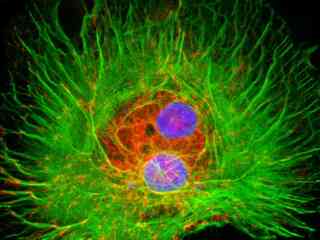
The adherent log phase culture of tahr ovary cells illustrated above was treated for one hour with MitoTracker Red CMXRos in order to label the mitochondrial network, and the fixed cells were then incubated with mouse anti-cytokeratin primary antibodies followed by goat anti-mouse secondary antibodies (IgG) conjugated to Marina Blue. The nuclei were counterstained with SYTOX Green. Images were recorded in grayscale with a 12-bit digital camera coupled to either a Nikon E-600 or Eclipse 80i microscope equipped with bandpass emission fluorescence filter optical blocks. During the processing stage, individual image channels were pseudocolored with RGB values corresponding to each of the fluorophore emission spectral profiles.
-
Tahr Ovary Epithelial Cells (HJ1.Ov Line)
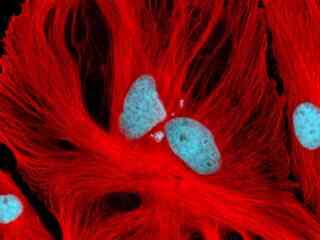
The log phase monolayer culture of tahr ovary cells depicted above was treated with MitoTracker Red CMXRos in growth medium for one hour, washed, and fixed with 3.7-percent paraformaldehyde in medium containing serum. After washing and permeabilization, the cells were blocked with bovine serum albumen in PBS and labeled with BODIPY FL conjugated to phallacidin. The nuclei were subsequently counterstained with Hoechst 33258. Images were recorded in grayscale with a 12-bit digital camera coupled to either a Nikon E-600 or Eclipse 80i microscope equipped with bandpass emission fluorescence filter optical blocks. During the processing stage, individual image channels were pseudocolored with RGB values corresponding to each of the fluorophore emission spectral profiles.
-
Tahr Ovary Epithelial Cells (HJ1.Ov Line)
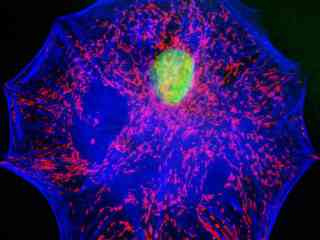
The proximity of nuclei and peroxisomes in the tahr ovary cell culture illustrated above was probed in a double immunofluorescence experiment with mouse anti-histones (pan) and rabbit anti-PMP 70 (peroxisomal membrane protein) primary antibodies. The antibody targets were visualized with goat secondary antibodies conjugated to Alexa Fluor 568 and Alexa Fluor 488, respectively, while the actin cytoskeletal framework was labeled with Alexa Fluor 350 conjugated to phalloidin. Images were recorded in grayscale with a 12-bit digital camera coupled to either a Nikon E-600 or Eclipse 80i microscope equipped with bandpass emission fluorescence filter optical blocks. During the processing stage, individual image channels were pseudocolored with RGB values corresponding to each of the fluorophore emission spectral profiles.
-
Tahr Ovary Epithelial Cells (HJ1.Ov Line)
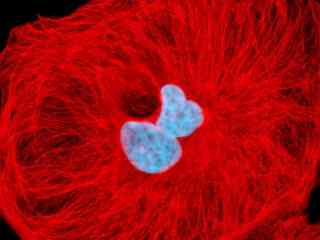
The culture of tahr ovary epithelial cells presented in the digital image above was treated with MitoTracker Deep Red 633 and Alexa Fluor 568 conjugated to phalloidin, fluorescently labeling the mitochondrial network and F-actin, respectively. The nucleic acid stain YO-PRO-1 was utilized to counterstain cell nuclei. Images were recorded in grayscale with a 12-bit digital camera coupled to either a Nikon E-600 or Eclipse 80i microscope equipped with bandpass emission fluorescence filter optical blocks. During the processing stage, individual image channels were pseudocolored with RGB values corresponding to each of the fluorophore emission spectral profiles with the exception of MitoTracker Deep Red 633, which was pseudocolored cyan.
-
Tahr Ovary Epithelial Cells (HJ1.Ov Line)
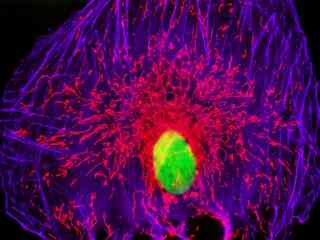
A culture of HJ1.OV epithelial cells (depicted above) was immunofluorescently labeled for the nuclear pore and Golgi complexes with a cocktail of mouse anti-NPCP (nuclear pore complex protein) and rabbit anti-giantin primary antibodies followed by goat anti-mouse and anti-rabbit secondary antibodies (IgG) conjugated to Alexa Fluor 488 and Alexa Fluor 568, respectively. The actin cytoskeleton was targeted with Alexa Fluor 350 conjugated to phalloidin. Images were recorded in grayscale with a 12-bit digital camera coupled to either a Nikon E-600 or Eclipse 80i microscope equipped with bandpass emission fluorescence filter optical blocks. During the processing stage, individual image channels were pseudocolored with RGB values corresponding to each of the fluorophore emission spectral profiles.
-
Tahr Ovary Epithelial Cells (HJ1.Ov Line)
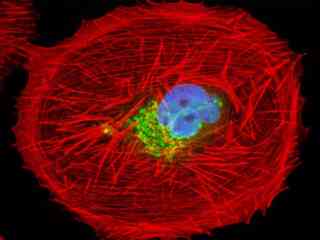
In a double immunofluorescence experiment, the adherent monolayer culture of HJ1.Ov epithelial cells illustrated above was fixed, permeabilized, blocked with 10-percent normal goat serum, and then treated with a cocktail of mouse anti-NPCP (nuclear pore complex protein) and rabbit anti-giantin (Golgi complex) primary antibodies followed by goat anti-mouse and anti-rabbit secondary antibodies (IgG) conjugated to Alexa Fluor 568 and Alexa Fluor 488, respectively. The filamentous actin network was counterstained with Alexa Fluor 350 conjugated to phalloidin. Images were recorded in grayscale with a 12-bit digital camera coupled to either a Nikon E-600 or Eclipse 80i microscope equipped with bandpass emission fluorescence filter optical blocks. During the processing stage, individual image channels were pseudocolored with RGB values corresponding to each of the fluorophore emission spectral profiles.
-
Tahr Ovary Epithelial Cells (HJ1.Ov Line)
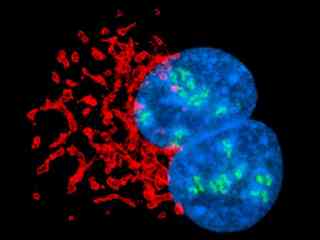
The HJ1.Ov cell culture featured above was fixed, permeabilized, washed, and blocked with 10-percent normal goat serum in phosphate-buffered saline prior to immunofluorescent labeling with rabbit primary antibodies to giantin, a protein resident in the Golgi complex of mammalian cells. The culture was subsequently stained with a mixture of secondary antibodies conjugated to Alexa Fluor 568. In addition, nuclear pore complexes were immunofluorescently labeled with primary anti-NPCP mouse monoclonal antibodies followed by goat anti-mouse Fab heavy and light chain fragments conjugated to Alexa Fluor 488. The F-actin actin network was counterstained with Alexa Fluor 350 conjugated to phalloidin. Images were recorded in grayscale with a 12-bit digital camera coupled to either a Nikon E-600 or Eclipse 80i microscope equipped with bandpass emission fluorescence filter optical blocks. During the processing stage, individual image channels were pseudocolored with RGB values corresponding to each of the fluorophore emission spectral profiles.
-
Tahr Ovary Epithelial Cells (HJ1.Ov Line)
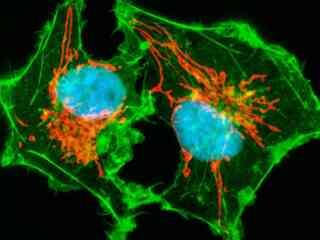
The relationship between the mitochondrial and filamentous actin networks was visualized in a culture of HJ1.Ov cell (depicted above) with MitoTracker Red CMXRos and Oregon Green 488 conjugated to phalloidin. The culture was counterstained for DNA in the cell nucleus with Hoechst 33258. Images were recorded in grayscale with a 12-bit digital camera coupled to either a Nikon E-600 or Eclipse 80i microscope equipped with bandpass emission fluorescence filter optical blocks. During the processing stage, individual image channels were pseudocolored with RGB values corresponding to each of the fluorophore emission spectral profiles.
-
Tahr Ovary Epithelial Cells (HJ1.Ov Line)
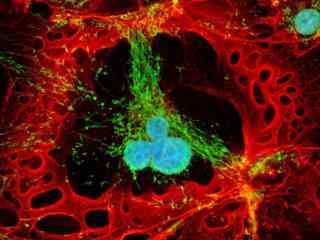
Nuclear histone proteins were targeted in the culture of tahr ovary cells presented above with mouse anti-histone (pan) monoclonal antibodies, which were imaged with goat anti-mouse Fab fragments conjugated to Alexa Fluor 568 (labeling the nucleus). The specimen was simultaneously labeled for peroxisomes with Alexa Fluor 488 conjugated to goat secondary antibodies that target rabbit anti-PMP 70 (peroxisomal membrane protein 70). Alexa Fluor 350 conjugated to phalloidin was utilized to counterstain the cytoskeletal F-actin network. Images were recorded in grayscale with a 12-bit digital camera coupled to either a Nikon E-600 or Eclipse 80i microscope equipped with bandpass emission fluorescence filter optical blocks. During the processing stage, individual image channels were pseudocolored with RGB values corresponding to each of the fluorophore emission spectral profiles.
-
Tahr Ovary Epithelial Cells (HJ1.Ov Line)
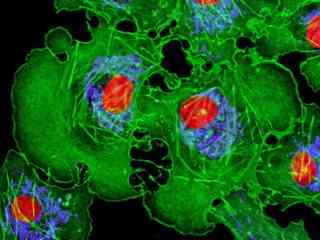
Epithelial tissue that surrounds the ovaries is continuous with the peritoneum, the serous membrane that lines the abdominal cavity. The tissue is commonly referred to as the germinal epithelium, which is a misnomer. When the term was coined, it was generally thought that the tissue, which is a simple cuboidal epithelium, was the site of germ cells. Though this supposition has since been disproved, the term is still widely employed.